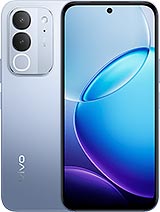
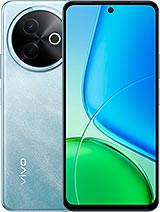
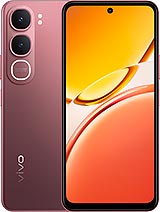
Vivo Y300i review
The Y300i suits buyers in 5G regions who prioritise screen size, battery endurance, and basic 5G access over processing power or flagship build. It is less compelling if you value fast charging, drop durability, or sharp display clarity—budget rivals at the same price offer faster charging or better resolution.
This review is based on Vivo’s published specifications and public benchmark data for the Vivo Y300i, and the rating is spec-based. GoSolo does not physically test devices; where we estimate real-world behaviour such as battery life or charge time, we say so. How we rate phones.
Overview
The Vivo Y300i is a budget-friendly large-screen 5G phone built for everyday use and long battery life, not for pushing power limits. At around €190, it hits the sweet spot for buyers in regions with 5G coverage who prioritise screen size and endurance over raw performance or camera refinement.
Design & build
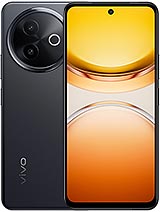
At 205g and 8.1mm thick, the Y300i is reassuringly solid without being unwieldy. The glass front feels good to hold, though the plastic frame and back—while sensible for this price—mean it will show wear and scratches faster than metal rivals. IP64 splash protection is useful for accidental spills and light rain, but the plastic construction leaves little margin for drops. For a budget device, the build quality is honest: it looks and feels a step above the cheapest offerings, but does not pretend to be durable like a flagship.
Display
The 6.68-inch 120Hz IPS LCD is the hero here. At 264ppi, the pixel density is lower than 1080p phones at this size, so small text reads slightly softer than you might expect from a newer budget device; however, the 120Hz refresh keeps scrolling through apps and social feeds buttery and responsive, which matters more in daily use than perfect text sharpness. Colour accuracy is decent for an IPS panel—nothing to write home about, but reliable for video and photos. The 20:9 aspect ratio makes it tall and screen-heavy (84.9% ratio), ideal for media consumption on a device at this price point.
Performance
The Snapdragon 4 Gen 2 is positioned for everyday duties: messaging, social media, browsing, light streaming, and casual gaming all run smoothly. Demanding games like Genshin Impact will throttle to lower settings and frame rates, but they remain playable. The 8GB base and 12GB options are adequate; the 12GB version gives a comfortable buffer for multitasking and app-switching without lag. Performance is not a headliner for this phone—it is explicitly entry-level—but the practical experience is predictable and frustration-free for its intended audience.
Software
Android 15 with OriginOS 5 on top gives you the latest Android framework layered with Vivo's customisations. OriginOS tends to add visual flourishes and useful shortcuts, though it can feel crowded compared to stock Android. Updates should arrive regularly for a new device, and the vanilla Android 15 kernel means no artificial lag. For budget-conscious buyers, this is a solid foundation without surprises.
Camera
The 50MP main sensor with f/1.8 aperture and PDAF is genuinely solid for this price. Daylight shots are sharp and detailed, and the wide aperture pulls in enough light for usable low-light photos without aggressive noise reduction that kills detail. The 5MP front camera is passable for selfies and video calls, though it is deliberately basic. The real constraint is 1080p video capping at 30fps—perfectly fine for casual recording, but a standard that flagships left behind years ago. You will not be making cinema-grade footage, but everyday video is more than workable.
Battery & charging
The 6500mAh battery is substantial and realistic for a device this large. Expect 14–16 hours of mixed use (messaging, browsing, streaming) before needing a charge, or closer to a full two days if you are a light user. The 44W wired charging is respectable—around 50–75 minutes from empty to full—though it lags behind the 65–100W standard that rivals are now hitting at this price. Reverse wired charging and stereo speakers sweeten the package, but lack of wireless charging is expected at this tier.
Value & verdict
At around €190, the Y300i competes in a crowded budget segment where 5G, a large screen, and multi-day battery matter more than flagship specs. The trade-offs are clear: plastic build, entry-level chip, lower pixel density, and capped video recording. Against true flagship or mid-range phones, it will lag in raw power, camera finesse, and durability. Against other budget 5G offerings, it holds its own on screen size and battery, though some rivals might offer faster charging or better video at the same price. It is not a flagship killer—it is not trying to be. It is honest budget engineering aimed at buyers in 5G regions who want a big phone and long runtime without overpaying for horsepower they will not use.
Verdict
The Y300i suits buyers in 5G regions who prioritise screen size, battery endurance, and basic 5G access over processing power or flagship build. It is less compelling if you value fast charging, drop durability, or sharp display clarity—budget rivals at the same price offer faster charging or better resolution.
- Large 120Hz IPS LCD keeps scrolling and everyday interaction responsive; 84.9% screen-to-body ratio maximises usable space
- 6500mAh battery easily clears a full day of mixed use, closer to two days with light use
- 50MP main camera with f/1.8 and PDAF delivers sharp daylight shots and workable low-light performance for a budget device
- 5G, NFC, dual-SIM, stereo speakers, and IP64 splash protection cover genuine features most budget buyers need
- Plastic frame and back design absorbs damage from drops far better than it survives them; fragile compared to metal or glass at this size
- 264ppi pixel density leaves text and fine details noticeably softer than 1080p rivals; noticeable if you read a lot or want crisp displays
- 44W charging is now behind the curve for this price tier; many rivals hit 65–100W wired charging at €190
Vivo Y300i Key Specifications
The essentials at a glance. See the full spec sheet.
| Released | 2025, March 10 |
|---|---|
| Display | 6.68 inches, 107.4 cm2 (~84.9% screen-to-body ratio), IPS LCD, 120Hz |
| Resolution | 720 x 1608 pixels, 20:9 ratio (~264 ppi density) |
| Chipset | Qualcomm SM4450 Snapdragon 4 Gen 2 (4 nm) |
| RAM & storage | 128GB 8GB RAM, 256GB 8GB RAM, 256GB 12GB RAM, 512GB 12GB RAM |
| Main camera | 50 MP, f/1.8, (wide), PDAF |
| Selfie camera | 5 MP, f/2.0, (wide) |
| Battery | 6500 mAh |
| Charging | 44W wiredReverse wired |
| Software | Android 15, OriginOS 5 |
| Dimensions | 165.7 x 76.3 x 8.1 mm (6.52 x 3.00 x 0.32 in) |
| Weight | 205 g (7.23 oz) |
| Build | Glass front, plastic frame, plastic back |
| Durability | IP64 dust tight and water resistant (water splashes) |
| Network | GSM / CDMA / HSPA / LTE / 5G |
| NFC | Yes |
| USB | USB Type-C 2.0, OTG |
Vivo Y300i FAQ
Common questions, answered from the spec sheet.
Does the Y300i support 5G?
Yes. The Y300i supports 5G networks.
What chipset does the Y300i use?
The Y300i runs on the Qualcomm SM4450 Snapdragon 4 Gen 2 (4 nm).
What display does the Y300i have?
A 6.68 inches, 107.4 cm2 (~84.9% screen-to-body ratio) IPS LCD, 120Hz, 720 x 1608 pixels, 20:9 ratio (~264 ppi density).
How big is the Y300i battery?
The Y300i has a 6500 mAh battery. Charging is rated at 44W wiredReverse wired.
Does the Y300i have NFC?
Yes, the Y300i has NFC.
Is the Y300i water resistant?
The Y300i carries a IP64 dust tight and water resistant (water splashes) rating.
Does the Y300i support a microSD card?
No, the Y300i does not support expandable storage.
Does the Y300i have a headphone jack?
No, the Y300i does not have a 3.5mm headphone jack.