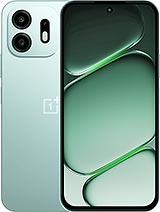
Vivo Y31t review
This phone suits buyers in harsh environments who value durability and battery life over speed and screen clarity. Anyone who needs responsive performance, a sharp display, or fast charging should step up to a mid-range phone; the Y31t's weak points are too visible for general use.
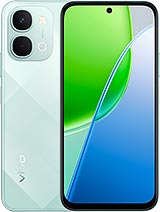
This review is written with AI assistance from Vivo’s published specifications and public benchmark data for the Vivo Y31t, and the rating is spec-based. GoSolo does not physically test devices; where we estimate real-world behaviour such as battery life or charge time, we say so. How we rate phones.
Overview
The Vivo Y31t is a sturdy, large-screened entry-level phone built for durability and everyday use rather than speed. It brings IP68 water resistance and a 7200 mAh battery to a budget segment where such features are still uncommon, but the low-res display and entry-class chip mean it's slow for any real workload.
Design & build
At 219 grams and 8.4 mm thick, the Y31t is a substantial piece—heavier and thicker than mainstream flagships, which signals durability over lightness. The plastic frame and back keep weight down compared to all-glass rivals, and the real differentiator here is the IP68/IP69 rating. That water-resistance spec is not noise; it means immersion to 1.5 meters for half an hour, plus resistance to high-pressure jets. For a budget phone, this is genuinely useful in regions where durability in bad conditions matters more than a thin profile. The 6.75-inch screen-to-body ratio of 83.9 percent is reasonable for the size class.
Display
The 6.75-inch IPS LCD is large, but the 720 x 1608 pixel resolution struggles on a screen that size. At 261 ppi, text and icons have a visible grain; this is not a sharp display by modern standards, even for budget class. The 120Hz refresh is a genuine plus for scrolling smoothness, and the brightness figures (1000 nits high brightness mode, 1200 nits peak) are strong enough to handle harsh sunlight. But the low pixel density is a constant visual reminder of the cost-cutting, and it is hard to ignore when you spend all day looking at it.
Performance
The Snapdragon 4 Gen 2 is an entry-level chip, and that shows. It handles basic tasks—calls, messages, light web browsing, social media—without complaint, but open a few apps at once, try any modern game, or edit video and you will hit the limits. The Adreno 613 GPU is modest, and the six efficiency cores mean the phone will thermal-throttle under sustained load. This is not a phone for multitasking or future-proofing; it is built for people who use one app at a time and do not push the hardware.
Software
Android 16 with OriginOS 6 is current and security-wise sound, but OriginOS is Vivo's own skin layered on top. How heavy the customization feels and how long updates arrive depend on Vivo's track record in your region; generically, Vivo phones get two to three years of OS updates and longer security patches, though this varies by market. For an entry-level device, longevity in software is not guaranteed.
Camera
The 50 MP main camera with f/1.8 aperture and PDAF is a decent headline, but a single sensor does not replace a cohesive camera system. Video is limited to 1080p at 30 fps, standard for this price. The 8 MP selfie is unremarkable. In daylight the 50 MP sensor will deliver fine detail, but low light will expose the entry-level limitations of the processor handling the ISP work. There is no ultrawide or telephoto, so framing choices are limited. The camera is functional, not a strength.
Battery & charging
The 7200 mAh battery is a genuine strong point for the category; it should deliver two days of moderate use or a full day of heavy use without struggling. The charging speed is not specified in the available data, which is a red flag—budget phones often ship with 18W or 22W chargers while rivals move to 44W or higher. If the Y31t matches that slow pace, it could take two hours or more to fully charge, a real friction point compared to mid-range competitors.
Value & verdict
The Y31t is built for durability and battery life over speed or display sharpness. In markets where water resistance, large battery capacity, and rugged build matter more than raw performance, this phone has a clear purpose. The low resolution screen and entry-class chip mean everyday speed suffers, and if you care about fast performance or sharp visuals, a mid-range alternative will serve you better for not much more money. The absence of a microSD slot is a minor pain in the context of 128 GB or 256 GB base storage, but it removes the expansion path that many budget buyers rely on.
Verdict
This phone suits buyers in harsh environments who value durability and battery life over speed and screen clarity. Anyone who needs responsive performance, a sharp display, or fast charging should step up to a mid-range phone; the Y31t's weak points are too visible for general use.
- IP68/IP69 water and dust resistance rare at this price and durability class—immersible to 1.5m for 30 minutes, which matters where phones take real punishment
- 7200 mAh battery is genuinely large for the category; likely to last two days of moderate use
- 120Hz display is smooth for scrolling even if the 261 ppi resolution is soft, and 1000–1200 nits brightness handles direct sunlight
- Side-mounted fingerprint sensor is faster to reach than under-display, especially on such a tall phone
- 720p resolution on a 6.75-inch screen yields 261 ppi—text and icons look noticeably grainy compared to any mid-range phone, a constant visual compromise
- Snapdragon 4 Gen 2 is entry-level; expect stutters in heavy apps, gaming, or multitasking—not a fast phone by 2026 standards
- No microSD card slot and charging power not specified in the sheet, making it unclear whether this charges as slowly as rival budget phones
Vivo Y31t Key Specifications
The essentials at a glance. See the full spec sheet.
| Released | 2026, August 19 |
|---|---|
| Display | 6.75 inches, 109.6 cm2 (~83.9% screen-to-body ratio), IPS LCD, 120Hz, 1000 nits (HBM), 1200 nits (peak) |
| Resolution | 720 x 1608 pixels, 20:9 ratio (~261 ppi density) |
| Chipset | Qualcomm SM4450 Snapdragon 4 Gen 2 (4 nm) |
| RAM & storage | 128GB 4GB RAM, 128GB 6GB RAM, 256GB 6GB RAM |
| Main camera | 50 MP, f/1.8, (wide), PDAF Auxiliary lens |
| Selfie camera | 8 MP, f/2.1, (wide) |
| Battery | 7200 mAh |
| Software | Android 16, OriginOS 6 |
| Dimensions | 166.6 x 78.4 x 8.4 mm (6.56 x 3.09 x 0.33 in) |
| Weight | 219 g (7.72 oz) |
| Build | Glass front, plastic frame, plastic back |
| Durability | IP68/IP69 dust tight and water resistant (high pressure water jets; immersible up to 1.5m for 30 min) |
| Network | GSM / HSPA / LTE / 5G |
| NFC | Unspecified |
| USB | USB Type-C 2.0, OTG |
Vivo Y31t FAQ
Common questions, answered from the spec sheet.
Does the Y31t support 5G?
Yes. The Y31t supports 5G networks.
What chipset does the Y31t use?
The Y31t runs on the Qualcomm SM4450 Snapdragon 4 Gen 2 (4 nm).
What display does the Y31t have?
A 6.75 inches, 109.6 cm2 (~83.9% screen-to-body ratio) IPS LCD, 120Hz, 1000 nits (HBM), 1200 nits (peak), 720 x 1608 pixels, 20:9 ratio (~261 ppi density).
How big is the Y31t battery?
The Y31t has a 7200 mAh battery.
Does the Y31t have NFC?
No, the Y31t does not list NFC support.
Is the Y31t water resistant?
The Y31t carries a IP68/IP69 dust tight and water resistant (high pressure water jets; immersible up to 1.5m for 30 min) rating.
Does the Y31t support a microSD card?
No, the Y31t does not support expandable storage.
Alternatives to consider
If the Y31t isn’t quite right, these are the closest calls.
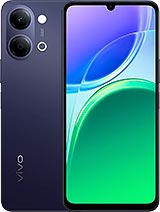
Y6t
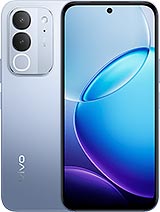
Y600i
Y11d
V70 Lite 4G
Galaxy M17e