Vivo Y36 review
The Y36 is for people who live on messaging and video streaming and want their phone to outlast a full day without anxiety; if charging speed, gaming, or 4K video matter to you, the money is better spent elsewhere in this tier.

This review is based on Vivo’s published specifications and public benchmark data for the Vivo Y36, and the rating is spec-based. GoSolo does not physically test devices; where we estimate real-world behaviour such as battery life or charge time, we say so. How we rate phones.
Overview
The Y36 is a large-screen budget phone built for messaging and streaming rather than gaming, with a 5000 mAh battery that easily outlasts a day and a 90Hz LCD that makes scrolling smooth. For 200 EUR it hits the basics but lacks the charging speed and processing muscle rivals now offer at this price, and the 1080p video caps its use as a camera device.
Design & build
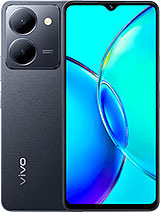
The Y36 is a straightforward slab: glass front, plastic back and frame, 202g, 8.1mm thick. It lands in the middle of modern phones—not featherweight but not a brick either. The side-mounted fingerprint reader is reliable, though it sits low enough to occasionally catch your palm grip. IP54 dust and splash resistance is real comfort for a device in this bracket, though rain or spill will still ruin it; don't treat this like a waterproof flagship. The three color options (Meteor Black, Gold, Aqua Glitter) skew conservative, and the screen-to-body ratio of 85.4% is decent but not pushing boundaries. Plastic feels like plastic, and after a year or two the back will show wear. For everyday bumps and desk drops it's resilient enough, but this is a phone that earns its case.
Display
The 6.64-inch 90Hz IPS LCD is the star of the hardware sheet. At 1080p resolution and 395 ppi, pixel density is enough to avoid visible grain at arm's length. The 650-nit peak brightness handles direct sunlight and outdoor reading without washing out—a real win for a budget LCD that often struggle here. The 90Hz refresh feels smooth for scrolling through social apps and browsers; it won't match the fluidity of 120Hz or higher, but side-to-side motion is noticeably more fluid than a standard 60Hz panel. IPS viewing angles are wide, which matters if you watch videos in bed or share the screen. Colors are neutral rather than punchy, which is fine for a device aimed at practicality over spectacle. If you're coming from a 60Hz phone, this refresh rate will feel like a small but genuine upgrade.
Performance
The Snapdragon 680 is entry-level for 2023 and it shows. The Adreno 610 GPU handles casual gaming—Candy Crush, Subway Surfers, light 2D titles—at stable framerates. Anything demanding, like PUBG or Genshin at high settings, will throttle or stutter; expect 30 fps and frame drops if you persist. Day-to-day tasks like messaging, browsing, and app switching are smooth enough with 4GB or 8GB RAM, but lag appears under sustained load—opening multiple heavy apps in quick succession can cause brief freezes. The 128GB base storage uses UFS 2.2, which is adequate for installs and file transfers but noticeably slower than UFS 3.1 or above. This chipset was mainstream midrange five years ago; in 2023, at this price, it's starting to feel behind. For a student or light user, fine. For anyone expecting to game or multitask heavily, consider looking sideways.
Software
Android 13 with Funtouch 13 overlay. Vivo's skin adds bloatware on top of AOSP—pre-installed apps and promotional tiles that chew battery and storage. Some are removable, others aren't. The interface itself is clean enough and reasonably fast to navigate, but the number of pre-loaded services feels excessive for a budget device. The launcher is customizable and reasonably responsive. Security updates are a mixed bag for Vivo at this tier; expect patches to be infrequent and lags behind flagship timelines. Major Android upgrades won't be guaranteed, so plan for this to age on Android 13 or 14 max. No surprises here, just typical budget-phone software bloat.
Camera
The 50MP main sensor with f/1.8 aperture and PDAF performs respectably in daylight and moderate indoor light. Daytime stills are detailed and exposure is usually accurate, though saturation skews slightly warm. The f/1.8 lens helps with low-light shots where rivals with f/2.0 or f/2.2 would struggle. The 2MP macro is a gimmick—practically useless unless you're shooting stamps. The 16MP selfie camera handles video calls and selfies adequately at f/2.5, though high-contrast backgrounds can blow out. Where the Y36 stumbles is video: 1080p@30fps only, no 4K, no slow-motion. For a 2023 phone at 200 EUR, this is a limitation. Rivals in this tier now shoot 4K or at least offer 60fps 1080p. If video is a priority beyond basic clips, this phone won't satisfy. Stills are solid for the price, but video is entry-grade.
Battery & charging
The 5000 mAh cell is genuinely impressive for the price. With typical use (messaging, browsing, some video) you'll see 36 to 40 hours between charges; light users can stretch to two days. Heavy streaming cuts that to a single day, but for the target audience—people who text and watch more than they game—this is a strength. The 44W wired charger fills the battery in roughly 45 to 60 minutes; 30% in 15 minutes is useful for a quick top-up before leaving the house. The pace is respectable, though rivals now push 65W to 100W at this price, reducing full charge time to 25–40 minutes. No wireless charging, as expected. The 44W is not slow, but it's not keeping up with the charging armament competitors offer. Reverse wired charging is listed but rarely used in practice. For people on a consistent routine who can charge overnight, this is fine. For travelers or people with unpredictable days, faster rivals exist.
Value & verdict-context
At 200 EUR the Y36 targets users who value battery life and screen real estate over raw processing or camera versatility. The 5000 mAh and 90Hz LCD are genuine draws. The price-to-battery ratio is hard to beat. Where you pay the trade-off is performance (680 is old for 2023) and charging speed (44W is now standard, not fast). The 1080p-only video and lack of meaningful gaming chops further narrow its appeal. For a student working through lecture notes and social media, or a parent who texts all day and watches videos on commute, this makes sense. For anyone expecting 4K video, speedy charging, or gaming at playable settings, rivals at the same price hit more of those marks. The microSD slot and 3.5mm jack are increasingly rare bonuses. The IP54 rating and large battery are genuinely valuable.
Verdict
The Y36 is for people who live on messaging and video streaming and want their phone to outlast a full day without anxiety; if charging speed, gaming, or 4K video matter to you, the money is better spent elsewhere in this tier.
- 5000 mAh battery delivers 1.5 to 2 days of real-world use on light duty; heavy texters and video watchers will rarely fret about charge
- 6.64-inch 90Hz IPS LCD with 650-nit peak brightness handles outdoor sunlight and scrolling feels fluid enough for daily browsing
- 50MP main camera with f/1.8 aperture and PDAF performs reasonably in indoor light and daylight stills, avoiding the sensor-upgrade trap many budget rivals fall into
- IP54 rating plus a 3.5mm jack and FM radio keep this practical for regions where either matters; dedicated microSD slot saves you a SIM
- 44W charging is respectable at the price, but rivals now hit 65W to 100W in this tier, leaving a noticeable speed gap
- Snapdragon 680 handles texts and streaming fine but stumbles on 3D games and can feel laggy under app load; last-gen processing for a 2023 launch
- 1080p@30fps video only—no 4K option, no slow-mo, limiting it to basic clips; a step behind what you'd get elsewhere at this price
Vivo Y36 Key Specifications
The essentials at a glance. See the full spec sheet.
| Released | 2023, May 27 |
|---|---|
| Display | 6.64 inches, 106.8 cm2 (~85.4% screen-to-body ratio), IPS LCD, 90Hz, 650 nits (peak) |
| Resolution | 1080 x 2388 pixels (~395 ppi density) |
| Chipset | Qualcomm SM6225 Snapdragon 680 4G (6 nm) |
| RAM & storage | 128GB 4GB RAM, 128GB 8GB RAM, 256GB 8GB RAM |
| Main camera | 50 MP, f/1.8, (wide), PDAF 2 MP (macro) * the macro camera availability is market/region dependent Auxiliary lens |
| Selfie camera | 16 MP, f/2.5, (wide) |
| Battery | 5000 mAh |
| Charging | 44W wired, 30% in 15 minReverse wired |
| Software | Android 13, Funtouch 13 |
| Dimensions | 164.1 x 76.2 x 8.1 mm (6.46 x 3.00 x 0.32 in) |
| Weight | 202 g (7.13 oz) |
| Build | Glass front, plastic back, plastic frame |
| Durability | IP54 dust protected and water resistant (water splashes) |
| Network | GSM / HSPA / LTE |
| NFC | Yes (market/region dependent) |
| USB | USB Type-C 2.0, OTG |
Vivo Y36 FAQ
Common questions, answered from the spec sheet.
Does the Y36 support 5G?
No. The Y36 tops out at GSM / HSPA / LTE, without 5G.
What chipset does the Y36 use?
The Y36 runs on the Qualcomm SM6225 Snapdragon 680 4G (6 nm).
What display does the Y36 have?
A 6.64 inches, 106.8 cm2 (~85.4% screen-to-body ratio) IPS LCD, 90Hz, 650 nits (peak), 1080 x 2388 pixels (~395 ppi density).
How big is the Y36 battery?
The Y36 has a 5000 mAh battery. Charging is rated at 44W wired, 30% in 15 minReverse wired.
Does the Y36 have NFC?
Yes, the Y36 has NFC.
Is the Y36 water resistant?
The Y36 carries a IP54 dust protected and water resistant (water splashes) rating.
Does the Y36 support a microSD card?
Yes, the Y36 supports expandable storage (microSDXC (dedicated slot)).
Does the Y36 have a headphone jack?
Yes, the Y36 has a 3.5mm headphone jack.
Alternatives to consider
If the Y36 isn’t quite right, these are the closest calls.

Y56 5G

Y56

Y27
Y27 5G

Galaxy M15 5G