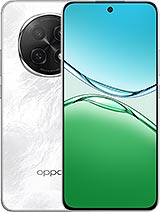
Vivo Y400 Pro review
The Y400 Pro suits buyers who spend most time scrolling, streaming, and messaging and want a large, vivid display without breaking the budget. Someone who games regularly or shoots subjects that need optical zoom will find it limiting—a Dimensity 7300 phone is not built for sustained frame rates, and a single 50MP camera with no telephoto is a real constraint for composition.

This review is based on Vivo’s published specifications and public benchmark data for the Vivo Y400 Pro, and the rating is spec-based. GoSolo does not physically test devices; where we estimate real-world behaviour such as battery life or charge time, we say so. How we rate phones.
Overview
The Y400 Pro is a large-screen mid-ranger with a bright AMOLED display and swift 90W charging, built to appeal to buyers who prioritize display quality and quick top-ups over gaming grunt. It's a sensible choice at 250 EUR if you value screen real estate and software smoothness, though its Dimensity 7300 chip and lack of zoom camera leave little room for heavy tasks or distant detail.
Design & build
The Y400 Pro measures 163.8 x 75.0 x 7.5mm and weighs 182g—a large, fairly light phone that sits comfortably in one hand despite the 6.77-inch footprint. Glass front with a plastic back and frame keep weight down, though that construction trades durability for affordability; the phone won't survive drops as well as a full-glass or metal build. IP65 rating protects against dust and brief water splashes, covering spills and light rain for roughly 15 minutes, but do not submerge it. The form factor feels modern and the slim 7.5mm profile is an easy pocket fit, though plastic creaks slightly under pressure if you flex the frame—typical for this price and not a dealbreaker.
Display
A 6.77-inch AMOLED screen with 120Hz refresh and HDR support gives the phone genuine punch at this price point. The 1300 nits peak brightness (1300 in high-brightness mode, 4500 nits claimed peak) handles outdoor sunlight without washing out, a rare strength in the budget space. Colors are vivid and deep blacks are true OLED blacks—very different from the LCD panels most rivals at 250 EUR still use. The trade-off is resolution: 1080 x 2392 pixels across 6.77 inches yields 388 ppi, enough to avoid visible pixelation in icons and buttons, but text and fine detail lose the sharpness you'd get from a 1440p display. For casual reading and video this is fine; for work involving small text or photo editing, the softer image is noticeable. 120Hz scrolling is buttery and a genuine quality-of-life upgrade over 60Hz, though not revolutionary.
Performance
The Mediatek Dimensity 7300 (4nm) is an upper-midrange chip designed for efficiency and everyday responsiveness rather than peak power. With 8GB of RAM and UFS 3.1 storage, the phone handles messaging, social media, streaming, and light multitasking without stumbling. App launches are snappy, scrolling through Twitter or Instagram is smooth, and video playback at 1080p or 4K runs without hiccups. Where it falters is sustained gaming: demanding titles like Genshin Impact or Fortnite lag visibly at high settings, and even lighter games dip frames when pushed. For someone who checks email, browses the web, and watches videos, this chip is adequate; for someone who games regularly or does heavy photo editing, it feels underpowered. The GPU (Mali-G615 MC2) is modest, not a pain point but not impressive either.
Software
Android 15 with Vivo's Funtouch 15 overlay is refreshingly restrained. Vivo's skin historically trails Samsung and Xiaomi in bloat, and that reputation holds here: the interface is clean, animations are snappy, and the OS feels responsive to taps and gestures without lag. One-handed gestures work well given the phone's width, and settings are logically organized. The Circle to Search feature (Google's visual search) is present and functional, though not essential. You will not find heavy pre-installed app cruft that drags things down, a real advantage for a budget device where RAM is limited. Updates will likely come regularly given Vivo's track record, though long-term support is not guaranteed past 2-3 years.
Camera
The 50MP f/1.8 main camera has a large 1/1.95-inch sensor and 0.8µm pixels, a capable wide lens for daylight and low-light work. PDAF and a ring-LED flash round it out. In good light, the 50MP sensor captures detail and color accurately; the f/1.8 aperture gathers enough light for usable night shots without excessive noise. However, there is no optical zoom—no 2x, 3x, or 5x telephoto—so cropping in on distant subjects loses quality fast. Video is 4K@30fps with gyro-EIS stabilization, adequate but not exceptional; 4K at 30fps looks less smooth than 60fps rivals. The 32MP front camera handles selfies and video calls without fuss. Overall, the camera is competent for social media and casual snaps, but lack of zoom is a real limit if you shoot detail-heavy scenes or want tighter framing without walking closer.
Battery & charging
The 5500mAh battery with 90W wired charging is the phone's headline act. The 90W speed tops up to 50% in 19 minutes, a legitimate convenience if you leave the house low on juice. Full charging likely takes 35-45 minutes, faster than competitors at this price who typically cap out at 65-75W. Battery endurance is about average: with moderate use (reading, messaging, some video), expect a day to a day and a half between charges. Heavy gaming or sustained video streaming shortens that to 18-20 hours. There is no wireless charging, a typical omission at 250 EUR, and the 6W reverse wired charging for other devices is slow enough to ignore. For most users, daily charging is the rhythm, and the swift top-up makes that less painful.
Value & verdict-context
The Y400 Pro lands at roughly 250 EUR, a price tier where buyers are trading performance for screen size and battery life. For that money, a bright, large AMOLED screen and quick charging are genuine appeals, particularly in markets where many rivals default to LCD and 65W charging. The Dimensity 7300 is not flagship-class, but it is not meant to be; it keeps the price competitive while handling daily tasks without strain. What you are not getting: optical zoom, a quad-camera array with ultra-wide and macro lenses, wireless charging, or a 1440p display. Those are not egregious omissions at this price—they are expected trade-offs. The phone succeeds by doing core things well: fast charging, bright screen, clean software. It stumbles on gaming and zoom photography, areas where budget phones have historically been weak and still are.
Verdict
The Y400 Pro suits buyers who spend most time scrolling, streaming, and messaging and want a large, vivid display without breaking the budget. Someone who games regularly or shoots subjects that need optical zoom will find it limiting—a Dimensity 7300 phone is not built for sustained frame rates, and a single 50MP camera with no telephoto is a real constraint for composition.
- 90W wired charging reaches 50% in 19 minutes, genuinely useful for a quick top-up before stepping out.
- 6.77-inch AMOLED screen with 1300 nits peak brightness and 120Hz refresh delivers vivid colors and excellent visibility outdoors, even at 1080p resolution.
- Clean Android 15 with Funtouch 15 keeps the interface light and responsive—no bloat-heavy UI dragging down everyday use.
- IP65 rating covers routine dust and splash exposure, practical for the price tier where water resistance is often absent.
- 1080p resolution on a 6.77-inch screen leaves text and fine detail noticeably softer than rivals using 1440p panels at similar sizes.
- Dimensity 7300 struggles with demanding games at high frame rates and struggles with sustained high-load tasks—fine for apps and video, poor for graphics-heavy workloads.
- No optical zoom and a single 50MP camera with no telephoto option means cropped shots lose quality fast, typical of this price but a real constraint for composition.
Vivo Y400 Pro Key Specifications
The essentials at a glance. See the full spec sheet.
| Released | 2025, June 20 |
|---|---|
| Display | 6.77 inches, 110.9 cm2 (~90.3% screen-to-body ratio), AMOLED, 120Hz, HDR, 1300 nits (HBM), 4500 nits (peak) |
| Resolution | 1080 x 2392 pixels (~388 ppi density) |
| Chipset | Mediatek Dimensity 7300 (4 nm) |
| RAM & storage | 128GB 8GB RAM, 256GB 8GB RAM |
| Main camera | 50 MP, f/1.8, (wide), 1/1.95", 0.8µm, PDAF Auxiliary lens |
| Selfie camera | 32 MP, f/2.5, (wide) |
| Battery | 5500 mAh |
| Charging | 90W wired, 50% in 19 min6W reverse wired |
| Software | Android 15, Funtouch 15 |
| Dimensions | 163.8 x 75.0 x 7.5 or 7.7 mm |
| Weight | 182 g (6.42 oz) |
| Build | Glass front, plastic back, plastic frame |
| Durability | IP65 dust tight and water resistant (low pressure water jets) |
| Network | GSM / HSPA / LTE / 5G |
| NFC | No |
| USB | USB Type-C 2.0, OTG |
Vivo Y400 Pro FAQ
Common questions, answered from the spec sheet.
Does the Y400 Pro support 5G?
Yes. The Y400 Pro supports 5G networks.
What chipset does the Y400 Pro use?
The Y400 Pro runs on the Mediatek Dimensity 7300 (4 nm).
What display does the Y400 Pro have?
A 6.77 inches, 110.9 cm2 (~90.3% screen-to-body ratio) AMOLED, 120Hz, HDR, 1300 nits (HBM), 4500 nits (peak), 1080 x 2392 pixels (~388 ppi density).
How big is the Y400 Pro battery?
The Y400 Pro has a 5500 mAh battery. Charging is rated at 90W wired, 50% in 19 min6W reverse wired.
Does the Y400 Pro have NFC?
No, the Y400 Pro does not list NFC support.
Is the Y400 Pro water resistant?
The Y400 Pro carries a IP65 dust tight and water resistant (low pressure water jets) rating.
Does the Y400 Pro support a microSD card?
No, the Y400 Pro does not support expandable storage.
Does the Y400 Pro have a headphone jack?
No, the Y400 Pro does not have a 3.5mm headphone jack.
Alternatives to consider
If the Y400 Pro isn’t quite right, these are the closest calls.

Y400 Pro 5G

Y31 Pro 5G
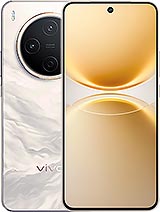
Y500 Pro
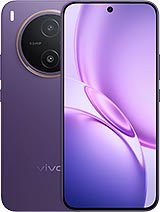
Y600 Pro
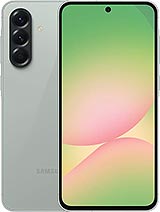
Galaxy A56