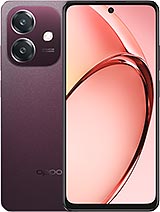
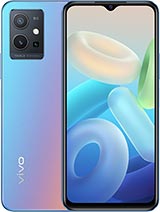
Vivo Y55s 5G review
The Y55s suits casual users and travelers who value a full day of battery and 5G connectivity over processing power or fast charging. If you frequently play demanding games, shoot in low light, or want a responsive interface, a rival with a stronger chipset and faster charging will serve you better for the same money.
This review is based on Vivo’s published specifications and public benchmark data for the Vivo Y55s 5G, and the rating is spec-based. GoSolo does not physically test devices; where we estimate real-world behaviour such as battery life or charge time, we say so. How we rate phones.
Overview
The Vivo Y55s is a budget 5G phone aimed at buyers who want connectivity without paying flagship prices. Its strength is endurance—a 5000 mAh battery and efficient display let you coast through a full day of messaging and video—but the Dimensity 700 chipset and IPS LCD screen are entry-level compromises that add up.
Design & Build
At 164 mm tall and weighing just 187 g, the Y55s sits comfortably in one hand and fits easily into a pocket. The glass front, plastic frame, and plastic back keep weight down and production cost low, though the build feels less rigid than devices with all-metal frames. At 8.3 mm thick, it is one of the slimmest phones you will find with a 5000 mAh battery, a trade-off Vivo has chosen well. The side-mounted fingerprint sensor is responsive and placed where your thumb naturally rests. This is a phone designed for people who carry it all day and do not want heft; form factor is its strongest suit.
Display
The 6.58-inch IPS LCD with 1080 x 2408 resolution and 401 ppi is sharp enough for text and icons at normal viewing distance. Scrolling is smooth at the standard 60 Hz refresh rate, so you will not feel hamstrung compared to the 90 Hz screens becoming standard at this price. The real gap is brightness: no peak brightness figure is published, which on an IPS panel raises a question about sunlight visibility. If this phone lives indoors or is mostly used at dawn and dusk, you will not notice. Outdoor readers in bright sun may squint. The 20:9 aspect ratio and 83.8% screen-to-body ratio are both standard for 2023, and the display does the job for social media and video streaming without complaint.
Performance
The MediaTek Dimensity 700 is a mainstream midrange chip for this era: it handles everyday apps, messaging, social media, and light video streaming without stutter. Web browsing is fluid, and you can switch between multiple apps without lag in normal use. Where it falls short is gaming and heavy multitasking. Demanding 3D games will drop frames at high settings, and if you keep ten apps running in the background, you will feel slowdowns. The 4 GB variant will wear on performance sooner than the 6 GB option, especially if you fill storage with media. This is not a chip that punches above its weight, but it is honest for the price. Do not expect to run Genshin Impact at smooth framerates; expect messaging, photos, and YouTube to work every time.
Camera
The 50 MP main sensor with f/1.8 aperture and phase-detection autofocus is respectable for a budget phone. In good light, it captures sharp daylight photos with correct color balance and usable detail. Autofocus is fast, and the 26 mm focal length is a sensible standard. The 2 MP macro camera is filler; it will rarely produce images you actually want to keep. Low-light performance is the weak point: at f/1.8 the sensor struggles to gather enough light, and Vivo's processing can introduce noise or muddy shadow detail. The 8 MP selfie camera is serviceable for video calls and social media. Video recording maxes out at 1080p at 30 fps with gyro-enabled stabilization, which is standard but not memorable. This is a camera that works for vacation snaps and bright-day shooting, not night photography or vlogging.
Battery & Charging
The 5000 mAh battery is the Y55s's biggest asset. In realistic mixed use—messaging, email, an hour of video, some light gaming, and moderate brightness—you will reach the evening with 15 to 20 percent left. Heavy users will land closer to empty by nightfall, but casual users will stretch to two days. That endurance matters if you travel without a charger or work a long shift. The drawback is charging: 18 W is slow by 2023 standards. Rivals at this price now offer 30 W, 33 W, or faster, which cuts recharge time roughly in half. Without a stated fast-charger wattage or cable in the box, a full recharge from empty will take well over an hour. If you charge nightly, this is fine. If you rely on quick top-ups, you will feel the lag.
Software
The Y55s ships with Android 12 and Vivo's Funtouch 12 skin on top. Funtouch adds custom UI tweaks, some bloatware, and Samsung-style features like a customizable launcher. Updates are not guaranteed beyond two years, and Funtouch's approach to permissions can feel invasive compared to stock Android. If you prefer a clean, minimal interface, this will feel cluttered. If you are accustomed to Vivo or other Chinese OEM skins, you will find it familiar. There is nothing broken here, but stock Android or near-stock skins have become the expectation at this price point.
Value & Verdict
At around 250 EUR, the Y55s costs less than most competitors offering the same 5G modem. That alone makes it appealing for global south markets where 5G coverage is rolling out and budget is tight. The battery life, slim design, and 128 GB of storage with microSD expansion are genuine wins. Against that, you accept a slowish chipset, questionable sunlight brightness, slow charging, and a bloated OS. The phone works, but it is not an overachiever. For someone who prioritizes battery life and 5G over gaming or camera detail, it is a logical choice. Anyone who demands smooth gaming, quick charging, or a polished software experience should spend slightly more.
Verdict
The Y55s suits casual users and travelers who value a full day of battery and 5G connectivity over processing power or fast charging. If you frequently play demanding games, shoot in low light, or want a responsive interface, a rival with a stronger chipset and faster charging will serve you better for the same money.
- 5000 mAh battery delivers realistic all-day endurance for typical use
- 5G connectivity at a price point where most rivals still offer 4G only
- Slim and light at 187 g and 8.3 mm, easy to pocket for its screen size
- 50 MP main camera with phase-detection autofocus for a budget device
- Dimensity 700 struggles with demanding games and app switching under load
- 18W charging speed is slow compared to rivals at this price now offering 30W or faster
- No brightness spec listed; outdoor sunlight visibility is uncertain on an IPS LCD screen
Vivo Y55s 5G Key Specifications
The essentials at a glance. See the full spec sheet.
| Released | 2023, January 21 |
|---|---|
| Display | 6.58 inches, 104.3 cm2 (~83.8% screen-to-body ratio), IPS LCD |
| Resolution | 1080 x 2408 pixels, 20:9 ratio (~401 ppi density) |
| Chipset | Mediatek Dimensity 700 (7 nm) |
| RAM & storage | 128GB 4GB RAM, 128GB 6GB RAM |
| Main camera | 50 MP, f/1.8, 26mm (wide), PDAF 2 MP (macro) Auxiliary lens |
| Selfie camera | 8 MP, f/1.8, (wide) |
| Battery | 5000 mAh |
| Software | Android 12, Funtouch 12 |
| Dimensions | 164 x 75.9 x 8.3 mm (6.46 x 2.99 x 0.33 in) |
| Weight | 187 g (6.60 oz) |
| Build | Glass front, plastic frame, plastic back |
| Network | GSM / HSPA / LTE / 5G |
| NFC | Yes |
| USB | USB Type-C, OTG |
Vivo Y55s 5G FAQ
Common questions, answered from the spec sheet.
Does the Y55s 5G support 5G?
Yes. The Y55s 5G supports 5G networks.
What chipset does the Y55s 5G use?
The Y55s 5G runs on the Mediatek Dimensity 700 (7 nm).
What display does the Y55s 5G have?
A 6.58 inches, 104.3 cm2 (~83.8% screen-to-body ratio) IPS LCD, 1080 x 2408 pixels, 20:9 ratio (~401 ppi density).
How big is the Y55s 5G battery?
The Y55s 5G has a 5000 mAh battery.
Does the Y55s 5G have NFC?
Yes, the Y55s 5G has NFC.
Does the Y55s 5G support a microSD card?
Yes, the Y55s 5G supports expandable storage (microSDXC).
Alternatives to consider
If the Y55s 5G isn’t quite right, these are the closest calls.
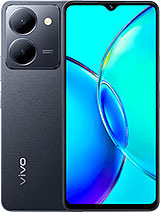
Y27 5G
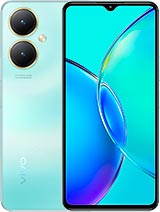
Y27 4G
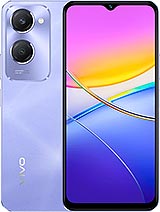
Y37 5G
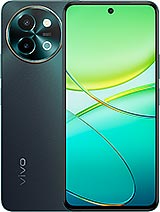
Y38 5G
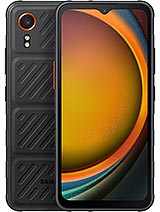
Galaxy XCover7