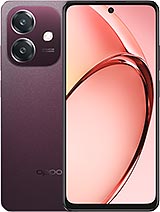
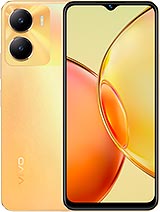
Vivo Y56 review
The Y56 suits battery-conscious buyers in emerging markets who prioritize long runtime and a large screen over speed, and who rarely push beyond social apps and video. Anyone who games, edits photos, or values quick app performance should look at this year's budget alternatives, which offer better CPUs without much price creep.
This review is based on Vivo’s published specifications and public benchmark data for the Vivo Y56, and the rating is spec-based. GoSolo does not physically test devices; where we estimate real-world behaviour such as battery life or charge time, we say so. How we rate phones.
Overview
The Vivo Y56 is a budget phone built for everyday use and long battery life, not speed or gaming. At 220 EUR, it delivers on screen size and endurance, but its 2023-era MediaTek chip feels sluggish now, and you won't want to push it beyond messaging and video.
Design & build
The Y56 is light at 184g and slim at 8.2mm, which feels nice in hand. The glass front and plastic frame-and-back combo is typical for sub-200 EUR devices, but it shows wear quickly—expect micro-scratches on the back after a few months of pocket time. The IPX4/IP5X rating means it shrugs off splashes and light dust, a genuine convenience in rough-pocket use, though it is not a substitute for caution near a sink. The side-mounted fingerprint sensor works without fuss.
Display
The 6.58-inch IPS LCD panel is a highlight at this price. The 1080×2408 resolution yields 401 ppi, so text stays crisp and icons remain clear even up close. The 20:9 aspect ratio and 84% screen-to-body ratio mean more usable space and minimal bezels, a rarity three years ago and still a draw now. Brightness is moderate—good indoors and in shade, but sun reflections wash out color in direct sunlight. IPS color accuracy is neutral, not the punchy OLED contrast budget buyers often fantasize about, but adequate for browsing and video.
Performance
The MediaTek Dimensity 700 and Mali-G57 GPU were mainstream-midrange in 2023 and have not aged well. App launching, multitasking, and switching between social apps all feel noticeably slower than current midrange phones at this price point. The 4GB base RAM variant will struggle with heavy browser tabs; the 8GB option helps but does not solve the CPU bottleneck. Gaming at any demanding setting causes frame drops and thermal throttling within 20–30 minutes. For pure messaging, calling, light browsing, and video playback, it is tolerable. Treat this as an everyday-essentials-only device.
Software
Android 13 with Vivo's Funtouch 13 skin runs stable. The UI is bloat-light compared to some Chinese brands, though Vivo preloads its own apps (store, music, etc.) that cannot be fully uninstalled. Update policy is not exceptional—expect about two years of OS updates and security patches if you are lucky. For a sub-200 EUR phone, the software experience is unremarkable but functional.
Camera
The 50MP f/1.8 main sensor with PDAF is the camera highlight. Daylight photos are sharp and well-focused, with realistic color and adequate dynamic range for social media. The f/1.8 aperture lets in more light than budget rivals, so indoor and low-light shots are noticeably better than what entry phones usually deliver. The 1080p 30fps video is smooth for social clips but lacks stabilization; handheld footage will be shaky. The 16MP selfie camera is serviceable for video calls and selfies. Do not expect 2026-era computational photography—Vivo does not shoot raw, and there is no night mode; what you see is what the sensor captures.
Battery & charging
The 5000 mAh battery is the strongest card here. With moderate daily use—messaging, browsing, some video—you will see 18–20 hours before the red warning. Heavy gaming or continuous streaming cuts that to 14–16 hours, but for typical use, one full day is real. The 18W wired charger is a lag: rivals in this segment now push 30–50W, so the Y56 takes 90–120 minutes to empty-to-full. If you work near a plug and are patient, it is fine; if you need quick turnarounds, it is a nuisance.
Value & verdict
At 220 EUR, the Y56 occupies a narrow band: big screen, real battery endurance, and a camera good enough for social media. What you sacrifice is processing speed and charging pace—compromises that made sense in 2023 but feel sharper now that sub-200 competitors have caught up with faster chips and quicker charging. If you live in a region where 5G and dual SIM matter, and you do not play games or demand snappy app performance, it is still defensible. Otherwise, a newer entry-midrange phone at similar money will feel noticeably more responsive.
Verdict
The Y56 suits battery-conscious buyers in emerging markets who prioritize long runtime and a large screen over speed, and who rarely push beyond social apps and video. Anyone who games, edits photos, or values quick app performance should look at this year's budget alternatives, which offer better CPUs without much price creep.
- 5000 mAh battery with realistic 18–20 hour runtime on moderate use
- Bright 6.58-inch display with 84% screen ratio and sharp 401 ppi pixel density
- 50MP main camera with PDAF and f/1.8 aperture handles daylight and low-light reasonably well for the price
- Dual SIM, 5G connectivity, and 3.5mm jack—useful for emerging-market users
- MediaTek Dimensity 700 feels dated in 2026; app switching and sustained multitasking lag noticeably
- Plastic back and unprotected display scratch easily despite IPX4/IP5X rating
- 18W charging takes 90–120 minutes, slow by current standards even in this segment
Vivo Y56 Key Specifications
The essentials at a glance. See the full spec sheet.
| Released | 2023, February 17 |
|---|---|
| Display | 6.58 inches, 104.3 cm2 (~84.1% screen-to-body ratio), IPS LCD |
| Resolution | 1080 x 2408 pixels, 20:9 ratio (~401 ppi density) |
| Chipset | Mediatek Dimensity 700 (7 nm) |
| RAM & storage | 128GB 4GB RAM, 128GB 8GB RAM |
| Main camera | 50 MP, f/1.8, (wide), 1/2.76", 0.64µm, PDAF Auxiliary lens |
| Selfie camera | 16 MP, f/2.0, (wide) |
| Battery | 5000 mAh |
| Charging | 18W wired |
| Software | Android 13, Funtouch 13 |
| Dimensions | 164.1 x 75.6 x 8.2 mm (6.46 x 2.98 x 0.32 in) |
| Weight | 184 g (6.49 oz) |
| Build | Glass front, plastic frame, plastic back |
| Durability | IPX4 water/ IP5X dust resistant |
| Network | GSM / HSPA / LTE / 5G |
| NFC | No |
| USB | USB Type-C, OTG |
Vivo Y56 FAQ
Common questions, answered from the spec sheet.
Does the Y56 support 5G?
Yes. The Y56 supports 5G networks.
What chipset does the Y56 use?
The Y56 runs on the Mediatek Dimensity 700 (7 nm).
What display does the Y56 have?
A 6.58 inches, 104.3 cm2 (~84.1% screen-to-body ratio) IPS LCD, 1080 x 2408 pixels, 20:9 ratio (~401 ppi density).
How big is the Y56 battery?
The Y56 has a 5000 mAh battery. Charging is rated at 18W wired.
Does the Y56 have NFC?
No, the Y56 does not list NFC support.
Is the Y56 water resistant?
The Y56 carries a IPX4 water/ IP5X dust resistant rating.
Does the Y56 support a microSD card?
Yes, the Y56 supports expandable storage (microSDXC (uses shared SIM slot)).
Does the Y56 have a headphone jack?
Yes, the Y56 has a 3.5mm headphone jack.
Alternatives to consider
If the Y56 isn’t quite right, these are the closest calls.
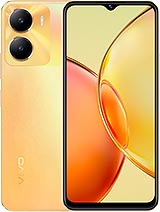
Y56 5G
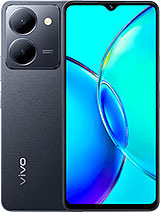
Y27 5G
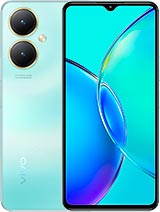
Y27 4G
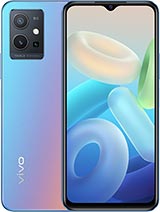
Y55s 5G
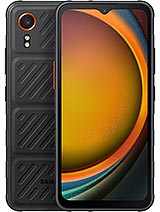
Galaxy XCover7