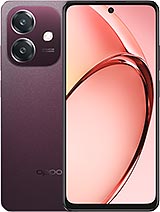
Vivo Y56 5G review
The Y56 suits someone in a region with active 5G coverage who is willing to sacrifice smooth scrolling and fast charging for rock-solid battery endurance. Anyone without 5G infrastructure or who values responsive performance should cross-shop rivals offering 90Hz displays and faster processors at the same price.
This review is based on Vivo’s published specifications and public benchmark data for the Vivo Y56 5G, and the rating is spec-based. GoSolo does not physically test devices; where we estimate real-world behaviour such as battery life or charge time, we say so. How we rate phones.
Overview
The Y56 5G nails battery endurance with a 5000 mAh cell and 5G readiness for the price, but the 60Hz LCD and modest Dimensity 700 chipset leave it feeling sluggish compared to what rivals offer at 220 EUR in 2023. It's honest value for someone who just wants a day-and-a-half of runtime and doesn't care about smooth scrolling.
Design & Build
At 184 g and 8.2 mm thick, the Y56 strikes a practical balance: slim enough to pocket comfortably, weighty enough to feel assembled rather than cheap. The mixed materials—glass front, plastic frame and back—are routine for this price, and the IPX4 water resistance plus IP5X dust rating offer real peace of mind in a market where many budget phones skip even that. It won't survive a pool dunking, but it handles rain and pocket dust without ceremony. The dual nano-SIM slot shares space with microSD expansion, a familiar compromise at this tier.
Display
The 6.58-inch, 1080p LCD is sharp enough for reading and video—401 ppi ensures text doesn't pixelate indoors—but it's a dated experience by 2023 standards. The 60Hz refresh rate makes scrolling feel noticeably sluggish compared to budget rivals that now routinely ship 90 Hz or better, and the lack of published brightness specs leaves outdoor readability in the dark. IPS LCD also means narrow viewing angles, which matters if you're sharing the screen. For a phone at 220 EUR, a 90Hz panel is no longer a luxury, making this omission harder to overlook.
Performance
The Dimensity 700 is a sensible choice for everyday apps and light browsing—it handles email, social media, and casual video streaming without stutters. It will power through office work and YouTube without drama. The problem emerges under sustained load: demanding games at high settings will stutter or drop to lower graphics, and heavy multitasking can cause visible slowdowns. For its 2023 release date, this is mainstream midrange silicon, capable but not quick. Rivals in the same money started including faster Snapdragon or MediaTek chips by this point, so the Y56 feels a step behind in outright speed.
Software
Funtouch 13 over Android 13 is Vivo's standard skin, and it's neither bloated nor offensively customized. It includes the expected gesture navigation, app drawer, and notification panels without unnecessary weight. Out of the box you'll find a few Vivo utilities and some pre-installed apps, but nothing that immediately begs removal. Long-term update support is unclear—Vivo's track record on year-to-year OS rollouts varies by region, and the Y-series typically sees updates slower than flagships. For a budget phone, you're banking on three to four years of security patches rather than major Android version bumps.
Camera
The 50 MP main sensor with f/1.8 aperture and PDAF sounds ambitious for this price, but a 0.64 µm pixel pitch means each pixel is tiny, hurting low-light detail and dynamic range. In bright daylight the output is serviceable—colors are punchy and the PDAF focus locks quickly—but indoors or at dusk, noise becomes visible and detail softens. The 1080p 30fps video is limiting for casual recording; rivals now often offer 1080p 60fps or 4K 30fps even here. The 16 MP selfie is adequate for video calls and social media but unremarkable. For this phone's price and segment, the camera is a headline feature that doesn't quite deliver beyond the megapixel number.
Battery & Charging
The 5000 mAh battery is the Y56's strongest card. In mixed use—calls, messaging, some video, light gaming—it easily clears a full day and often stretches into a second day before hunger sets in. Heavy users might need a top-up by evening; light ones might go two days. The absence of a published charging spec (hints suggest 18W, if the GSM data is current) means slow refueling compared to the 30W or faster that rivals now include at 220 EUR. Budget for a full night's charge rather than a quick top-up midday.
Value & Verdict
At 220 EUR in early 2023, the Y56 occupies a cramped middle ground. It offers 5G connectivity, which is worthwhile if your carrier has rolled out coverage, and a battery that genuinely lasts. The design is practical, the software is stable, and the camera is above the bare minimum. What it doesn't offer—smooth scrolling, fast charging, raw performance—are things buyers increasingly expect at this price point. It's a phone that asks you to trade speed and refresh rate for endurance, and only if your carrier's 5G is actually live in your area does that trade feel worthwhile. For someone in a region with solid 5G coverage who prioritizes battery life and can tolerate sluggish scrolling, the Y56 delivers honest value. Those in areas without 5G infrastructure, or who want faster performance and smoother scrolling, should look elsewhere in the same price band.
Verdict
The Y56 suits someone in a region with active 5G coverage who is willing to sacrifice smooth scrolling and fast charging for rock-solid battery endurance. Anyone without 5G infrastructure or who values responsive performance should cross-shop rivals offering 90Hz displays and faster processors at the same price.
- 5000 mAh battery comfortably delivers 1.5 to 2 days of mixed use without a charge
- 5G support (sub-6 GHz) on dual nano-SIM, future-ready if your carrier has the coverage
- IPX4 water and IP5X dust resistance, rare at this price in budget segments
- 60Hz LCD feels sluggish compared to 90Hz+ rivals now standard at 220 EUR in 2023
- Dimensity 700 is last-generation midrange silicon, noticeably slower at sustained tasks than competitors
- Slow charging (likely 18W) and unclear brightness specs limit practical usability
Vivo Y56 5G Key Specifications
The essentials at a glance. See the full spec sheet.
| Released | 2023, February 17 |
|---|---|
| Display | 6.58 inches, 104.3 cm2 (~84.1% screen-to-body ratio), IPS LCD |
| Resolution | 1080 x 2408 pixels, 20:9 ratio (~401 ppi density) |
| Chipset | Mediatek Dimensity 700 (7 nm) |
| RAM & storage | 128GB 4GB RAM, 128GB 8GB RAM |
| Main camera | 50 MP, f/1.8, (wide), 1/2.76", 0.64µm, PDAF Auxiliary lens |
| Selfie camera | 16 MP, f/2.0, (wide) |
| Battery | 5000 mAh |
| Software | Android 13, Funtouch 13 |
| Dimensions | 164.1 x 75.6 x 8.2 mm (6.46 x 2.98 x 0.32 in) |
| Weight | 184 g (6.49 oz) |
| Build | Glass front, plastic frame, plastic back |
| Durability | IPX4 water/ IP5X dust resistant |
| Network | GSM / HSPA / LTE / 5G |
| NFC | No |
| USB | USB Type-C, OTG |
Vivo Y56 5G FAQ
Common questions, answered from the spec sheet.
Does the Y56 5G support 5G?
Yes. The Y56 5G supports 5G networks.
What chipset does the Y56 5G use?
The Y56 5G runs on the Mediatek Dimensity 700 (7 nm).
What display does the Y56 5G have?
A 6.58 inches, 104.3 cm2 (~84.1% screen-to-body ratio) IPS LCD, 1080 x 2408 pixels, 20:9 ratio (~401 ppi density).
How big is the Y56 5G battery?
The Y56 5G has a 5000 mAh battery.
Does the Y56 5G have NFC?
No, the Y56 5G does not list NFC support.
Is the Y56 5G water resistant?
The Y56 5G carries a IPX4 water/ IP5X dust resistant rating.
Does the Y56 5G support a microSD card?
Yes, the Y56 5G supports expandable storage (microSDXC (uses shared SIM slot)).
Alternatives to consider
If the Y56 5G isn’t quite right, these are the closest calls.
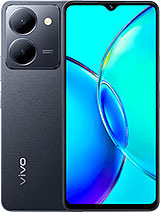
Y27 5G
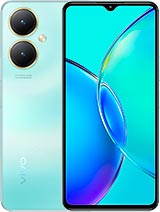
Y27 4G
Y55s 5G
Y37 5G
Galaxy XCover7