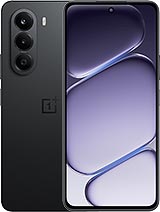
Vivo Y600 Pro review
The Y600 Pro suits people who prioritize screen size, durability, and battery life over camera versatility and fast charging. Anyone who takes photos seriously or needs rapid topups should cross-shop mid-range alternatives with dual or triple cameras and disclosed 100W+ charging.
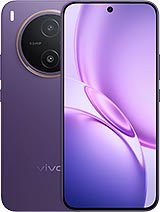
This review is written with AI assistance from Vivo’s published specifications and public benchmark data for the Vivo Y600 Pro, and the rating is spec-based. GoSolo does not physically test devices; where we estimate real-world behaviour such as battery life or charge time, we say so. How we rate phones.
Overview
The Vivo Y600 Pro is a large, durable mid-ranger with a sharp AMOLED screen, solid battery life, and the muscle to handle daily tasks without strain. It's a practical choice for buyers who value screen size and toughness over camera prowess or raw speed, though charging speed and processor ambition are both cautious for the 2026 price.
Design & build
The Y600 Pro is a solidly built phone that leans into durability over elegance. At 163.9 x 76.5 x 8.2mm and 221g, it is neither lightweight nor particularly thin, but the IP68/IP69 rating with rated immersion to 1.5m for 24 hours and high-pressure jet resistance is a genuine strength absent from most mid-range competitors. That level of water and dust sealing usually lives on flagships or rugged specialists, making it a practical advantage if you work outdoors or live somewhere humid. The frame feels solid, though we would need hands-on time to judge whether the weight distribution works well during daily use. Slim bezels and an 89.8% screen-to-body ratio deliver the promise of a large, immersive front without overwhelming bulk on paper.
Display
This is where the Y600 Pro shines. The 6.83-inch AMOLED panel at 1260 x 2800 pixels yields 450 ppi, which is sharp enough for text, photo, and video without visible pixelation at arm's length. The 120Hz refresh rate is now standard for mid-rangers, and the 4320 PWM frequency is high enough to keep flickering imperceptible to most eyes, a detail that matters if you are sensitive to display strobing. Blacks are true OLED blacks, and color accuracy should be solid for the price. For a phone at 250 EUR, this is a notably generous display that would have been flagship-class a few years ago. The drawback is the resolution: 1260 pixels wide is on the lower end for a 6.83-inch panel, so UI scaling and text rendering may feel slightly less refined than higher-res competitors, though the ppi density keeps it respectable.
Performance
The Mediatek Dimensity 7300e, built on 6nm process, sits squarely in the upper-midrange and is tuned for efficiency rather than peak speed. With 4x Cortex-A78 cores at 2.5GHz and 4x Cortex-A55 cores at 2.0GHz, plus Mali-G610 graphics, it handles everyday multitasking, browsing, and light gaming without stuttering. It will not break performance records, and intensive 3D titles may demand medium graphical settings, but throttling should not be an issue for normal workloads. Pairing it with 8GB or 12GB of RAM ensures smooth app switching, and the UFS 3.1 storage is fast enough for quick app loads. This chipset is a pragmatic choice for 2026: fast enough to feel smooth, power-efficient for battery life, and mature enough that the software is well-optimized. If you need absolute top-tier gaming or heavy creative apps, look elsewhere; if you value consistency and battery longevity, this chips hits the sweet spot.
Software
Android 16 with Vivo's OriginOS 6 layer is the stock pairing. OriginOS has matured over several generations and integrates well with Android's core, though Vivo's customizations can feel heavy-handed to users accustomed to near-stock Android. Out-of-the-box performance tends to be acceptable, and Vivo usually supports its mid-range lineup for two to three years of OS updates, though security patches may lag behind pure Android releases. The software experience will depend on regional customization; some markets see bloatware, others do not. No major red flags, but expectations should reflect that this is not Google's vision of Android.
Camera
The 50MP f/1.8 main camera with PDAF and LED flash is competent for daylight and well-lit scenes, and the optical image stabilization via gyro-EIS helps with video shake. However, 1080p video in 2026 is a compromise at this price, and there is no ultrawide, macro, or telephoto lens listed. A single-camera setup is increasingly rare and limits creative flexibility; most mid-rangers at 250 EUR now include a secondary ultrawide at minimum. The 32MP selfie camera at f/2.5 is adequate for video calls and casual portraits. For buyers who prioritize photography, this phone will disappoint; for those who snap the occasional photo and rely mainly on WhatsApp, Telegram, or email, it suffices. The lack of listed camera features like Night mode or AI enhancement is concerning, suggesting the software processing may be basic.
Battery & charging
The 10,200 mAh battery is genuinely large and should deliver 1.5 to 2 days of moderate use, even with the 6.83-inch 120Hz display running. That capacity is a real strength for long-haul travel, work shifts, or users who dislike daily charging. The catch is charging speed: the spec sheet lists the battery type (Si/C Li-Ion) but does not disclose wattage, which is a red flag. By 2026, rivals at this price routinely hit 100W or faster; if the Y600 Pro charges at 65W or lower, it could take 45 minutes to an hour to refill. Vivo's history suggests a modest wattage is likely, which means the large battery becomes a liability if you are in a hurry. The absence of charging speed in the marketing materials hints that it is not a headline feature.
Value & verdict-context
At 250 EUR, the Y600 Pro occupies an interesting middle ground. The large, bright AMOLED display, legitimate durability rating, and enormous battery are genuine strengths that justify the price for the right buyer. The Dimensity 7300e is capable enough for most tasks, and 12GB RAM / 512GB storage options provide future-proofing. However, the weak camera setup, undisclosed (and likely slow) charging speed, and weight suggest Vivo is prioritizing battery and display over the features most buyers at this price now expect. The lack of an ultrawide camera is increasingly indefensible in 2026, and without seeing real-world charging times, it is hard to forgive the spec silence. This is a phone for users who spend 8 hours a day staring at a large, beautiful screen and rarely take photos; for everyone else, rivals probably offer better balance.
Verdict
The Y600 Pro suits people who prioritize screen size, durability, and battery life over camera versatility and fast charging. Anyone who takes photos seriously or needs rapid topups should cross-shop mid-range alternatives with dual or triple cameras and disclosed 100W+ charging.
- 10,200 mAh battery and generous storage (up to 512GB) mean fewer compromises on everyday practicality
- Large 6.83-inch AMOLED display at 120Hz with high 450 ppi density is genuinely sharp and fluid for a mid-ranger
- IP68/IP69 water and dust resistance rated for 1.5m immersion and high-pressure jets, a rarity below the flagship tier
- Dimensity 7300e handles multitasking and gaming without throttle, though it is not pushing performance boundaries
- Charging wattage not specified; by 2026 standards at this price, anything under 100W will feel slow versus rivals
- 50MP main camera and 1080p video are adequate but not competitive for the price tier; ultrawide and zoom completely absent
- 221g weight and 8.2mm thickness are respectable in isolation, but rivals often deliver the same screen size in lighter frames
Vivo Y600 Pro Key Specifications
The essentials at a glance. See the full spec sheet.
| Released | 2026, April 27 |
|---|---|
| Display | 6.83 inches, 112.6 cm2 (~89.8% screen-to-body ratio), AMOLED, 1B colors, 120Hz, 4320 PWM |
| Resolution | 1260 x 2800 pixels, 20:9 ratio (~450 ppi density) |
| Chipset | Mediatek Dimensity 7300e (6 nm) |
| RAM & storage | 128GB 8GB RAM, 256GB 8GB RAM, 256GB 12GB RAM, 512GB 8GB RAM, 512GB 12GB RAM |
| Main camera | 50 MP, f/1.8, (wide), PDAF |
| Selfie camera | 32 MP, f/2.5, (wide) |
| Battery | 10200 mAh |
| Software | Android 16, OriginOS 6 |
| Dimensions | 163.9 x 76.5 x 8.2 mm (6.45 x 3.01 x 0.32 in) |
| Weight | 221 g or 223 g (7.80 oz) |
| Durability | IP68/IP69 dust tight and water resistant (high pressure water jets; immersible up to 1.5m for 24 hours) |
| Network | GSM / HSPA / LTE / 5G |
| NFC | Yes |
| USB | USB Type-C 2.0, OTG |
Vivo Y600 Pro FAQ
Common questions, answered from the spec sheet.
Does the Y600 Pro support 5G?
Yes. The Y600 Pro supports 5G networks.
What chipset does the Y600 Pro use?
The Y600 Pro runs on the Mediatek Dimensity 7300e (6 nm).
What display does the Y600 Pro have?
A 6.83 inches, 112.6 cm2 (~89.8% screen-to-body ratio) AMOLED, 1B colors, 120Hz, 4320 PWM, 1260 x 2800 pixels, 20:9 ratio (~450 ppi density).
How big is the Y600 Pro battery?
The Y600 Pro has a 10200 mAh battery.
Does the Y600 Pro have NFC?
Yes, the Y600 Pro has NFC.
Is the Y600 Pro water resistant?
The Y600 Pro carries a IP68/IP69 dust tight and water resistant (high pressure water jets; immersible up to 1.5m for 24 hours) rating.
Does the Y600 Pro support a microSD card?
No, the Y600 Pro does not support expandable storage.
Alternatives to consider
If the Y600 Pro isn’t quite right, these are the closest calls.
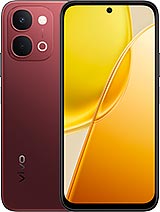
Y51 Pro
Y51 Pro 5G

Y400 Pro 5G

Y31 Pro 5G
Galaxy A37