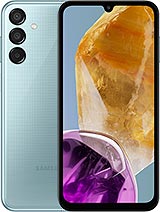
Vivo Y78t review
The Y78t suits someone who values battery life, low-light photography, and everyday fluidity over gaming or creative work. If you need sustained performance, an ultrawide camera, or wireless charging, you will find better value stepping up to a flagship from last year or sideways to a competitor with a faster chip.
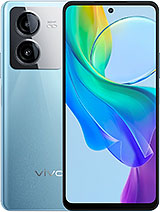
This review is based on Vivo’s published specifications and public benchmark data for the Vivo Y78t, and the rating is spec-based. GoSolo does not physically test devices; where we estimate real-world behaviour such as battery life or charge time, we say so. How we rate phones.
Overview
The Y78t pairs a battery that lasts and a low-light camera that punches above its weight with the Snapdragon 6 Gen 1—a chip that runs daily work smoothly but throttles under sustained gaming. It is a no-fuss choice for someone who lives on messaging, video, and streaming, not a do-everything bargain.
Design and build
At 200 grams and 9.1mm thick, the Y78t is neither light nor pocketable by today's standards—it sits squarely in the mainstream. Glass front, plastic frame, and plastic back are the formula for this budget tier, and it shows: nothing feels premium, though there is no obvious creak or flex. The side-mounted fingerprint sensor is fast and reliable, and the layout is familiar. This is function over character, which is fine at the price, but do not expect the tactile satisfaction of a metal frame or a finished back.
Display
The 6.64-inch, 120Hz IPS LCD is the Y78t's daily strength. Scrolling through social feeds, news, and web pages is noticeably smoother than a 60Hz screen, and 395 ppi keeps text and images sharp without noticeable pixelation. Colors are neutral rather than punchy, brightness is adequate indoors and in shade, but the screen washes out badly in direct sunlight—a common weakness of IPS panels. For streaming video and reading, this display does the job. Gaming, though, will expose the fact that 1080p is not the standard for ambitious titles on a 6.6-inch screen anymore.
Performance
The Snapdragon 6 Gen 1 is the workhorse of this segment. It handles messaging, email, social media, light web browsing, and video playback without hiccups. Apps open briskly, and multitasking is smooth. Where it stumbles is sustained 3D gaming and demanding video encoding: after 15 to 20 minutes, thermal throttling kicks in, frame rates drop, and responsiveness falters. This is not a chip for someone who plays intensive games daily; it is built for people who play casually or not at all. For productivity and content consumption, it is entirely adequate. The 8GB or 12GB RAM options keep things snappy, though the base 128GB storage will fill quickly with apps and photos.
Software
Android 13 with Vivo's OriginOS 3 overlay runs lightly enough that it does not bog down the Snapdragon 6. OriginOS is cleaner than some rival skins and adds useful features like app cloning and smart folders, though it does come with pre-installed bloat that takes a few minutes to disable. Updates will likely be two years of OS upgrades and three years of security patches—the standard for this class. Nothing here feels cutting-edge, but software is not a liability.
Camera
The 50MP f/1.8 main camera with PDAF is the standout. The wide aperture and phase-detection autofocus combine to produce low-light stills that are noticeably cleaner and sharper than what you would expect at this price. Daylight shots are competent, though the lack of an ultrawide and telephoto means you are limited to the main lens for framing. Video maxes out at 4K 30fps, which is steady but lacks the fluidity of 60fps rivals; 1080p 60fps would have been a smarter choice. The 8MP selfie is basic—expect soft focus and dim performance in indoor lighting. For someone who mostly shoots in everyday light and does not need multiple focal lengths, this setup delivers. For anyone who demands ultrawide or night mode, look elsewhere.
Battery and charging
The 6000 mAh battery is the phone's most sensible spec. Light use—messaging, social media, browsing—yields about 1.5 days. Moderate use, including some video streaming and photography, comfortably hits a full day. Heavy video streaming or gaming cuts that to 8 to 10 hours, but that is true of most phones at this capacity. Charging at 44W gets you from empty to full in roughly 40 to 50 minutes, which is respectable but not class-leading; rivals now routinely hit 65W or higher. There is no wireless charging, which is acceptable at the price but a minor step down in convenience.
Value and verdict
At around 200 EUR, the Y78t occupies a sensible middle ground. It is not the cheapest option, nor does it aspire to flagship features. What it does is bundle a battery that actually lasts, a camera that handles low light, and a display that makes everyday scrolling pleasant. The Snapdragon 6 is honest about its limits: it will not run demanding games or handle heavy workloads, but it will not frustrate you during normal use either. This is a phone that knows what it is and delivers on that promise without pretense.
Verdict
The Y78t suits someone who values battery life, low-light photography, and everyday fluidity over gaming or creative work. If you need sustained performance, an ultrawide camera, or wireless charging, you will find better value stepping up to a flagship from last year or sideways to a competitor with a faster chip.
- 6000 mAh battery delivers a full day of moderate use and handles all-day video streaming without breaking a sweat
- 50MP f/1.8 main camera with PDAF produces noticeably cleaner low-light stills than budget rivals
- 120Hz IPS LCD makes scrolling and web browsing fluid, and the 1080p resolution is sharp enough at 395 ppi
- Side-mounted fingerprint sensor and 44W charging get you unlocked and topped up quickly
- Snapdragon 6 Gen 1 throttles visibly after 15–20 minutes of sustained 3D gaming or video encoding
- Only 8MP selfie camera and no ultrawide; framing and low-light portraits lag behind rivals at the price
- Plastic build and no wireless charging mean it feels less refined than pricier options
Vivo Y78t Key Specifications
The essentials at a glance. See the full spec sheet.
| Released | 2023, October 20 |
|---|---|
| Display | 6.64 inches, 106.8 cm2 (~85.6% screen-to-body ratio), IPS LCD, 120Hz |
| Resolution | 1080 x 2388 pixels (~395 ppi density) |
| Chipset | Qualcomm SM6450 Snapdragon 6 Gen 1 (4 nm) |
| RAM & storage | 128GB 8GB RAM, 256GB 8GB RAM, 256GB 12GB RAM |
| Main camera | 50 MP, f/1.8, (wide), PDAF Auxiliary lens |
| Selfie camera | 8 MP, f/2.0, (wide) |
| Battery | 6000 mAh |
| Charging | 44W wired |
| Software | Android 13, OriginOS 3 |
| Dimensions | 164.6 x 75.8 x 9.1 mm (6.48 x 2.98 x 0.36 in) |
| Weight | 199.6 g (7.05 oz) |
| Build | Glass front, plastic frame, plastic back |
| Network | GSM / CDMA / HSPA / CDMA2000 / LTE / 5G |
| NFC | No |
| USB | USB Type-C 2.0, OTG |
Vivo Y78t FAQ
Common questions, answered from the spec sheet.
Does the Y78t support 5G?
Yes. The Y78t supports 5G networks.
What chipset does the Y78t use?
The Y78t runs on the Qualcomm SM6450 Snapdragon 6 Gen 1 (4 nm).
What display does the Y78t have?
A 6.64 inches, 106.8 cm2 (~85.6% screen-to-body ratio) IPS LCD, 120Hz, 1080 x 2388 pixels (~395 ppi density).
How big is the Y78t battery?
The Y78t has a 6000 mAh battery. Charging is rated at 44W wired.
Does the Y78t have NFC?
No, the Y78t does not list NFC support.
Does the Y78t support a microSD card?
No, the Y78t does not support expandable storage.
Does the Y78t have a headphone jack?
Yes, the Y78t has a 3.5mm headphone jack.
Alternatives to consider
If the Y78t isn’t quite right, these are the closest calls.

Y77t
Y200t
iQOO Z7

iQOO Z8x
X60 Pro