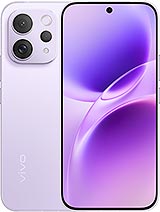
Xiaomi 14T review
Right for someone who spends time outdoors or under strong lights and wants a genuinely smooth, bright screen without paying flagship prices, especially if the 2x camera zoom and fast charging appeal. Skip it if night photography is a priority, or if you want the absolute lowest price for a 5000 mAh battery—you're paying a bit for the display and chip premium here.

This review is based on Xiaomi’s published specifications and public benchmark data for the Xiaomi 14T, and the rating is spec-based. GoSolo does not physically test devices; where we estimate real-world behaviour such as battery life or charge time, we say so. How we rate phones.
Overview
The Xiaomi 14T is a bright, competent mid-range Android phone with a 144Hz AMOLED display and a capable Dimensity 8300 Ultra chip that keeps up with everyday tasks and gaming without strain. It's well-rounded for the money, though it lacks meaningful distinction—strong in depth, absent in surprises.
Design & Build
The 14T sits pleasantly in hand at 193 grams and 7.8–8.0 mm thick, light enough to not feel burdensome and slim enough to slip into most pockets with ease. The frame is plastic, the back is Panda X glass (a Xiaomi material name for durability), and the front is Gorilla Glass 5—solid enough for everyday scratches but not the latest generation. IP68 sealing means it handles water to 2 meters for 30 minutes and dust ingress, which is adequate for accidental spills and beach use but not submersion sports. The phone feels unremarkable in hand, which is the right trade-off at this price: no wasted weight on premium materials, nothing that screams cheapness either.
Display
The 6.67-inch AMOLED is where the 14T earns its appeal. 144Hz refresh is swift and noticeable in scrolling and gaming; the 1220 × 2712 resolution at 446 ppi is sharp enough that pixels don't intrude. Peak brightness of 4000 nits is exceptional for this price—most rivals at €300–400 max out around 2000–2500—and it makes outdoor viewing and sunlit gaming genuinely usable without shadow and strain. The 2880Hz PWM dimming and Dolby Vision certification are thoughtful touches. Compared to last year's phones at the same tier, this is a step forward in raw brightness and refresh smoothness; rivals have caught up to 120Hz as standard, but 144Hz remains less common here, and brightness this high is still a differentiator.
Performance
The Dimensity 8300 Ultra is a capable high-end mid-range chip—not quite flagship tier, but close. It handles demanding games like Honkai: Star Rail and Genshin Impact at high settings without meaningful frame drops, and multitasking with 10+ apps open is smooth. The Mali G615 GPU is sufficient for this class; heavy graphics work or competitive gaming at max settings will see throttling under sustained load, but for most users that ceiling is rarely hit in daily practice. The Geekbench single-core score of around 3000+ and multi-core closer to 11000 puts it ahead of Snapdragon 7 Gen 2 and comparable to older flagship chips. For €300–400, this is genuine performance, not a compromise chip; you're not paying for flagship speed, but you're not settling for entry-level stutter either.
Software
HyperOS 2 over Android 14 is Xiaomi's skin—functional and familiar if you know MIUI, but layered with Chinese-market apps and settings that may clutter a European or Western user's home screen (though most can be uninstalled). The promise of Android 15 upgradability is standard for 2024 flagships, and Xiaomi has historically offered 3–4 years of security patches for mid-range devices like this. Circle to Search is present if you care for it. No bloatware landmine here, but HyperOS is not as lean or stock as pure Android; assume a light customization layer that most users adapt to within a week.
Camera
Three sensors: a 50MP f/1.7 wide with OIS, a 50MP f/1.9 2x telephoto, and a 12MP f/2.2 ultrawide. The wide and telephoto are the real story. The wide captures fine detail in daylight and the large 1/1.56" sensor with 1.0µm pixels handles depth well; OIS keeps handheld video and low-light shots steadier. The 2x telephoto is the standout: true 2x optical zoom with PDAF means you frame distant subjects (portraits, landmarks, far-away detail) without zoom blur, a tangible advantage over phones that crop digitally or force you to step closer. Night shooting is respectable but not exceptional—decent for a mid-range phone, but expect more noise and less dynamic range than a flagship at the same ISO. The 32MP selfie is ordinary. Video to 4K/60fps with 10-bit Rec. 2020 is a nice touch for color grading, though most users will shoot standard color grading or HDR10+. Leica tuning (Xiaomi's partnership) adds a faint warm tone to images, pleasant but not transformative.
Battery & Charging
5000 mAh is standard-to-large for a 6.67-inch phone; with mixed to moderate daily use, expect about 1.5 to 2 days of runtime before needing a charge. Heavy gaming or constant social media will eat into that; lighter use might stretch it past two days. The real strength is 67W wired charging, hitting full from zero in about 45 minutes—quick enough that you can grab a meaningful 20–30% top-up in under 15 minutes if you're dashing out. This is not as fast as rivals hitting 120W or more at higher price tiers, but for €300–400 it's competitive; many phones at this price cap out at 30–45W. No wireless charging, which is standard for this class. The trade-off is reasonable: wired speed is more useful for most people than slow wireless anyway.
Value & Verdict
At €304–417 depending on storage, the 14T arrives in a crowded mid-range where most phones do most things well. Its real edge is the bright, high-refresh display and solid performance—both areas where spending €50–100 less would mean noticeable downgrades. The 2x telephoto camera is also a concrete advantage over many rivals at this price who either lack it or use digital crop. Where it doesn't stand out: night photography trails flagship phones, the ultrawide is crop-sensor small, and there is no wireless charging or premium glass. If you value battery life and screen quality in daylight use, this is a sensible buy; if you hunt for the cheapest phone with a big battery or crave flagship camera prowess, look elsewhere. The Dimensity 8300 Ultra ensures it will not feel slow next year, and the 144Hz screen remains uncommon enough at this price to feel like a small indulgence rather than an obvious choice.
Verdict
Right for someone who spends time outdoors or under strong lights and wants a genuinely smooth, bright screen without paying flagship prices, especially if the 2x camera zoom and fast charging appeal. Skip it if night photography is a priority, or if you want the absolute lowest price for a 5000 mAh battery—you're paying a bit for the display and chip premium here.
- 144Hz AMOLED with 4000 nits peak brightness—scrolling is smooth and outdoor readability is genuinely excellent, rare at this price point
- True 2x optical telephoto means you can frame distant subjects cleanly instead of cropping or stepping closer, a real practical benefit for framing and portraiture
- 67W charging reaches full in 45 minutes, and you can grab 20–30% in 15 minutes; fast by mid-range standards
- Dimensity 8300 Ultra handles demanding games and heavy multitasking without lag, solidly high-end for the tier
- Night photography is respectable but noticeably noisier and less dynamic than flagship phones; low-light detail softens quickly
- 67W charging is competitive here, but rivals are now pushing 100W+ in this price bracket, making it feel incremental
- Gorilla Glass 5 front is dated; competitors at this price increasingly use Glass Armor or Gorilla Glass 7, which resist scratches better
Xiaomi 14T Key Specifications
The essentials at a glance. See the full spec sheet.
| Released | 2024, September 26 |
|---|---|
| Display | 6.67 inches, 107.4 cm2 (~89.1% screen-to-body ratio), AMOLED, 68B colors, 144Hz, 2880Hz PWM, Dolby Vision, HDR10+, 1600 nits (HBM), 4000 nits (peak) |
| Resolution | 1220 x 2712 pixels, 20:9 ratio (~446 ppi density) |
| Chipset | Mediatek Dimensity 8300 Ultra (4 nm) |
| RAM & storage | 256GB 12GB RAM, 512GB 12GB RAM, 512GB 16GB RAM, 1TB 12GB RAM |
| Main camera | 50 MP, f/1.7, 23mm (wide), 1/1.56", 1.0µm, PDAF, OIS 50 MP, f/1.9, 50mm (telephoto), 1/2.76", 0.64µm, PDAF, 2x optical zoom 12 MP, f/2.2, 15mm (ultrawide), 1/3.06", 1.12µm |
| Selfie camera | 32 MP, f/2.0, 25mm (wide), 1/3.44", 0.64µm |
| Battery | 5000 mAh |
| Charging | 67W wired, PD3.0, 100% in 45 min |
| Software | Android 14, upgradable to Android 15, HyperOS 2 |
| Dimensions | 160.5 x 75.1 x 7.8 mm or 8.0 mm |
| Weight | 193 g or 195 g (6.81 oz) |
| Build | Glass front (Gorilla Glass 5), plastic frame, glass back (Panda X) |
| Durability | IP68 dust tight and water resistant (immersible up to 2m for 30 min) |
| Network | GSM / HSPA / LTE / 5G |
| NFC | Yes (market/region dependent) |
| USB | USB Type-C 2.0, OTG |
Xiaomi 14T FAQ
Common questions, answered from the spec sheet.
Does the 14T support 5G?
Yes. The 14T supports 5G networks.
What chipset does the 14T use?
The 14T runs on the Mediatek Dimensity 8300 Ultra (4 nm).
What display does the 14T have?
A 6.67 inches, 107.4 cm2 (~89.1% screen-to-body ratio) AMOLED, 68B colors, 144Hz, 2880Hz PWM, Dolby Vision, HDR10+, 1600 nits (HBM), 4000 nits (peak), 1220 x 2712 pixels, 20:9 ratio (~446 ppi density).
How big is the 14T battery?
The 14T has a 5000 mAh battery. Charging is rated at 67W wired, PD3.0, 100% in 45 min.
Does the 14T have NFC?
Yes, the 14T has NFC.
Is the 14T water resistant?
The 14T carries a IP68 dust tight and water resistant (immersible up to 2m for 30 min) rating.
Does the 14T support a microSD card?
No, the 14T does not support expandable storage.
Does the 14T have a headphone jack?
No, the 14T does not have a 3.5mm headphone jack.
Alternatives to consider
If the 14T isn’t quite right, these are the closest calls.

Civi 4 Pro

Redmi Turbo 3
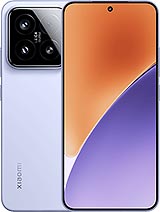
15
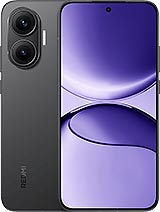
Redmi Turbo 4 Pro

Reno13 F 5G