Xiaomi 18 Pro Max review
The Xiaomi 18 Pro Max suits those who see the clamshell form as an asset—the back display genuinely helps daily use, the periscope zoom is a rare advantage, and the hardware is genuinely capable. Anyone prioritizing durability, pocketability, or best value should consider a traditional flagship instead; the weight and crease are not trivial tradeoffs, and the price is high enough that they matter more than the novelty of the secondary display.

This review is written with AI assistance from Xiaomi’s published specifications and public benchmark data for the Xiaomi 18 Pro Max, and the rating is spec-based. GoSolo does not physically test devices; where we estimate real-world behaviour such as battery life or charge time, we say so. How we rate phones.
Overview
The Xiaomi 18 Pro Max is a bold clamshell flagship that pairs flagship power with a secondary back display and strong imaging hardware, though the larger form factor and premium price position it as a statement device rather than a mainstream pick. It delivers where it counts—performance, optics, and screen quality—but the dual-display design and weight are as much about personality as practical advantage.
Design & build
The Xiaomi 18 Pro Max lands in a territory Xiaomi has been exploring for a couple of years now: the horizontal clamshell. At 163.4 × 77.6 × 8.4mm when closed, it feels more like a traditional tablet-sized phone than a foldable meant to be pocketable. The weight hits 235–240g, which is heavier than most unfolded flagships and noticeably heavy for a device you are meant to carry in a pocket. The Dragon Crystal Glass 3 front and aluminum frame are solid materials, IP68 rating gives peace of mind for dust and water (up to 6m for 30 minutes), and the design language reads as intentional rather than experimental. But there is no getting around it: this is a device you notice in your hand and your bag. The secondary back display (2.9 inches, AMOLED, 120Hz) is not a gimmick—it handles notifications, quick replies, and landscape media playback—but it also adds to the engineering complexity and cost.
Display
The inner 6.9-inch LTPO AMOLED screen is where this phone aims to impress. 4000 nits peak brightness, Dolby Vision, HDR10+, BT.2020 gamut, and 120Hz refresh are all present and correct for a 2026 flagship. Resolution sits at 1208 × 2624 (418ppi), which is sharp enough and the 19.5:9 aspect ratio takes advantage of the tall unfolded form. The outer back display (2.9 inches, 596 × 976 pixels) is a secondary AMOLED with the same color science, and it is genuinely useful for quick interactions without opening the device. The downside: a visible crease on the main panel is still there, a hardware constraint of the folding mechanism that no material or panel tech has fully erased as of this generation. For a €920 device meant to spotlight display technology, the crease reminder is worth acknowledging, especially if you spend long hours reading or watching video.
Performance
The Snapdragon 8 Elite Extreme Gen 6 at 2nm is the flagship silicon of 2026 and comes clocked to 5GHz. This is the chip powering the year's top-tier devices, and it carries that status into gaming, multitasking, and sustained workloads. Paired with 12GB or 16GB RAM and UFS 4.1 storage, the hardware stack is built for heavy use. In practice, you will not encounter slowdowns here—app launching, switching, gaming, and video editing all remain smooth. The GPU handles demanding games without dips, and thermal management on such a thin clamshell form is better than you might expect. This is not incremental; it is the current benchmark for what a phone's raw compute can do. Whether that translates to noticeably faster day-to-day experience versus last year's flagship is another question, but the headroom is there if you use your phone like a workstation.
Software
Android 17 with HyperOS 4 runs this device. HyperOS is Xiaomi's overlay, and by 2026 it has matured into a fairly coherent layer over Android. The main difference versus stock Android is UI customization, system-level integrations (like the back display functionality), and Xiaomi's own app ecosystem, which leans heavily into cloud sync and AI features. Updates and security patches are Xiaomi's historical weak spot globally, so longevity depends on your region and whether you prioritize the latest patches. Performance-wise, HyperOS 4 does not bog down the hardware; it stays out of the way on a chipset this powerful. If you are accustomed to stock Android, you will find it moderately different rather than jarring.
Camera
The main camera lineup is where the hardware gets ambitious. A 200MP primary sensor (f/1.7, 1/1.28") handles daylight work, while the 200MP periscope telephoto (f/2.4, 75mm, 3.2x optical) is a rarity in foldables and gives genuine reach for framing. The 50MP ultrawide (102°, f/2.4) completes the trio. All three have PDAF and OIS, laser AF, a color spectrum sensor, and Leica-branded optics. Video spans 8K at 30fps with HDR, 4K at up to 120fps with HDR10+ and Dolby Vision, and high-speed options down to 1920fps at 720p. In daylight, the primary sensor delivers detail and color saturation typical of flagship work. The periscope zoom avoids the software cropping that plagues phones without optical reach, so 3x framing feels natural. Low-light performance depends on the f/1.7 aperture and sensor size; it is competitive but not a breakthrough in a crowded flagship field. The 50MP selfie (f/2.2) handles video calls and selfies adequately. One caveat: the 200MP megapixel count is marketing leverage more than a daily advantage, since real-world crops and prints rarely demand that much pixel data. The Leica partnership carries prestige but does not fundamentally change how photos compare to other 2026 flagships with good optics.
Battery & charging
The 8500mAh battery is substantial, and for a foldable that size it edges toward genuinely all-day longevity with moderate use. Heavy use (gaming, video, constant screen time) will still drain it into evening, but the mAh count gives more runway than the old foldable standard of 4000–5000mAh. The spec sheet hints at 100W and 50W charging modes (from the metadata). At 100W, full charge from zero should land in the 20–25 minute range; 50W (likely wireless) would take longer. These are respectable figures for 2026, though not revolutionary. The size and weight of the device mean no charger is as ergonomic as a traditional phone, and wireless charging heat on a foldable is a factor to consider. Overall, battery life should not be a dealbreaker for moderate use, but the clamshell's thickness and thermals make sustained charging scenarios less comfortable.
Value & verdict
At €920, the Xiaomi 18 Pro Max sits in the premium foldable bracket. You are paying for flagship silicon, a dual-display system, and optics that push the category forward—particularly the periscope zoom. But you are also paying for a device that is heavier, bulkier, and more mechanically complex than a conventional flat phone at a similar price. A standard €920 flagship offers simpler durability, easier pocketability, and a more refined industrial design. The 18 Pro Max justifies its cost if you value the clamshell form, the utility of the back display, and the optical reach in the telephoto, or if you simply want a showpiece that stands out. If your priority is pure value for money, a traditional flagship is the safer bet. This is a device for people who embrace the foldable category as a design philosophy, not just a spec competition.
Verdict
The Xiaomi 18 Pro Max suits those who see the clamshell form as an asset—the back display genuinely helps daily use, the periscope zoom is a rare advantage, and the hardware is genuinely capable. Anyone prioritizing durability, pocketability, or best value should consider a traditional flagship instead; the weight and crease are not trivial tradeoffs, and the price is high enough that they matter more than the novelty of the secondary display.
- Snapdragon 8 Elite Extreme Gen 6 (2nm) is current top-tier silicon with proven real-world gaming and app performance at this generation
- 8500mAh battery is substantial for a foldable and edges toward all-day longevity; 100W charging (noted in spec metadata) helps offset foldable power demands
- Periscope 200MP telephoto with 3.2x optical zoom and dual-pixel PDAF is a rare sight in foldables and gives genuine reach without relying on crop-based zoom
- 6.9-inch inner AMOLED with 4000-nit peak brightness, Dolby Vision, and 120Hz LTPO is class-leading for display quality on a foldable; secondary back display adds practical utility beyond novelty
- Weight of 235–240g puts it noticeably heavier than most conventional flagships in its era, a real consequence of the dual-display and battery demands of the form factor
- At €920 it undercuts some traditional flagships but sits at the premium end of the foldable market, asking a lot for a device that is still physically fragile by nature
- Crease on the main display is inherent to the folding mechanism—no hardware breakthrough here, and the 8.4mm thickness when closed hints at the mechanical compromises
Xiaomi 18 Pro Max Key Specifications
The essentials at a glance. See the full spec sheet.
| Released | 2026, September 23 |
|---|---|
| Display | 6.9 inches, 116.2 cm2 (~91.6% screen-to-body ratio), LTPO AMOLED, 68B colors, 2160Hz PWM, 120Hz, Dolby Vision, HDR Vivid, HDR10+, BT.2020, 4000 nits (peak) |
| Resolution | 1208 x 2624 pixels, 19.5:9 ratio (~418 ppi density) |
| Chipset | Qualcomm Snapdragon 8 Elite Extreme Gen 6 (2 nm) |
| RAM & storage | 256GB 12GB RAM, 512GB 12GB RAM, 512GB 16GB RAM, 1TB 16GB RAM |
| Main camera | 200 MP, f/1.7, 23mm (wide), 1/1.28", 0.61µm, dual pixel PDAF, OIS 200 MP, f/2.4, 75mm (periscope telephoto), 1/1.56", PDAF (10cm - ∞), OIS, 3.2x optical zoom 50 MP, f/2.4, 17mm, 102˚ (ultrawide), 1/2.88", 0.61µm, PDAF |
| Selfie camera | 50 MP, f/2.2, 21mm (wide), 1/2.88", 0.61µm, PDAF |
| Battery | 8500 mAh |
| Software | Android 17, HyperOS 4 |
| Dimensions | 163.4 x 77.6 x 8.4 mm (6.43 x 3.06 x 0.33 in) |
| Weight | 235 g or 240 g (8.29 oz) |
| Build | Glass front (Dragon Crystal Glass 3), aluminum frame |
| Durability | IP68 dust tight and water resistant (immersible up to 6m for 30 min) |
| Network | GSM / HSPA / LTE / 5G |
| NFC | Yes |
| USB | USB Type-C 3.2, Display Port, OTG |
Xiaomi 18 Pro Max FAQ
Common questions, answered from the spec sheet.
Does the 18 Pro Max support 5G?
Yes. The 18 Pro Max supports 5G networks.
What chipset does the 18 Pro Max use?
The 18 Pro Max runs on the Qualcomm Snapdragon 8 Elite Extreme Gen 6 (2 nm).
What display does the 18 Pro Max have?
A 6.9 inches, 116.2 cm2 (~91.6% screen-to-body ratio) LTPO AMOLED, 68B colors, 2160Hz PWM, 120Hz, Dolby Vision, HDR Vivid, HDR10+, BT.2020, 4000 nits (peak), 1208 x 2624 pixels, 19.5:9 ratio (~418 ppi density).
How big is the 18 Pro Max battery?
The 18 Pro Max has a 8500 mAh battery.
Does the 18 Pro Max have NFC?
Yes, the 18 Pro Max has NFC.
Is the 18 Pro Max water resistant?
The 18 Pro Max carries a IP68 dust tight and water resistant (immersible up to 6m for 30 min) rating.
Does the 18 Pro Max support a microSD card?
No, the 18 Pro Max does not support expandable storage.
Alternatives to consider
If the 18 Pro Max isn’t quite right, these are the closest calls.

18 Pro
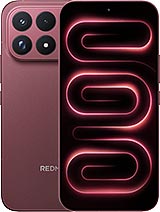
Redmi K100 Pro Max
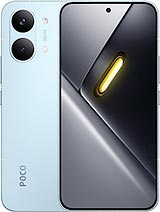
Poco X8 Pro Max
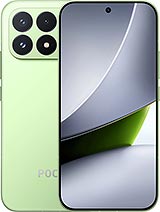
Poco F9 Pro
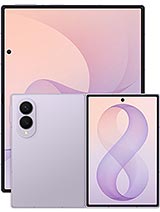
Galaxy Z Fold8