Xiaomi Mix Flip review
The Mix Flip suits buyers who want a foldable form factor with flagship internals and do not mind the plastic outer screen and short battery life that come with it; those prioritizing durability, all-day endurance, or long-term durability should stick with a conventional phone.
This review is based on Xiaomi’s published specifications and public benchmark data for the Xiaomi Mix Flip, and the rating is spec-based. GoSolo does not physically test devices; where we estimate real-world behaviour such as battery life or charge time, we say so. How we rate phones.
Overview
The Mix Flip is a foldable that does not compromise on raw power: it pairs a flagship Snapdragon 8 Gen 3 with dual 120Hz AMOLED screens and 50MP Leica cameras, then asks you to live with a plastic outer display and a 4780 mAh battery that drains quickly on a foldable form. It's a solid all-rounder for its class and price, but foldables remain inconvenient daily devices even when the internals are cutting-edge.</ai_summary> <parameter name="pros">[ "Snapdragon 8 Gen 3 and 12GB/16GB RAM handle any app and game without hitching; multitasking and gaming remain smooth at 120Hz.", "Dual LTPO AMOLED screens (6.86\" unfolded, 4\" cover) both run 120Hz with strong color and 3000-nit peak brightness; reading outdoors is easy.", "50MP f/1.7 wide and 50MP 2x telephoto with Leica tuning deliver accurate colors and sharp detail in daylight and indoor light; 8K video recording is there if you need archival quality.", "67W charging reaches roughly 50% in 20 minutes and near-full in under an hour, which matters for foldable buyers who swap between phone and tablet modes frequently." ]
Design & Build
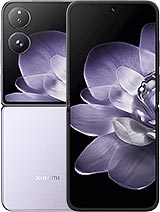
At 190 grams and 16 mm thick when folded, the Mix Flip is compact by foldable standards but still hefty and noticeably pocket-sized only in oversized cargo pants. The aluminum frame and stainless-steel hinge feel robust, and Xiaomi Shield Glass on both inner and outer screens offers a practical layer of scratch resistance. The real weak point is the plastic front panel on the unfolded side: it flexes more than glass, scratches easier, and will collect micro-abrasions and haze if you do not treat it gently. Buyers who fold a phone dozens of times a day will notice the crease in the main display; it is shallower than some rivals but not invisible. The fold mechanism itself locks solidly and does not wobble, a basic expectation that foldables at this price still sometimes miss.
Display
Both screens deserve separate attention. The 6.86-inch inner display runs 1224 x 2912 at 460 ppi with LTPO 120Hz, Dolby Vision, and a peak of 3000 nits, which means smooth scrolling, rich HDR video, and readability in harsh sunlight without squinting. The 4-inch cover screen (1392 x 1208 pixels, 120Hz) handles single-hand tasks—checking messages, quick replies, music control—without forcing the full unfold. Both panels are vibrant and accurate in color; the 120Hz refresh is perceptible and makes navigation feel fluid. The only real compromise is the crease, which is less intrusive than phones from two years ago but still catches light and disrupts seamlessness if you are pixel-hunting. For everyday use, the dual-screen experience justifies the form factor more convincingly than on previous foldables.
Performance
The Snapdragon 8 Gen 3 with 12GB or 16GB RAM runs games like Genshin Impact and Honkai Star Rail at maximum settings without thermal throttle, and heavy multitasking—browsers with 20+ tabs, video editing, background downloads—never causes stutter or forced app closure. AnTuTu score of 1.6 million confirms it trades blows with any 2024 flagship. Startup times for apps are instant, file transfers over USB-C are quick (USB 2.0 is the speed cap, not the RAM), and the OS scrolls without hiccups. This is flagship power, and Xiaomi did not cut corners here. Most buyers will not need this much processor for another two to three years.
Software
HyperOS 3 on Android 14 (upgradable to Android 16) ships with Xiaomi's expected layer of customization: app drawer, widgets, face unlock, and fingerprint unlock via the side-mounted sensor. There is bloatware—Mi apps, Mi Cloud, Mi Home integrations—but most can be disabled or uninstalled. HyperOS' foldable-specific tweaks (split-screen multitasking, dual-app mode) work smoothly and take advantage of the dual screens without friction. Updates are rolled out regularly in China and most global markets, though warranty and support vary by region. Nothing here is a deal-breaker, and power users will have it configured to taste within an hour.
Camera
The 50MP f/1.7 main sensor (1/1.55", with OIS) captures detailed daylight shots and holds its own in dim indoor light; Leica's color science leans warm and natural, avoiding the oversaturated look of some rival flagships. The 50MP 2x telephoto (f/2.0, no OIS) delivers a second focal length for portraits and zoom shots without resorting to digital interpolation; image quality at 2x is nearly indistinguishable from the main sensor. The 32MP front camera (f/2.0) is fine for video calls and selfies, though Dolby Vision HDR video recording is overkill for most users. Eight-K video at 24fps is marketing fluff—file sizes are massive and playback support is limited—but 4K at 60fps is practical and smooth. In bright conditions, the camera is excellent; in low light, it holds back slightly compared to rival flagships with larger sensors, but the gap is not dramatic.
Battery & Charging
The 4780 mAh battery is the Mix Flip's biggest compromise. On paper it looks adequate, but squeezed behind two 120Hz AMOLED screens and a high-performance chipset, you will see around 6 to 7 hours of mixed screen time (browsing, video, apps) on a single charge. Heavy users will need a top-up by mid-afternoon; casual users might stretch to evening. Rivals in the foldable space do not fare much better—the form factor and screen real estate demand frequent charging—but a traditional flat flagship at this price will last noticeably longer. The 67W wired charger is brisk: roughly 20 minutes to 50%, and 45 to 55 minutes to full. There is no wireless charging, which is not unusual for foldables but worth noting if you rely on cable-free charging. You will also need to carry or buy a USB-C charger; the phone does not ship with one.
Value & Verdict
At around 670 EUR, the Mix Flip slots into the high-end foldable market, undercutting some rivals and trading blows with others on raw specs. A Snapdragon 8 Gen 3, 12GB/16GB RAM, and dual 120Hz AMOLED displays put it on par with phones costing 50 to 100 EUR more in some markets. The Leica cameras and strong charging speed justify the price tag for buyers who want a capable dual-screen device without cutting corners on performance. The trade-offs—plastic outer screen, modest battery life, foldable inconvenience—are inherent to the form factor and not unique to Xiaomi. Storage maxes out at 1TB (no card slot), and software support hinges on region and market. For buyers in markets where Xiaomi has a presence, the Mix Flip offers a complete foldable experience without requiring you to compromise on speed or camera quality; for markets with limited Xiaomi support or where foldables still feel like expensive experiments, a flat flagship makes more practical sense.
Verdict
The Mix Flip suits buyers who want a foldable form factor with flagship internals and do not mind the plastic outer screen and short battery life that come with it; those prioritizing durability, all-day endurance, or long-term durability should stick with a conventional phone.
- The unfolded outer display is plastic, not glass, making it scratch-prone and prone to haze over time; you will notice the difference versus the glass inner screen.
- 4780 mAh battery falls short for a foldable's screen real estate and 120Hz draw: expect 6 to 7 hours of mixed use before needing the charger, shorter than a conventional flat flagship.
- Foldable form factor remains bulky when closed (74x74x16 mm, 190g) and the crease is still visible; the hinge design is proven but adds weight and durability unknowns over years of daily folding.
Xiaomi Mix Flip Key Specifications
The essentials at a glance. See the full spec sheet.
| Released | 2024, July 19 |
|---|---|
| Display | 6.86 inches, 108.5 cm2 (~87.5% screen-to-body ratio), Foldable LTPO AMOLED, 1B colors, Dolby Vision, HDR10+, 120Hz, 3000 nits (peak) |
| Resolution | 1224 x 2912 pixels (~460 ppi density) |
| Chipset | Qualcomm SM8650-AB Snapdragon 8 Gen 3 (4 nm) |
| RAM & storage | 256GB 12GB RAM, 512GB 12GB RAM, 1TB 16GB RAM |
| Main camera | 50 MP, f/1.7, 23mm (wide), 1/1.55", 1.0µm, PDAF, OIS 50 MP, f/2.0, 47mm (telephoto), PDAF (9cm - ∞), 2x optical zoom |
| Selfie camera | 32 MP, f/2.0, 21mm (wide), 0.7µm |
| Battery | 4780 mAh |
| Charging | 67W wired |
| Software | Android 14, upgradable to Android 16, HyperOS 3 |
| Dimensions | Unfolded: 167.5 x 74 x 7.6 mmFolded: 74 x 74 x 16 mm |
| Weight | 190 g or 192 g (6.70 oz) |
| Build | Plastic front (unfolded), glass front (folded), glass back, aluminum frame, hinge (stainless steel) |
| Network | GSM / CDMA / HSPA / CDMA2000 / LTE / 5G |
| NFC | Yes |
| USB | USB Type-C 2.0 |
Xiaomi Mix Flip FAQ
Common questions, answered from the spec sheet.
Does the Mix Flip support 5G?
Yes. The Mix Flip supports 5G networks.
What chipset does the Mix Flip use?
The Mix Flip runs on the Qualcomm SM8650-AB Snapdragon 8 Gen 3 (4 nm).
What display does the Mix Flip have?
A 6.86 inches, 108.5 cm2 (~87.5% screen-to-body ratio) Foldable LTPO AMOLED, 1B colors, Dolby Vision, HDR10+, 120Hz, 3000 nits (peak), 1224 x 2912 pixels (~460 ppi density).
How big is the Mix Flip battery?
The Mix Flip has a 4780 mAh battery. Charging is rated at 67W wired.
Does the Mix Flip have NFC?
Yes, the Mix Flip has NFC.
Does the Mix Flip support a microSD card?
No, the Mix Flip does not support expandable storage.
Does the Mix Flip have a headphone jack?
No, the Mix Flip does not have a 3.5mm headphone jack.
Alternatives to consider
If the Mix Flip isn’t quite right, these are the closest calls.
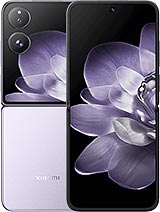
Mix Flip 2

Mix Fold 4
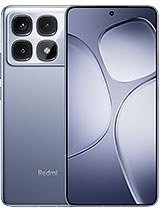
Redmi K70 Ultra
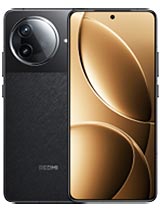
Redmi K80
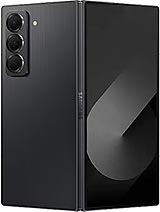
Galaxy Z Fold Special