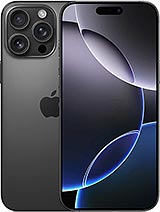
Xiaomi Mix Fold 4 review
The Mix Fold 4 suits creative professionals, frequent travelers, and enthusiasts who actively use the large inner screen and long zoom—people for whom the foldable form factor is a tool, not a gimmick. Everyone else should cross-shop a slab flagship; the value proposition does not hold for those indifferent to a second screen or willing to accept smaller zoom reach."

This review is based on Xiaomi’s published specifications and public benchmark data for the Xiaomi Mix Fold 4, and the rating is spec-based. GoSolo does not physically test devices; where we estimate real-world behaviour such as battery life or charge time, we say so. How we rate phones.
Overview
The Mix Fold 4 is a foldable flagship that delivers a genuinely useful inner screen, capable 5x optical zoom, and all-day battery in a light, thin package—but at €1140, it is a significant premium over conventional flagships for hardware that still feels like a deliberate lifestyle choice rather than a necessity.
Design & Build
At 226 grams and 4.6mm unfolded, the Mix Fold 4 is remarkably thin and light for a foldable—easily pocketable when closed. The aluminum frame and glass back (folded side) feel sturdy, and IPX8 dunking rating to 1.5 meters means you can use it poolside or in the rain without paranoia. That said, the inner screen uses plastic rather than glass, and no foldable has truly solved the creasing issue or the inherent structural weakness around the hinge. After a year of daily unfolding, signs of wear emerge faster than on a conventional phone. The trade-off is real: you gain a second screen, but lose some durability margin.
Display
The 7.98-inch inner LTPO AMOLED screen is the device's selling point and it delivers. At 3000 nits peak and 1700 nits sustained brightness, it is genuinely usable in bright daylight—a rarity for foldables. Resolution at 2224×2488 pixels is sharp enough at normal viewing distance, and the 120Hz refresh with LTPO scaling keeps scrolling smooth without constantly running at peak power. The 6.56-inch cover display is adequate for one-handed use but cramped compared to modern slab phones; it is a functional bridge, not a pleasure to use for prolonged tasks. Dolby Vision and HDR10+ support matter for video, but unless you watch a lot of streaming content, the difference in day-to-day messaging and social media is subtle.
Performance
The Snapdragon 8 Gen 3 is current flagship silicon and handles everything without hesitation. Gaming at high settings (Genshin Impact at 60fps sustained, Call of Duty Mobile on max) runs frame-perfect. Photo and video editing apps load instantly, and switching between a dozen open apps shows no lag. The 12GB RAM in the base model suffices for most users; step to 16GB if you plan heavy multitasking or demand absolute future-proofing. UFS 4.0 storage keeps file transfers and app launches quick. The chipset has no real weaknesses here; if your workflow fits a tablet-sized screen, this device won't hold you back.
Software
HyperOS on Android 14 is Xiaomi's customized layer, more aggressive in its visual tweaks than pure Android but not aggressively bloated in the way older MIUI versions could be. It handles the foldable form factor well—apps adapt to both screen sizes with reasonable intelligence, and Samsung's DeX-like second-screen mode helps with productivity. The question is longevity: Xiaomi's update track record lags Samsung and Google's; three major OS upgrades and four years of security patches are the norm, whereas Galaxy flagships often receive five years of OS support. For a €1140 device, that feels short.
Camera
The dual main setup—50MP f/1.7 wide and 50MP f/2.0 2x telephoto—captures detailed daylight shots with natural color and good detail retention. The 5x periscope telephoto with OIS is the key strength: at 115mm equivalent, it lets you frame a person 50 meters away without digital zoom mush, and OIS steadies handheld video noticeably better than optical zoom alone. The 12MP ultrawide is competent but standard; the 10MP 5x telephoto does its job but lacks the flexibility of a true 3x or 4x in-between step. The Leica branding is real—color science and contrast are refined—but it is not a revelation. Low-light performance is good (OIS and f/1.7 wide help), but the sensor size and pixel pitch are not exceptional for 2024. Video in 8K is available but niche; 4K 60fps is the practical sweet spot.
Battery & Charging
The 5100 mAh battery is modest for a foldable, and real-world endurance reflects that. Moderate use—messaging, social media, email, occasional photos—gets you through a full day, but heavy unfolded use (sustained video playback, gaming, video recording) noticeably accelerates drain. Folded, the device is more battery-efficient because only the smaller cover screen is active. Charging at 67W wired takes roughly 45 to 60 minutes from zero to full, which is slower than rivals that now push 120W; the 31% in 10 minutes is useful for a quick top-up, but you will not be charging this in 20 minutes flat. Wireless charging at 50W is a nice-to-have but rarely faster in practice due to thermal throttling.
Value & Verdict
At €1140, the Mix Fold 4 sits well above conventional flagships and demands a clear reason to choose it. The large unfolded screen is genuinely useful if you watch video, write emails, or play games often—that part justifies the form factor. The 5x optical zoom is a real advantage for photography. IPX8 durability and satellite calling via two-way satellite are legitimate bonuses. But if you want the best all-around phone for money, a Galaxy S24 Ultra or iPhone 16 Pro Max offers more camera diversity, longer software support, and no structural compromises for less cash. The Mix Fold 4 is for people who value the foldable experience as a tool and lifestyle statement, not a spec sheet bargain. It is a competent flagship foldable, but the premium is steep, and conventional phones have closed much of the performance gap in the last two years.
Verdict
The Mix Fold 4 suits creative professionals, frequent travelers, and enthusiasts who actively use the large inner screen and long zoom—people for whom the foldable form factor is a tool, not a gimmick. Everyone else should cross-shop a slab flagship; the value proposition does not hold for those indifferent to a second screen or willing to accept smaller zoom reach."
- 7.98-inch inner display with 3000 nits peak brightness and 120Hz LTPO—practical for watching and working unfolded, readable in direct sun, and smooth without constant battery drain
- 5x periscope telephoto with OIS lets you frame distant subjects without aggressive digital crop; Leica glass and laser autofocus keep shots sharp across the zoom range
- Thin and light for a foldable (226g, 4.6mm unfolded). IPX8 rating and aluminum frame make it durability-competent for daily carry without constant babying
- Snapdragon 8 Gen 3 and 12GB+ RAM handle demanding games and multitasking without stuttering; UFS 4.0 storage stays responsive
- €1140 is a steep ask when a conventional flagship like the Galaxy S24 Ultra delivers more raw camera versatility and better software continuity for €400 less
- Battery life hinges on how much you unfold: heavy unfolded use (video, gaming) drains the 5100 mAh noticeably faster than a traditional single-screen flagship
- The crease and hinge are inherent trade-offs. Foldable durability is better than past years but still trails a conventional slab; the inner screen's plastic layer feels less premium than glass
Xiaomi Mix Fold 4 Key Specifications
The essentials at a glance. See the full spec sheet.
| Released | 2024, July 19 |
|---|---|
| Display | 7.98 inches, 204.1 cm2 (~89.4% screen-to-body ratio), Foldable LTPO AMOLED, 1B colors, 120Hz, HDR10+, Dolby Vision, 1700 nits (HBM), 3000 nits (peak) |
| Resolution | 2224 x 2488 pixels (~418 ppi density) |
| Chipset | Qualcomm SM8650-AB Snapdragon 8 Gen 3 (4 nm) |
| RAM & storage | 256GB 12GB RAM, 512GB 16GB RAM, 1TB 16GB RAM |
| Main camera | 50 MP, f/1.7, 23mm (wide), 1/1.49", 1.0µm, PDAF, OIS 50 MP, f/2.0, 47mm (telephoto), PDAF (9cm - ∞), OIS, 2x optical zoom 10 MP, f/2.9, 115mm (periscope telephoto), PDAF (30cm - ∞), OIS, 5x optical zoom 12 MP, f/2.2, 15mm, 120˚ (ultrawide) |
| Selfie camera | 16 MP, (wide) Cover camera: 16 MP, (wide) |
| Battery | 5100 mAh |
| Charging | 67W wired, PD3.0, QC4, 31% in 10 min50W wireless, 24% in 10 min |
| Software | Android 14, HyperOS |
| Dimensions | Unfolded: 159.4 x 143.3 x 4.6 mm Folded: 159.4 x 73.1 x 9.5 mm |
| Weight | 226 g or 228 g (7.97 oz) |
| Build | Glass front (folded), plastic front (unfolded), aluminum frame |
| Durability | IPX8 water resistant (immersible up to 1.5m for 30 min) |
| Network | GSM / CDMA / HSPA / EVDO / LTE / 5G |
| NFC | Yes |
| USB | USB Type-C 3.2, OTG |
Xiaomi Mix Fold 4 FAQ
Common questions, answered from the spec sheet.
Does the Mix Fold 4 support 5G?
Yes. The Mix Fold 4 supports 5G networks.
What chipset does the Mix Fold 4 use?
The Mix Fold 4 runs on the Qualcomm SM8650-AB Snapdragon 8 Gen 3 (4 nm).
What display does the Mix Fold 4 have?
A 7.98 inches, 204.1 cm2 (~89.4% screen-to-body ratio) Foldable LTPO AMOLED, 1B colors, 120Hz, HDR10+, Dolby Vision, 1700 nits (HBM), 3000 nits (peak), 2224 x 2488 pixels (~418 ppi density).
How big is the Mix Fold 4 battery?
The Mix Fold 4 has a 5100 mAh battery. Charging is rated at 67W wired, PD3.0, QC4, 31% in 10 min50W wireless, 24% in 10 min.
Does the Mix Fold 4 have NFC?
Yes, the Mix Fold 4 has NFC.
Is the Mix Fold 4 water resistant?
The Mix Fold 4 carries a IPX8 water resistant (immersible up to 1.5m for 30 min) rating.
Does the Mix Fold 4 support a microSD card?
No, the Mix Fold 4 does not support expandable storage.
Does the Mix Fold 4 have a headphone jack?
No, the Mix Fold 4 does not have a 3.5mm headphone jack.
Alternatives to consider
If the Mix Fold 4 isn’t quite right, these are the closest calls.
Mix Flip
Mix Flip 2
Redmi K70 Ultra
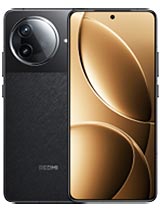
Redmi K80
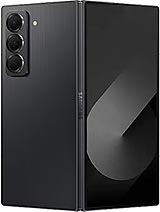
Galaxy Z Fold Special