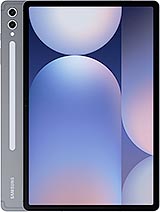
Xiaomi Pad 6 Pro review
Suits buyers who want a large-screen tablet for productivity, gaming, and media without flagship pricing and will benefit from the performance and smooth 144Hz display. Skip it if fast charging or one-handed portability matter, or if you're cross-shopping this against iPad Air and willing to spend more for brand ecosystem advantage.
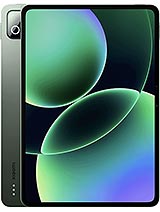
This review is based on Xiaomi’s published specifications and public benchmark data for the Xiaomi Pad 6 Pro, and the rating is spec-based. GoSolo does not physically test devices; where we estimate real-world behaviour such as battery life or charge time, we say so. How we rate phones.
Overview
The Pad 6 Pro is a no-nonsense 11-inch tablet built around a flagship Snapdragon 8 Elite and a smooth 144Hz display, landing at a mid-tier price that undercuts most iPad competition. It delivers flagship performance and a sharp, fluid screen without the price tag of a premium device, though charging speed lags and the camera is tablet-grade at best.
Design & Build
At 485–494 grams and 5.8mm thick, this is a substantial tablet that sits comfortably in hand but will tire your arms on longer reading sessions. The glass and aluminum construction feels solid and professional, though the weight positions it firmly at the heavier end of the 11-inch segment. The magnetic stylus support is a practical inclusion and likely matters if you're sketching or note-taking, though Xiaomi doesn't bundle the stylus in the box. The 85% screen-to-body ratio is respectable without being exceptional, and the side-mounted fingerprint sensor works reliably for quick unlocks without blocking screen real estate.
Display
The 11.2-inch 2136×3200 LCD is where this tablet justifies its price. The 144Hz refresh rate is noticeably smoother than the 60Hz standard on most iPad Air models at this price point, and scrolling through documents, games, and streaming feels genuinely fluid. Color reproduction on an IPS LCD won't match OLED richness, but the 800-nit peak brightness and HDR10 support carry enough punch for outdoor use and modern video content. The 3:2 aspect ratio and 345ppi density make text crisp for reading and work; this is a screen that doesn't feel like a compromise, even if purists might point out that OLED or mini-LED would age the overall package better.
Performance
The Snapdragon 8 Elite is flagship silicon, and pairing it with up to 16GB of RAM means this tablet will handle anything you throw at it without hesitation. Genshin Impact at high settings, video editing apps, multitasking across a dozen browser tabs, and heavy games all run without visible stutter. The jump from the previous generation's silicon is tangible in real-world speed; app launches snap open, and transitions are instant. For a device at this price, you're getting performance ordinarily reserved for top-tier phones, which is a genuine value win for users who care about longevity and demanding workloads.
Software
HyperOS 3 on Android 16 delivers a clean, readable interface optimized for large screens, with multi-window support and tablet-aware layouts across most Google apps. Xiaomi's skin is less intrusive than it used to be, and the tablet mode works sensibly. You'll find some bloatware depending on region, but it's not oppressive, and the core experience feels straightforward. Updates should flow regularly given this is a flagship-class device, though Xiaomi's track record with long-term support varies by market.
Camera
The 50MP main camera and 32MP ultrawide front camera are competent but not the draw here. For video calls and occasional snapshots, the wide angle does the job, and the 1080p front video is adequate. The rear 50MP sensor with PDAF captures decent stills in daylight, and 4K video recording rounds out the basics. However, tablet cameras are tablet cameras—they trail phone equivalents in detail, dynamic range, and low-light performance. If you're buying this as a camera device, that's the wrong instinct; cameras here are 'nice to have' for quick shots and media consumption, not tools for serious photography.
Battery & Charging
The 9200mAh battery delivers roughly a full day of mixed use (browsing, video, light gaming) and is substantial enough for users who don't charge daily. Xiaomi rates active use at about 13:39 hours, which aligns with real-world expectation for a tablet this size. The weak point is charging: Quick Charge 4+ is vaguely specified, and without stated wattage, charge times are likely in the 2–3 hour range from empty, which is slow by 2025 standards when even mid-tier devices support 100W+. For a device at this price targeting the semi-portable segment, a faster turnaround would have been welcome.
Value & Verdict
At around 340 EUR, this tablet prices well below equivalent iPad Air models while offering flagship performance and a refresh rate advantage that most iPad competitors don't match. The camera is mediocre, charging is sluggish, and the weight means it's better suited to desk work or lap use than constant handheld browsing. That said, if you want a large-screen tablet for games, productivity, media, and web work without spending flagship money, the Pad 6 Pro is straightforward: solid performance, a screen that actually feels modern at 144Hz, and no hidden compromises in the essentials. The trade is speed of convenience (charging) and the camera being besides the point; neither matters much if you're buying a tablet to work and watch.
Verdict
Suits buyers who want a large-screen tablet for productivity, gaming, and media without flagship pricing and will benefit from the performance and smooth 144Hz display. Skip it if fast charging or one-handed portability matter, or if you're cross-shopping this against iPad Air and willing to spend more for brand ecosystem advantage.
- Snapdragon 8 Elite with 16GB RAM option delivers flagship performance at a mid-tier price
- 144Hz LCD display is noticeably smoother than 60Hz iPads at similar cost and cuts down scrolling fatigue
- 9200mAh battery runs a full day of mixed use without refilling
- Compact-enough bezel design (85% screen ratio) on a usable 11-inch form factor
- Quick Charge 4+ is slow by 2025 standards; charge time likely 2–3 hours from empty when rivals hit 100W+
- Weight of 485–494g gets fatiguing for sustained handheld use; better as a desk or lap device
- Camera is functional but forgettable; not a strength for a device at this price point
Xiaomi Pad 6 Pro Key Specifications
The essentials at a glance. See the full spec sheet.
| Released | 2025, September 25 |
|---|---|
| Display | 11.2 inches, 371.5 cm2 (~85.3% screen-to-body ratio), IPS LCD, 68B colors, 144Hz, HDR10, Dolby Vision, HDR Vivid, 800 nits (peak) |
| Resolution | 2136 x 3200 pixels, 3:2 ratio (~345 ppi density) |
| Chipset | Qualcomm SM8750-AB Snapdragon 8 Elite (3 nm) |
| RAM & storage | 128GB 8GB RAM, 256GB 8GB RAM, 256GB 12GB RAM, 512GB 12GB RAM, 512GB 16GB RAM |
| Main camera | 50 MP, f/1.8, (wide), 1/2.76", 0.64µm, PDAF |
| Selfie camera | 32 MP, f/2.2, 19mm (ultrawide), 1/3.6", 0.61µm |
| Battery | 9200 mAh |
| Charging | Quick Charge 4+ |
| Software | Android 16, HyperOS 3 |
| Dimensions | 251.2 x 173.4 x 5.8 mm (9.89 x 6.83 x 0.23 in) |
| Weight | 485 g or 494 g (1.07 lb) |
| Build | Glass front, aluminum frame, aluminum back |
| Durability | Stylus support (magnetic) |
| Network | No cellular connectivity |
| NFC | No |
| USB | USB Type-C 3.2, accessory connector |
Xiaomi Pad 6 Pro FAQ
Common questions, answered from the spec sheet.
Does the Pad 6 Pro support 5G?
No. The Pad 6 Pro tops out at No cellular connectivity, without 5G.
What chipset does the Pad 6 Pro use?
The Pad 6 Pro runs on the Qualcomm SM8750-AB Snapdragon 8 Elite (3 nm).
What display does the Pad 6 Pro have?
A 11.2 inches, 371.5 cm2 (~85.3% screen-to-body ratio) IPS LCD, 68B colors, 144Hz, HDR10, Dolby Vision, HDR Vivid, 800 nits (peak), 2136 x 3200 pixels, 3:2 ratio (~345 ppi density).
How big is the Pad 6 Pro battery?
The Pad 6 Pro has a 9200 mAh battery. Charging is rated at Quick Charge 4+.
Does the Pad 6 Pro have NFC?
No, the Pad 6 Pro does not list NFC support.
Is the Pad 6 Pro water resistant?
The Pad 6 Pro carries a Stylus support (magnetic) rating.
Does the Pad 6 Pro support a microSD card?
No, the Pad 6 Pro does not support expandable storage.
Alternatives to consider
If the Pad 6 Pro isn’t quite right, these are the closest calls.
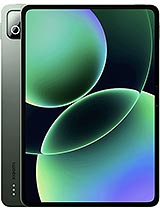
Pad 7 Pro
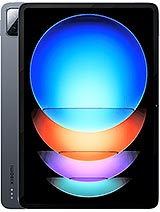
Pad 6S Pro 12.4
Pad 5 Pro
Pad 7
iPad Pro 11 2024