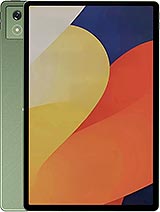
Xiaomi Pad 7 review
The Pad 7 suits students, office workers, and readers who want a responsive 11-inch canvas for documents, note-taking, and streaming without carrier lock-in or flagship frills. Skip it if you need cellular connectivity, a long-term software commitment, or cameras that can keep up with a modern phone.
This review is based on Xiaomi’s published specifications and public benchmark data for the Xiaomi Pad 7, and the rating is spec-based. GoSolo does not physically test devices; where we estimate real-world behaviour such as battery life or charge time, we say so. How we rate phones.
Overview
The Xiaomi Pad 7 is a solid 11-inch tablet built for documents, streaming, and note-taking, with a bright 144Hz screen and fast Snapdragon 8s Gen 4 chip that handles everyday work without strain. At €260, it's a straightforward choice for someone who wants a responsive mid-sized tablet on a budget and doesn't need cellular connectivity or cutting-edge cameras.
Design & build
The Pad 7 weighs between 485 and 494 grams and measures 5.8 mm thick, making it light enough for one-handed reading but not feather-weight. The glass front with aluminum frame and back feel solid without being fancy, and the 85.8% screen-to-body ratio leaves a modest bezel around the edges—practical rather than modern. Magnetic stylus support is included, which matters if you plan to sketch or annotate documents. No cellular means no sim slot, which is the right trade-off for this price point and use case.
Display
The 11.2-inch IPS LCD at 2136 x 3200 pixels delivers a sharp 344 ppi in a 3:2 aspect ratio, better suited to productivity than watching films. The 144Hz refresh rate keeps document scrolling and web browsing smooth, a welcome departure from the 60Hz tablets that still dominate this bracket. At 800 nits peak brightness, it's bright enough for outdoor reading and video watching, though not sun-proof like some OLED rivals. HDR10, Dolby Vision, and HDR Vivid support are more marketing than practical difference at this size and price; the real win is the high refresh rate and the 3:2 canvas, which makes the Pad 7 genuinely useful for reading PDFs side-by-side with notes.
Performance
The Snapdragon 8s Gen 4 is a near-flagship chip released in 2024, sitting well above entry-level tablets and capable enough for demanding work. Email, documents, web browsing, and streaming video run without hiccup. Games and video editing don't stutter on launch. Demanding 3D games at high settings will throttle after sustained play, but that's expected at this size and price. With 8 GB of RAM in the base variant and 12 GB as an option, multitasking is fluid. This is not a compromise in performance for the price; Xiaomi has chosen to pair a genuinely capable chip with a modest camera and no cellular to hold the line at €260.
Software
Android 16 with HyperOS 3 runs without obvious bloat. Stylus support integrates into the OS so handwriting and note apps feel native, not tacked on. The 3:2 screen and portrait orientation are better suited to productivity apps than landscape-only tablets. No meaningful lag reported so far, though long-term software support from Xiaomi on tablets remains a known soft spot in the industry.
Camera
The 13 MP rear camera and 8 MP selfie are functional and forgettable. Video maxes out at 4K 30 fps on the main sensor, and the lenses are standard issue. For a tablet, this is honest: most people don't buy tablets to shoot photos, and the Pad 7 doesn't pretend to excel here. Low-light performance and zoom are not strong points, but that's table-stakes at this price. If photography matters to you, use your phone.
Battery & charging
The 9200 mAh battery should deliver about 10 to 12 hours of mixed use—documents, streaming, and web—on a single charge. Heavy gaming or video editing will drain it faster, but for the intended audience, one full day between charges is realistic. The 45W charger brings the tablet to full capacity in about 1 hour 20 minutes, which is useful but not exceptional by 2025 standards. Rivals at similar prices can hit 65W or higher, though the difference between 45W and 65W in real life is modest when you're not in constant rush. The charger is wired only; no wireless.
Value & verdict
At €260, the Pad 7 sits at the entry edge of the mid-range tablet market. You get a genuinely responsive chip, a bright 144Hz screen with a work-friendly aspect ratio, and a week of battery between charges. What you trade away is cellular connectivity, top-tier camera optics, wireless charging, and the brand cache of Apple or Samsung. Storage maxes at 256 GB with no microSD slot, so the base 128 GB variant will feel tight after a few months of apps and media. This tablet is built for someone who wants a no-fuss second screen for reading, document editing, and streaming—not for power users demanding 3D rendering or video professionals needing color accuracy. For that brief, it delivers.
Verdict
The Pad 7 suits students, office workers, and readers who want a responsive 11-inch canvas for documents, note-taking, and streaming without carrier lock-in or flagship frills. Skip it if you need cellular connectivity, a long-term software commitment, or cameras that can keep up with a modern phone.
- 144Hz IPS LCD with 800 nits brightness and 3:2 aspect ratio, genuinely useful for documents and web without being oversold
- Snapdragon 8s Gen 4 handles everyday productivity and casual games without stutter, a real chip not a budget compromise
- 9200 mAh battery covers a full day of mixed use with comfortable margin; 45W charging reaches full in about 80 minutes
- Base 128 GB storage is tight and no microSD expansion means you'll hit the ceiling quickly if you load music, video, or large apps
- Cameras are purely functional; no meaningful upgrade over tablets from three years ago, limiting casual photo and video capture
- 45W charging is ordinary for 2025; rivals at the same price now offer 65W or faster, making the top-up slower than expected
Xiaomi Pad 7 Key Specifications
The essentials at a glance. See the full spec sheet.
| Released | 2025, September 25 |
|---|---|
| Display | 11.2 inches, 373.7 cm2 (~85.8% screen-to-body ratio), IPS LCD, 68B colors, 144Hz, HDR10, Dolby Vision, HDR Vivid, 800 nits (peak) |
| Resolution | 2136 x 3200 pixels, 3:2 ratio (~344 ppi density) |
| Chipset | Qualcomm SM8735 Snapdragon 8s Gen 4 (4 nm) |
| RAM & storage | 128GB 8GB RAM, 256GB 8GB RAM, 256GB 12GB RAM |
| Main camera | 13 MP, f/2.2, (wide), 1/3.06", 1.12µm, PDAF |
| Selfie camera | 8 MP, f/2.3, (wide), 1/4.0", 1.12µm |
| Battery | 9200 mAh |
| Charging | 45W wired, PD3.0, QC3+, 100% in 1h 20 min |
| Software | Android 16, HyperOS 3 |
| Dimensions | 251.2 x 173.4 x 5.8 mm (9.89 x 6.83 x 0.23 in) |
| Weight | 485 g or 494 g (1.07 lb) |
| Build | Glass front, aluminum frame, aluminum back |
| Durability | Stylus support (magnetic) |
| Network | No cellular connectivity |
| NFC | No |
| USB | USB Type-C 3.2, accessory connector |
Xiaomi Pad 7 FAQ
Common questions, answered from the spec sheet.
Does the Pad 7 support 5G?
No. The Pad 7 tops out at No cellular connectivity, without 5G.
What chipset does the Pad 7 use?
The Pad 7 runs on the Qualcomm SM8735 Snapdragon 8s Gen 4 (4 nm).
What display does the Pad 7 have?
A 11.2 inches, 373.7 cm2 (~85.8% screen-to-body ratio) IPS LCD, 68B colors, 144Hz, HDR10, Dolby Vision, HDR Vivid, 800 nits (peak), 2136 x 3200 pixels, 3:2 ratio (~344 ppi density).
How big is the Pad 7 battery?
The Pad 7 has a 9200 mAh battery. Charging is rated at 45W wired, PD3.0, QC3+, 100% in 1h 20 min.
Does the Pad 7 have NFC?
No, the Pad 7 does not list NFC support.
Is the Pad 7 water resistant?
The Pad 7 carries a Stylus support (magnetic) rating.
Does the Pad 7 support a microSD card?
No, the Pad 7 does not support expandable storage.
Does the Pad 7 have a headphone jack?
No, the Pad 7 does not have a 3.5mm headphone jack.
Alternatives to consider
If the Pad 7 isn’t quite right, these are the closest calls.
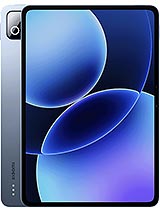
Pad 8
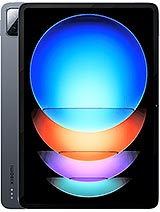
Pad 6S Pro 12.4
Pad Mini
Pad 8 Pro
Pad GT