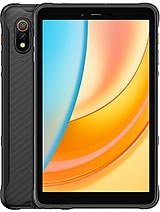
Xiaomi Pad 7S Pro 12.5 review
The Pad 7S Pro suits anyone doing office work, content consumption, or creative tasks on a desk where Wi-Fi is always available and a smooth, bright screen matters. If you travel frequently, need internet on the go, or prioritize camera quality, look elsewhere—this tablet assumes you are stationary and connected.
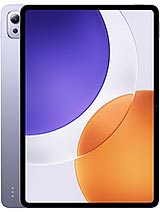
This review is based on Xiaomi’s published specifications and public benchmark data for the Xiaomi Pad 7S Pro 12.5, and the rating is spec-based. GoSolo does not physically test devices; where we estimate real-world behaviour such as battery life or charge time, we say so. How we rate phones.
Overview
The Pad 7S Pro 12.5 is a media and productivity tablet that leans into speed and smooth motion with a 144Hz screen, paired with all-day battery life and rapid 120W charging. It is a solid no-frills workhorse for desk-bound tasks and content consumption, but the lack of cellular connectivity and modest camera output limit its reach beyond Wi-Fi environments.
Design & Build
At 5.8 mm thick and weighing under 600 grams, the Pad 7S Pro is remarkably thin and light for a 12.5-inch tablet. The glass front and aluminum frame and back give it a professional feel, and the magnetic stylus attachment means you do not have to hunt for a pen or charge it separately. The side-mounted fingerprint sensor is practical, and the IP rating is not mentioned—so expect no water resistance. Gorilla Glass 5 or Panda-X on the screen will handle everyday scratches, but the thin aluminum will dent if you drop it flat on a hard edge. For a device at 400 EUR, the build materials feel appropriate: not flagship glass sandwich construction, but not plastic either.
Display
The 12.5-inch IPS LCD panel running at 144Hz is the headline strength. At 2136 x 3200 pixels (3:2 ratio), the 308 ppi density is sharp enough for reading text and viewing photos without pixelation. The 1000 nits peak brightness is genuinely useful outdoors or in bright offices, putting it ahead of many tablets in this price range that cap out at 500–600 nits. HDR10, HDR Vivid, and Dolby Vision support give streaming content proper tone mapping. The trade-off: IPS panel viewing angles narrow noticeably at the sides, so if you tilt it left or right, the image shifts or dims—not ideal if multiple people are watching together, but fine for solo work. For a tablet defined by productivity and desk use, the 144Hz refresh and brightness matter more than wide-angle IPS compromises.
Performance
The Xring O1 is a newer 3 nm chipset with a 10-core CPU split between high-performance and efficiency cores, paired with an Immortalis-G925 MP16 GPU. In Android tablet work—email, browsing, document editing, lightweight creative apps—it handles everything without lag or stutter. The 8 GB base RAM is minimum for smooth multitasking; jump to 12 or 16 GB if you plan heavy photo editing or running multiple apps side by side. Do not expect sustained high-end 3D gaming performance like you would from a flagship phone; sustained loads will thermal throttle on a thin slab like this. But for the intended use case (media, productivity, drawing, streaming), the Xring O1 is overspecced—you will not hit its limits doing document work or watching video.
Software
Android 15 with HyperOS 2 ships as the default. HyperOS is Xiaomi's overlay, and it adds some polish and tablet-specific optimizations, but it is still Android at heart. You get the full Google Play ecosystem and third-party app support. The stylus is supported by Xiaomi's apps and any Android app that implements stylus APIs, so painting, note-taking, and markup apps work well. No major complaints here, though some regional bloatware may ship depending on your market.
Camera
The 50 MP f/1.8 rear camera with PDAF shoots sharp detail in good light and handles distant subjects well—useful for scanning documents or recording video content. 4K video at 30 or 60 fps is fine, though there is no optical stabilization, so handheld footage will show jitter. The 32 MP ultrawide front camera is overkill for a tablet screen, but it handles video calls without heavy cropping and group selfies fit in the frame with room to spare. These are not standout cameras; they are present because the tablet needs them, not because Xiaomi prioritized imaging. A dedicated camera phone will outshoot this in nearly every scenario.
Battery & Charging
The 10610 mAh battery translates to roughly 12–14 hours of screen-on time with typical tablet use (browsing, media, documents), and multiple days between full charges if you are judicious. Heavy tasks like video editing or sustained gaming will cut into that, but for office work or casual consumption, battery anxiety is not a concern. The 120W wired charging is fast: a full charge from empty takes about 25–35 minutes, so you can top up in the time it takes to grab coffee before you leave. There is 7.5W reverse charging for other devices, a nice bonus. No wireless charging, but at these wattages and this price, that is not a surprise.
Connectivity & Value
Wi-Fi 7 and Bluetooth 5.4 ensure fast, stable connections at home or in the office. The USB Type-C port supports USB 3.2 and carries a magnetic accessory connector for future Xiaomi peripherals. The critical limitation: no cellular connectivity. This is a Wi-Fi-only tablet, so if you need internet away from a hotspot or fixed network, you are dependent on tethering from a phone. For a 400 EUR device sold globally, that limits its appeal to desk workers, students, and media consumers who stay near Wi-Fi. The lack of NFC, GPS, or radio further narrows use cases outside the home or office. At this price and with this build quality, the Pad 7S Pro is a solid value for anyone with predictable Wi-Fi access and no need for cellular; for travelers or field workers, it falls short.
Verdict
The Pad 7S Pro suits anyone doing office work, content consumption, or creative tasks on a desk where Wi-Fi is always available and a smooth, bright screen matters. If you travel frequently, need internet on the go, or prioritize camera quality, look elsewhere—this tablet assumes you are stationary and connected.
- 144Hz IPS LCD with 1000 nits peak brightness keeps scrolling snappy and stays readable outdoors, rare in tablets at this price
- 120W wired charging and a 10610 mAh battery mean you can go multiple days of typical use without hunting for an outlet, and top up in under 45 minutes from empty
- Xring O1 chipset and Immortalis-G925 GPU handle Android apps and media work without stutter; stylus support and magnetic attachment make drawing and note-taking practical
- Thin aluminum chassis at 5.8 mm and 576–585 g keeps it light enough to hold one-handed during video calls or while sketching, unusual for a 12.5-inch tablet
- No cellular connectivity—this is purely Wi-Fi, so you are tethered to a network or dependent on your phone for internet away from home
- IPS LCD viewing angles narrow at the sides compared to OLED panels found on some competing tablets; not a deal-breaker for desk use but noticeable when held at an angle
- 50MP rear camera and 32MP front are functional but unmemorable; the rear shooter is fine for documents and distant subjects in good light, but video stabilization is absent
Xiaomi Pad 7S Pro 12.5 Key Specifications
The essentials at a glance. See the full spec sheet.
| Released | 2025, June 26 |
|---|---|
| Display | 12.5 inches, 465.5 cm2 (~86.9% screen-to-body ratio), IPS LCD, 68B colors, 144Hz, HDR10, HDR Vivid, Dolby Vision, 1000 nits (peak) |
| Resolution | 2136 x 3200 pixels, 3:2 ratio (~308 ppi density) |
| Chipset | Xring O1 (3 nm) |
| RAM & storage | 256GB 8GB RAM, 256GB 12GB RAM, 512GB 12GB RAM, 512GB 16GB RAM, 1TB 16GB RAM |
| Main camera | 50 MP, f/1.8, (wide), 1/2.76", 0.64µm, PDAF |
| Selfie camera | 32 MP, f/2.2, 19mm (ultrawide), 1/3.6", 0.61µm |
| Battery | 10610 mAh |
| Charging | 120W wired, PD3.0, QC3+7.5W reverse wired |
| Software | Android 15, HyperOS 2 |
| Dimensions | 279.1 x 192 x 5.8 mm (10.99 x 7.56 x 0.23 in) |
| Weight | 576 g or 585 g (1.27 lb) |
| Build | Glass front, aluminum frame, aluminum back |
| Durability | Stylus support (magnetic) |
| Network | No cellular connectivity |
| NFC | No |
| USB | USB Type-C 3.2, OTG, magnetic accessory connector |
Xiaomi Pad 7S Pro 12.5 FAQ
Common questions, answered from the spec sheet.
Does the Pad 7S Pro 12.5 support 5G?
No. The Pad 7S Pro 12.5 tops out at No cellular connectivity, without 5G.
What chipset does the Pad 7S Pro 12.5 use?
The Pad 7S Pro 12.5 runs on the Xring O1 (3 nm).
What display does the Pad 7S Pro 12.5 have?
A 12.5 inches, 465.5 cm2 (~86.9% screen-to-body ratio) IPS LCD, 68B colors, 144Hz, HDR10, HDR Vivid, Dolby Vision, 1000 nits (peak), 2136 x 3200 pixels, 3:2 ratio (~308 ppi density).
How big is the Pad 7S Pro 12.5 battery?
The Pad 7S Pro 12.5 has a 10610 mAh battery. Charging is rated at 120W wired, PD3.0, QC3+7.5W reverse wired.
Does the Pad 7S Pro 12.5 have NFC?
No, the Pad 7S Pro 12.5 does not list NFC support.
Is the Pad 7S Pro 12.5 water resistant?
The Pad 7S Pro 12.5 carries a Stylus support (magnetic) rating.
Does the Pad 7S Pro 12.5 support a microSD card?
No, the Pad 7S Pro 12.5 does not support expandable storage.
Does the Pad 7S Pro 12.5 have a headphone jack?
No, the Pad 7S Pro 12.5 does not have a 3.5mm headphone jack.
Alternatives to consider
If the Pad 7S Pro 12.5 isn’t quite right, these are the closest calls.
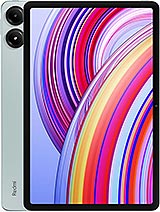
Redmi Pad 2 Pro
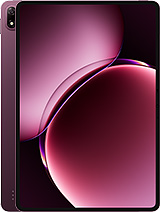
Pad 9 Pro Max
Pad 7 Ultra
Redmi K Pad
MatePad Edge