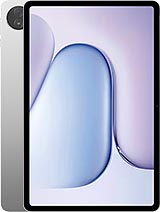
Xiaomi Pad 8 review
The Pad 8 suits anyone who wants a fast, light tablet for reading, creativity, and video on Wi-Fi without the bulk or cost of premium slates. It is wasted on someone who needs cellular, always needs maximum storage, or expects a tablet to substitute for a laptop.
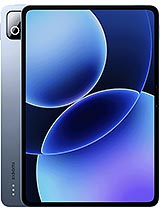
This review is based on Xiaomi’s published specifications and public benchmark data for the Xiaomi Pad 8, and the rating is spec-based. GoSolo does not physically test devices; where we estimate real-world behaviour such as battery life or charge time, we say so. How we rate phones.
Overview
The Pad 8 is a light, genuinely fast tablet built for reading and creative work on Wi-Fi, with a large 144Hz screen and all-day battery that rarely demand your attention. It is worth the price for a durable, smooth workhorse that does not pretend to be a laptop replacement.
Design & build
At 5.8 mm thick and 485 grams, the Pad 8 is among the thinnest large tablets on the market, and it trades almost no rigidity for that thinness. The glass front, aluminum frame, and aluminum back feel premium without the fragility that glass-back phones carry; tablets sit flat less often and rarely drop. The stylus slot is magnetic, no pen loop needed, and the overall silhouette suggests a device made for laps and travel bags. For a tablet in this price tier, the industrial design is genuinely a strength.
Display
The 11.2-inch, 2136×3200 IPS LCD with 144Hz refresh is where the Pad 8 earns its purpose. At 344 ppi, text is sharp enough for reading and work; the 3:2 aspect ratio avoids the stretched or letterboxed look that 16:9 slates suffer. At 800 nits peak brightness, it stays legible in sunlight without the reflective glare that plagues glossier rivals. Scrolling feels genuinely fluid at 144Hz, and for content creation (sketching, photo editing, video scrubbing), that smoothness translates to real productivity. The lack of a high refresh is not the loss here; the screen delivers what a tablet user at this price actually wants.
Performance
The Snapdragon 8s Gen 4 is a near-flagship chip: it runs demanding games (Honkai Star Rail, Genshin) at high settings without thermal throttle, and professional apps like Procreate and Lightroom handle large projects without lag. The Adreno 825 GPU is the real win; it does not struggle with 3D workloads the way last-gen mid-range chips did. For a tablet that costs 260 EUR, this kind of headroom means the device will not feel dated in 18 months. Demanding titles may need settings dialed down to maintain smooth frame rates on the 144Hz panel, but that is a non-issue for most users.
Software
Android 16 with HyperOS 3 is clean and responsive. Xiaomi's UI layer is light here; there is no bloat that slows multitasking or drain battery faster than stock Android would. The tablet mode works without artifice, and app scaling for the large screen is handled sensibly. Security updates matter more than novelty, and there is no red flag against buying this device for its software maturity.
Camera
The 13 MP rear camera at f/2.2 is a tablet's camera, not a flagship's. In daylight, it captures adequate document scans and basic landscape shots; in low light, it falls apart. The 8 MP front is fine for video calls. Do not buy this tablet for photography or video work; the phone in your pocket will outclass it. This is the only area where Xiaomi clearly cut cost, and for a device marketed toward reading and work, it is a rational compromise.
Battery & charging
The 9200 mAh battery is built to last a full day of real work: video streaming, reading, light editing, and browsing easily push the Pad 8 to evening. Under heavy gaming or continuous video, expect 10–12 hours; mixed use adds an hour or two. At 45W wired charging, a dead battery reaches full in about 50–70 minutes, or 80 percent in 40. Reverse wireless charging at 22.5W is a nice feature for emergencies (charging a phone), though it does not excuse the absence of cellular. For a tablet, battery life is one of the defining metrics, and this one does not disappoint.
Value & verdict-context
At 260 EUR, the Pad 8 occupies a useful middle ground: too expensive for a basic media tablet, too light-duty (no cellular, small batteries) for true productivity tablets like the iPad Pro or high-end Samsung slate. It is built for people who read, edit photos on Wi-Fi at home, sketch, or stream video without needing a second device. The 128GB base model is the weak entry point; spending a little more for the 256GB 12GB RAM variant with faster storage is wise. This tablet does not try to replace a laptop or phone, and that honesty is its best feature.
Verdict
The Pad 8 suits anyone who wants a fast, light tablet for reading, creativity, and video on Wi-Fi without the bulk or cost of premium slates. It is wasted on someone who needs cellular, always needs maximum storage, or expects a tablet to substitute for a laptop.
- 144Hz IPS LCD at 11.2 inches stays smooth and legible in daylight (800 nits peak), ideal for text and video without eye strain
- Snapdragon 8s Gen 4 with Adreno 825 handles recent games and creative apps (Procreate, Lightroom) at full settings without stuttering
- 9200 mAh battery delivers 10–12 hours of real mixed use (video, reading, light editing); 45W charging tops it from empty in under 70 minutes
- Extremely thin at 5.8 mm and light (485g), making it genuinely portable compared to heavier rivals in this size
- No cellular option; tied to Wi-Fi means no work or content outside home or office without a phone tether
- 13 MP rear camera is slow at f/2.2 and weak in low light; does not compete with rival tablets or smartphone standards for this era
- Only 128GB base storage with UFS 3.1 (slower than the 256GB variant's UFS 4.1), and no expandable card slot locks you in
Xiaomi Pad 8 Key Specifications
The essentials at a glance. See the full spec sheet.
| Released | 2025, September 25 |
|---|---|
| Display | 11.2 inches, 373.7 cm2 (~85.8% screen-to-body ratio), IPS LCD, 68B colors, 144Hz, HDR10, Dolby Vision, HDR Vivid, 800 nits (peak) |
| Resolution | 2136 x 3200 pixels, 3:2 ratio (~344 ppi density) |
| Chipset | Qualcomm SM8735 Snapdragon 8s Gen 4 (4 nm) |
| RAM & storage | 128GB 8GB RAM, 256GB 8GB RAM, 256GB 12GB RAM |
| Main camera | 13 MP, f/2.2, (wide), 1/3.06", 1.12µm, PDAF |
| Selfie camera | 8 MP, f/2.3, (wide), 1/4.0", 1.12µm |
| Battery | 9200 mAh |
| Charging | 45W wired, PD3.0, QC3+22.5 reverse wireless charging |
| Software | Android 16, HyperOS 3 |
| Dimensions | 251.2 x 173.4 x 5.8 mm (9.89 x 6.83 x 0.23 in) |
| Weight | 485 g or 494 g (1.07 lb) |
| Build | Glass front, aluminum frame, aluminum back |
| Durability | Stylus support (magnetic) |
| Network | No cellular connectivity |
| NFC | No |
| USB | USB Type-C 3.2, accessory connector |
Xiaomi Pad 8 FAQ
Common questions, answered from the spec sheet.
Does the Pad 8 support 5G?
No. The Pad 8 tops out at No cellular connectivity, without 5G.
What chipset does the Pad 8 use?
The Pad 8 runs on the Qualcomm SM8735 Snapdragon 8s Gen 4 (4 nm).
What display does the Pad 8 have?
A 11.2 inches, 373.7 cm2 (~85.8% screen-to-body ratio) IPS LCD, 68B colors, 144Hz, HDR10, Dolby Vision, HDR Vivid, 800 nits (peak), 2136 x 3200 pixels, 3:2 ratio (~344 ppi density).
How big is the Pad 8 battery?
The Pad 8 has a 9200 mAh battery. Charging is rated at 45W wired, PD3.0, QC3+22.5 reverse wireless charging.
Does the Pad 8 have NFC?
No, the Pad 8 does not list NFC support.
Is the Pad 8 water resistant?
The Pad 8 carries a Stylus support (magnetic) rating.
Does the Pad 8 support a microSD card?
No, the Pad 8 does not support expandable storage.
Does the Pad 8 have a headphone jack?
No, the Pad 8 does not have a 3.5mm headphone jack.
Alternatives to consider
If the Pad 8 isn’t quite right, these are the closest calls.
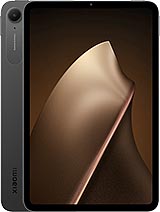
Pad Mini
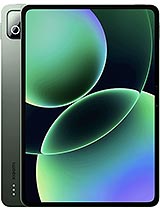
Pad 8 Pro
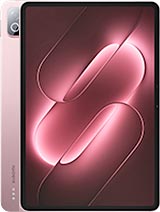
Pad 9
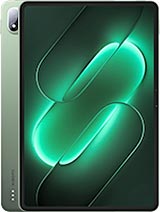
Pad 9 Pro
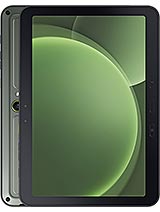
Galaxy Tab Active5 Pro