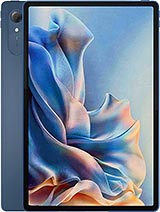
Xiaomi Pad 9 review
This tablet works well for content consumption, reading, light productivity, and gaming, and the 144Hz screen makes everyday scrolling genuinely better than cheaper alternatives. Skip it if cameras or battery endurance are priorities, or if you want a truly budget-conscious tablet rather than a spec-forward mid-ranger.
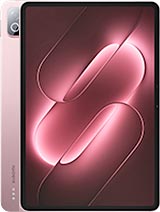
This review is written with AI assistance from Xiaomi’s published specifications and public benchmark data for the Xiaomi Pad 9, and the rating is spec-based. GoSolo does not physically test devices; where we estimate real-world behaviour such as battery life or charge time, we say so. How we rate phones.
Overview
The Pad 9 pairs a flagship chipset with a sharp 11.2-inch display and 144Hz refresh for under 400 EUR, making it a solid mid-range tablet for work and media. The weak rear camera and basic 13MP sensor undercut its otherwise competent spec sheet, and you're paying mostly for the screen and processor rather than a rounded experience.
Design & build
At 485 grams and 5.8mm thick, the Pad 9 is remarkably compact for an 11.2-inch slate. The aluminum frame and back paired with a glass front feel assembled rather than indulgent, which suits the price. Weight is well-controlled for one-handed hold and casual carrying; it won't tire you out during a long reading session. The physical form factor is its strongest asset, executing the basics without pretense or unnecessary bulk.
Display
The 3200 x 2136 resolution on an 11.2-inch IPS panel delivers sharp text and icons at 344 ppi—entirely sufficient for reading, video, and productivity work. 144Hz refresh is the standout; it's rare at this price and genuinely noticeable when scrolling or playing frame-heavy games. Peak brightness of 800 nits handles outdoor use and HDR content reasonably well. Dolby Vision and HDR Vivid support exist, though the IPS technology limits contrast depth compared to OLED alternatives you would not find at this price anyway. The 3:2 aspect ratio suits content creation and documents better than the 16:9 common on cheaper rivals.
Performance
The Snapdragon 8s Gen 4 is a high-end processor that typically powers flagship phones, so it's overkill for a mid-range tablet. That said, overkill translates to fluidity: multitasking, gaming, and creative apps will run without stutter or throttling, and the jump over last-gen Snapdragon chips for tablets is tangible. The Adreno 825 GPU handles 3D gaming with headroom to spare. You're not going to exhaust this hardware with typical tablet workloads—reading, web browsing, social media, light video editing. The processor choice feels like Xiaomi ensuring the device stays relevant through a few years of OS updates rather than a raw necessity for 2026 tablet tasks.
Software
Android 17 with HyperOS 4 arrives current and reasonably clean. HyperOS customization is lighter than older MIUI, which historically felt bloated; this version leans into functionality without excessive UI tweaks. Software promises are largely theoretical—Xiaomi's track record on long-term support is inconsistent, and a tablet is less likely to see rapid update cycles than a flagship phone. Expect 3–4 years of OS updates if you're optimistic, security patches for longer. The 8 or 12 GB of RAM handles multitasking seamlessly without artificial limits.
Camera
The rear camera is the weak link. A single 13MP sensor with no ultrawide or telephoto feels underpowered for a tablet in 2026, especially one that costs nearly 400 EUR. Most competitors at this tier bundle a wider lens for landscape composition and creative range. The 8MP front-facer is adequate for video calls but unremarkable. Real-world photos from the rear will lack the flexibility and dynamic range of multi-camera setups; expect usable stills in good light but limited punch in shadows or complex scenes. Video maxes out at 4K at 30fps, which is functional but not ambitious. If you plan to use this as a notebook or sketchpad, the camera is incidental; if media capture matters, look elsewhere.
Battery & charging
The 9720 mAh battery sounds substantial but delivers modest endurance. For a device of this size and screen brightness, expect about 8–10 hours of mixed use—browsing, video, apps—with the 144Hz display enabled. Disable it and you might squeeze another 2–3 hours. 67W charging is respectable and should top the battery in roughly 1.5 to 2 hours, though no charger is included in the box, so budget separately. The battery is not removable, which aligns with modern design but limits serviceability if capacity degrades.
Value & verdict
At around 390 EUR, the Pad 9 competes in the mid-range tablet space where balance matters more than any single spec. It delivers clean hardware, a sharp screen, and enough processing power to remain snappy for years. The 144Hz refresh and lightweight build are genuine wins for a tablet at this price. The camera is genuinely forgettable, and the battery endurance is fair rather than impressive, so this is not a device that tries to do everything equally well. It suits buyers who prioritize display quality, performance headroom, and portability over camera versatility or all-day battery life. Those needing robust tablet cameras or extended media battery life should cross-shop rivals with larger batteries or wider-angle lenses.
Verdict
This tablet works well for content consumption, reading, light productivity, and gaming, and the 144Hz screen makes everyday scrolling genuinely better than cheaper alternatives. Skip it if cameras or battery endurance are priorities, or if you want a truly budget-conscious tablet rather than a spec-forward mid-ranger.
- 144Hz IPS LCD with HDR support and 800-nit peak brightness, a rare feature at this price for a tablet
- Snapdragon 8s Gen 4 ensures smooth performance across demanding apps and gaming without thermal strain
- Lightweight and thin—485g and 5.8mm—making it genuinely portable for a 11.2-inch device
- Fast storage across the board (UFS 4.1 on top variants) keeps app launches and file transfers brisk
- 13MP rear camera with no ultrawide or zoom is weak for a tablet at this tier; most competitors offer broader focal lengths
- No charger in the box (inferred from 67W support but no mention of included power unit) means added cost for buyers
- 9720 mAh battery sounds large but translates to modest real-world endurance for a device this size; expect 8–10 hours under moderate use
Xiaomi Pad 9 Key Specifications
The essentials at a glance. See the full spec sheet.
| Released | 2026, September 23 |
|---|---|
| Display | 11.2 inches, 373.7 cm2 (~85.8% screen-to-body ratio), IPS LCD, 68B colors, 144Hz, HDR10, Dolby Vision, HDR Vivid, 800 nits (peak) |
| Resolution | 3200 x 2136 pixels, 3:2 ratio (~344 ppi density) |
| Chipset | Qualcomm SM8735 Snapdragon 8s Gen 4 (4 nm) |
| RAM & storage | 128GB 8GB RAM, 256GB 8GB RAM, 256GB 12GB RAM |
| Main camera | 13 MP |
| Selfie camera | 8 MP |
| Battery | 9720 mAh |
| Software | Android 17, HyperOS 4 |
| Dimensions | 251.2 x 173.4 x 5.8 mm (9.89 x 6.83 x 0.23 in) |
| Weight | 485 g or 494 g (1.07 lb) |
| Build | Glass front, aluminum frame, aluminum back |
| Durability | Stylus support |
| Network | No cellular connectivity |
| NFC | No |
| USB | USB Type-C 3.2, OTG |
Xiaomi Pad 9 FAQ
Common questions, answered from the spec sheet.
Does the Pad 9 support 5G?
No. The Pad 9 tops out at No cellular connectivity, without 5G.
What chipset does the Pad 9 use?
The Pad 9 runs on the Qualcomm SM8735 Snapdragon 8s Gen 4 (4 nm).
What display does the Pad 9 have?
A 11.2 inches, 373.7 cm2 (~85.8% screen-to-body ratio) IPS LCD, 68B colors, 144Hz, HDR10, Dolby Vision, HDR Vivid, 800 nits (peak), 3200 x 2136 pixels, 3:2 ratio (~344 ppi density).
How big is the Pad 9 battery?
The Pad 9 has a 9720 mAh battery.
Does the Pad 9 have NFC?
No, the Pad 9 does not list NFC support.
Is the Pad 9 water resistant?
The Pad 9 carries a Stylus support rating.
Does the Pad 9 support a microSD card?
No, the Pad 9 does not support expandable storage.
Alternatives to consider
If the Pad 9 isn’t quite right, these are the closest calls.
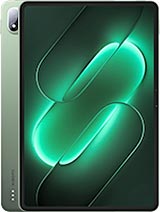
Pad 9 Pro
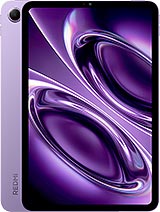
Redmi K Pad 2

Black Shark Gaming Tablet
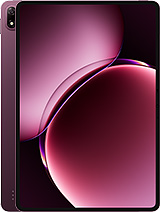
Pad 9 Pro Max
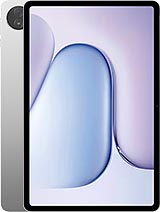
Pad 20 Pro