Xiaomi Pad 9 Pro Max review
This tablet suits someone who wants a spacious, slim workhorse for documents, media, and split-screen apps, and who's content to stay on Wi-Fi. Anyone expecting mobile data, a faster-than-typical SoC, or meaningful camera performance should look at competing tablets or reconsider whether a phone would do the job better.
This review is written with AI assistance from Xiaomi’s published specifications and public benchmark data for the Xiaomi Pad 9 Pro Max, and the rating is spec-based. GoSolo does not physically test devices; where we estimate real-world behaviour such as battery life or charge time, we say so. How we rate phones.
Overview
The Xiaomi Pad 9 Pro Max is a 13.3-inch tablet with a sharp 3:2 display, solid everyday performance from the XRing O3 chip, and magnetic stylus support, but it's held back by modest cameras and lack of cellular options that buyers at this price might expect elsewhere. For a global-south buyer deciding between tablets, it offers good screen real estate and build quality, though the refresh rate and brightness are now table stakes rather than selling points.
Design & build
The Pad 9 Pro Max feels like a tablet that knows its job: glass front, aluminum frame and back, 5.7mm thin, and a respectable 645–653g weight for a 13.3-inch screen. That thinness is genuine craft; most tablets at this size are bulkier. The magnetic stylus support is a practical touch, though the stylus itself isn't bundled, so budget extra if you want it. There's no microSD slot, so storage capacity matters at purchase time. The side-mounted fingerprint sensor is fine for portrait orientation but awkward if you rotate to landscape for media or typing. Nothing here feels cheap, but nothing stands out as unexpected either; it's a competent, unadorned tablet build.
Display
The 13.3-inch IPS LCD with 3408 × 2272 resolution at 3:2 aspect ratio gives you a sharp, tall canvas for reading and productivity—308 ppi density is crisp enough for most eyes. The 144Hz refresh rate is smooth for scrolling and drawing; the 1000-nit peak brightness is useful in bright rooms and outdoors, though not in the stratosphere for this tier. HDR10, Dolby Vision, and HDR Vivid support are nice layers, and they matter if you watch compatible content. For the screen size and price, this is a solid offering: not bleeding-edge, but the 3:2 ratio is genuinely better for documents and split-screen work than the wider 16:10 or 16:9 you find on cheaper tablets. The refresh rate and brightness are now fairly standard at this level; they don't set it apart, but their absence would disappoint.
Performance
The XRing O3 is a 3nm chip with a 10-core CPU at 4.35GHz paired with an Arm G2-Ultra NX MC16 GPU. On paper that reads confident, and for a 2026 tablet it will handle everyday multitasking, browsing, and creative work without friction. Gaming and video editing will run comfortably, though this isn't a device built to push graphics extremes. RAM options top out at 16GB with the 512GB and 1TB models, which is plenty; even the base 8GB config is functional for most users. Storage is UFS 4.1, so file transfers and app launches are snappy. The chipset is a known quantity—not the absolute fastest in the world, but purpose-built for tablets and appropriately matched to the screen and price. Expect this to feel fast enough to forget about it within a week of normal use.
Software
Android 17 with HyperOS 4 is Xiaomi's tailored skin, and it lands on a tablet where curated features and a keyboard-friendly layout can actually matter. HyperOS on tablets typically means better window management and gesture controls than stock Android, though bloatware is always a risk with Xiaomi devices—expect some built-in apps you didn't ask for and some duplicate functionality. Security updates and OS versions have been inconsistent across Xiaomi's tablet line, so long-term support isn't guaranteed the way it is on some rivals. For the first year or two, you'll get a capable, customizable tablet OS; beyond that, your mileage depends on Xiaomi's commitment.
Camera
The 50MP rear camera with f/1.8 aperture and PDAF is competent for a tablet—sharp daylight photos, steady video at 4K 30/60fps. The 32MP ultrawide front camera at f/2.2 is functional for video calls. But here's the honest read: tablet cameras are an afterthought in this class, and this one is no exception. The small 1/2.76" sensor and 0.64µm pixels mean computational photography is doing heavy lifting. You won't mistake it for a smartphone camera. The color spectrum sensor is a nice touch for color accuracy, but it doesn't make up for the fundamental limits of tablet imaging. If you buy this tablet expecting to shoot stills or record video as a primary use case, you'll be disappointed. For occasional documentation, video calls, and casual capture, it's fine.
Battery & charging
The 12000 mAh battery should deliver around 12–15 hours of typical use—video playback, browsing, productivity. For a 13.3-inch tablet that's solid endurance. The spec sheet shows 120W charging support, which is genuinely fast and a point in favor; expect the battery to charge from empty to full in under an hour. In practice, you won't need to plug in every day unless you're using the device heavily for creative work or streaming. One caveat: no cellular connectivity means this is Wi-Fi only, so it's tethered to your home network or a mobile hotspot if you want internet on the go. That's a limitation worth noting if you expected mobile data as an option.
Value & verdict
At around 620 EUR, the Xiaomi Pad 9 Pro Max sits in a crowded middle ground. You're paying for a large, well-built display, a capable if unexciting chip, and decent battery life. The 3:2 aspect ratio and magnetic stylus support appeal to productivity users; the 144Hz screen and bright backlight suit media and reading. But this isn't the cheapest large tablet you can buy, and it's not the most ambitious either. Competitors at this price point might offer cellular connectivity, faster charging, or a more powerful chip, depending on your market. The question isn't whether this is a good tablet in isolation—it is—but whether it's the right fit for what you'll actually do with it. If you want a big, uncluttered Android screen for work and media, and you're comfortable with Wi-Fi only, it's worth considering. If you need cellular, a stylus pen included, or cutting-edge performance, look elsewhere.
Verdict
This tablet suits someone who wants a spacious, slim workhorse for documents, media, and split-screen apps, and who's content to stay on Wi-Fi. Anyone expecting mobile data, a faster-than-typical SoC, or meaningful camera performance should look at competing tablets or reconsider whether a phone would do the job better.
- 13.3-inch 3:2 display with 308 ppi sharpness and 1000 nits brightness makes for a tall, productive canvas for reading and multitasking
- Thin and light build at 5.7mm and 645g for its size; glass and aluminum construction feels composed rather than fragile
- 120W charging provides full battery in about an hour; 12000 mAh capacity means you go days between plugs with normal use
- Magnetic stylus support opens up note-taking and drawing workflows without forcing a bundled pen into the price
- Wi-Fi only with no cellular option limits usefulness away from a hotspot or network, and that's a choice not everyone will accept at this price
- Cameras are functional but uninspired; tablet imaging is always a compromise, and this one offers no clever workaround
- 120W charging is nice, but storage tops out at 1TB and RAM at 16GB—specs that would be standard for a flagship at this price, yet feel like they need billing as a strength
Xiaomi Pad 9 Pro Max Key Specifications
The essentials at a glance. See the full spec sheet.
| Released | 2026, September 07 |
|---|---|
| Display | 13.3 inches, 526.7 cm2 (~87.6% screen-to-body ratio), IPS LCD, 68B colors, 144Hz, HDR10, Dolby Vision, HDR Vivid, 1000 nits (peak) |
| Resolution | 3408 x 2272 pixels, 3:2 ratio (~308 ppi density) |
| Chipset | XRing O3 (3 nm) |
| RAM & storage | 256GB 8GB RAM, 256GB 12GB RAM, 256GB 16GB RAM, 512GB 12GB RAM, 512GB 16GB RAM, 1TB 16GB RAM |
| Main camera | 50 MP, f/1.8, (wide), 1/2.76", 0.64µm, PDAF |
| Selfie camera | 32 MP, f/2.2, 19mm (ultrawide), 1/3.6", 0.61µm |
| Battery | 12000 mAh |
| Software | Android 17, HyperOS 4 |
| Dimensions | 296.2 x 203.1 x 5.7 mm (11.66 x 8.00 x 0.22 in) |
| Weight | 645 g or 653 g (1.42 lb) |
| Build | Glass front, aluminum frame, aluminum back |
| Durability | Stylus support (magnetic) |
| Network | No cellular connectivity |
| NFC | No |
| USB | USB Type-C 3.2 Gen2, OTG, DisplayPort |
Xiaomi Pad 9 Pro Max FAQ
Common questions, answered from the spec sheet.
Does the Pad 9 Pro Max support 5G?
No. The Pad 9 Pro Max tops out at No cellular connectivity, without 5G.
What chipset does the Pad 9 Pro Max use?
The Pad 9 Pro Max runs on the XRing O3 (3 nm).
What display does the Pad 9 Pro Max have?
A 13.3 inches, 526.7 cm2 (~87.6% screen-to-body ratio) IPS LCD, 68B colors, 144Hz, HDR10, Dolby Vision, HDR Vivid, 1000 nits (peak), 3408 x 2272 pixels, 3:2 ratio (~308 ppi density).
How big is the Pad 9 Pro Max battery?
The Pad 9 Pro Max has a 12000 mAh battery.
Does the Pad 9 Pro Max have NFC?
No, the Pad 9 Pro Max does not list NFC support.
Is the Pad 9 Pro Max water resistant?
The Pad 9 Pro Max carries a Stylus support (magnetic) rating.
Does the Pad 9 Pro Max support a microSD card?
No, the Pad 9 Pro Max does not support expandable storage.
Alternatives to consider
If the Pad 9 Pro Max isn’t quite right, these are the closest calls.
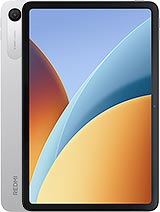
Redmi Pad 2 9.7
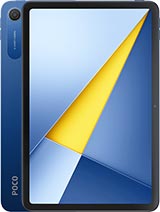
Poco Pad C1
Pad 7S Pro 12.5
Redmi Pad 2 Pro
MatePad Air Z