Xiaomi Poco C61 review
This phone suits someone in a cost-sensitive market who values battery life and connectivity over performance or camera quality. Anyone who games, edits media, or relies on fast processing should look at a higher-tier Poco or a rival brand offering better silicon at this price point.
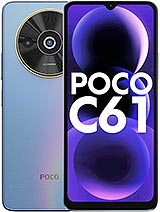
This review is based on Xiaomi’s published specifications and public benchmark data for the Xiaomi Poco C61, and the rating is spec-based. GoSolo does not physically test devices; where we estimate real-world behaviour such as battery life or charge time, we say so. How we rate phones.
Overview
The Poco C61 is a bare-bones budget phone that prioritizes battery life and basic connectivity over performance or camera quality. At around €80 it is honest about what it delivers: a day-and-a-half of heavy use, usable apps and video playback, and a display large enough to read without eye strain, even if pixels are visible.
Design & build
At 199g and 8.3mm thick, the Poco C61 feels light and pocketable without being fragile. The body uses unspecified plastic construction, which is standard for this price but shows fingerprints easily and lacks premium feel. Gorilla Glass 3 is genuinely from 2012—it scratches easier than modern versions and offers no water or dust resistance whatsoever. A side-mounted fingerprint sensor works quickly enough for daily unlocks. Overall it is competent industrial design with no surprises, neither robust nor particularly elegant.
Display
The 6.71-inch IPS LCD is visibly low-resolution at 720 x 1650 pixels and 268ppi density. Text appears fuzzy at normal arm's length, and anyone coming from a 1080p or higher phone will notice pixel grain immediately. The 90Hz refresh rate smooths scrolling and menu transitions, which helps the viewing experience feel less dated, but it cannot fix the underlying sharpness deficit. Brightness at 500 nits is adequate for outdoor use in moderate sunlight but not exceptional. The large screen real estate is the main win here: it makes reading messages and watching video genuinely comfortable for a phone at this price.
Performance
The Mediatek Helio G36 with Cortex-A53 cores is entry-level even by 2024 standards. Messaging apps, social media, and video playback run smoothly, and the phone will not lag you during everyday tasks. Anything more demanding reveals its limits: 3D games drop frames noticeably, and heavy multitasking stalls. The PowerVR GE8320 GPU simply lacks the muscle for modern games at any playable settings. Most users will tolerate this for basic use, but anyone who games regularly or runs resource-heavy apps should look elsewhere. Memory configurations up to 6GB RAM and 128GB storage help, but they cannot hide the CPU bottleneck.
Camera
An 8MP main sensor with f/2.0 aperture is minimal by any era's standards. Daylight photos come out soft and lacking fine detail; the auxiliary lens listed in specs is purely decorative at 0.08MP and contributes nothing. There is no night mode, no zoom, and no computational photography to salvage poor light. The 5MP selfie camera is similarly basic. Video at 1080p30 is workable for social media clips but nothing more. This phone's camera is functional for documentation but not a tool for photography enthusiasts. Accept it as a liability for the price.
Battery & charging
The 5000mAh battery is the genuine standout. With the Helio G36's low power drain and a typical mix of texting, social media, and video, you will comfortably reach 36–48 hours between charges. Heavy users or those who stream constantly might need a top-up by evening, but for most in cost-sensitive markets, this longevity is a genuine advantage. The 10W charging is the painful counterpart: a full recharge from zero takes roughly 90 minutes. Rivals now offer 33W, 65W, or faster at this price, so you are giving up speed for capacity. Plan charging around your day, not throughout it.
Software & connectivity
Android 14 with MIUI ships on the Poco C61, and Xiaomi's customization is light enough not to bog down an entry-level device. Updates are a question mark—Xiaomi's track record for budget phones is spotty, so expect 1–2 years of security patches at best. The phone includes FM radio and an audio jack, both rare luxuries in modern smartphones. Bluetooth 5.4, multi-band GPS, and LTE support (no 5G) cover the essentials. Wi-Fi 6 is absent, and NFC is not present, so contactless payments are off the table. For someone in a market without reliable internet at home, the FM radio alone is a practical inclusion.
Value & verdict
At around €80, the Poco C61 does not try to punch above its weight. It is intentionally simple: long battery, basic performance, minimal camera. The decision tree is clear. If you need a phone for calls, messaging, light browsing, and social media, and you value going 1.5 days between charges, this is a sensible pick. The display is large enough to read comfortably, the headphone jack and FM radio are unexpected bonuses, and the price is fair. If you game, take photos, or need snappy performance, this phone will frustrate you within days. Do not mistake cheap for bad—the Poco C61 is cheap and honest about it.
Verdict
This phone suits someone in a cost-sensitive market who values battery life and connectivity over performance or camera quality. Anyone who games, edits media, or relies on fast processing should look at a higher-tier Poco or a rival brand offering better silicon at this price point.
- 5000mAh battery stretches to 1.5–2 days on moderate use, among the longest in its class
- 3.5mm jack and FM radio still present, a rarity even in budget phones
- Large 6.71-inch display with 90Hz refresh, making scrolling smoother despite low resolution
- Dedicated microSD slot and up to 6GB RAM option give some headroom for app juggling
- 10W charging takes roughly 90 minutes to full—rivals now routinely offer 33W or higher at this price
- 268ppi pixel density makes text noticeably grainy; the 720p resolution is dated even for entry-level in 2024
- Helio G36 is underpowered for anything beyond basic apps; even casual games stutter and modern 3D titles are out of reach
Xiaomi Poco C61 Key Specifications
The essentials at a glance. See the full spec sheet.
| Released | 2024, March 26 |
|---|---|
| Display | 6.71 inches, 106.5 cm2 (~82.9% screen-to-body ratio), IPS LCD, 90Hz, 500 nits |
| Resolution | 720 x 1650 pixels (~268 ppi density) |
| Chipset | Mediatek Helio G36 (12 nm) |
| RAM & storage | 64GB 3GB RAM, 64GB 4GB RAM, 128GB 4GB RAM, 128GB 6GB RAM |
| Main camera | 8 MP, f/2.0, (wide) Auxiliary lens |
| Selfie camera | 5 MP |
| Battery | 5000 mAh |
| Charging | 10W wired |
| Software | Android 14, MIUI |
| Dimensions | 168.4 x 76.3 x 8.3 mm (6.63 x 3.00 x 0.33 in) |
| Weight | 199 g (7.05 oz) |
| Network | GSM / HSPA / LTE |
| NFC | No |
| USB | USB Type-C 2.0, OTG |
Xiaomi Poco C61 FAQ
Common questions, answered from the spec sheet.
Does the Poco C61 support 5G?
No. The Poco C61 tops out at GSM / HSPA / LTE, without 5G.
What chipset does the Poco C61 use?
The Poco C61 runs on the Mediatek Helio G36 (12 nm).
What display does the Poco C61 have?
A 6.71 inches, 106.5 cm2 (~82.9% screen-to-body ratio) IPS LCD, 90Hz, 500 nits, 720 x 1650 pixels (~268 ppi density).
How big is the Poco C61 battery?
The Poco C61 has a 5000 mAh battery. Charging is rated at 10W wired.
Does the Poco C61 have NFC?
No, the Poco C61 does not list NFC support.
Does the Poco C61 support a microSD card?
Yes, the Poco C61 supports expandable storage (microSDXC (dedicated slot)).
Does the Poco C61 have a headphone jack?
Yes, the Poco C61 has a 3.5mm headphone jack.
Alternatives to consider
If the Poco C61 isn’t quite right, these are the closest calls.
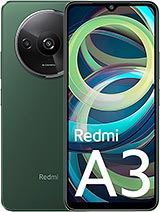
Redmi A3

Redmi A3x
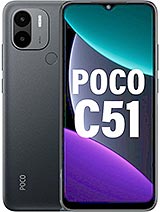
Poco C51

Poco C71

Y50 5G