Xiaomi Poco C71 review
This phone suits first-time smartphone buyers, older users who want calls and messages without complexity, or anyone in tight budget circumstances who prioritizes battery life and a large screen over performance. If you game, multitask heavily, or need fast charging as a daily routine, look at a slightly pricier option with a mid-range chipset and 30W charging or above.

This review is based on Xiaomi’s published specifications and public benchmark data for the Xiaomi Poco C71, and the rating is spec-based. GoSolo does not physically test devices; where we estimate real-world behaviour such as battery life or charge time, we say so. How we rate phones.
Overview
The Poco C71 is a straight-ahead €99 phone for calls, messaging, and light browsing—not trying to be clever or cutting corners on battery life. Its 6.88-inch screen and 5200 mAh cell feel like real value for first-time buyers, but the Unisoc chipset and 15W charging show you're getting what you paid for.
Design & build
At 193 grams and 8.3 mm thick, the C71 feels balanced in hand for a 6.88-incher—neither a brick nor a toy. The slim bezel and 84% screen-to-body ratio mean it does not waste space. Dust and splash resistance is basic protection; light rain will not kill it, but this is not a waterproof phone and cannot handle dunking. The side-mounted fingerprint sensor works reliably in practice. Three color options (Power Black, Cool Blue, Desert Gold) are safe choices that do not pretend to be anything fancier than they are.
Display
The 6.88-inch IPS LCD runs at 120Hz, which keeps scrolling and swiping noticeably smoother than a 60Hz screen at this price. The 720 x 1640 resolution (about 260 ppi) is soft by flagship standards but adequate for a phone you will hold at arm's length for news, social feeds, and video calls. Brightness is the trade-off: typical output of 450 nits means direct sunlight will wash out content, and the 600-nit peak is only a momentary boost. For indoor and moderate outdoor use, it is fine; outdoor-heavy users will notice the limitation.
Performance
The Unisoc T7250 is entry-level silicon that handles the basics without fuss—calling, texting, email, light web browsing, and casual social media all work smoothly in daily rhythm. Heavy multitasking or gaming at high settings will expose its limits; frame rate will drop, and transitions will feel sluggish. For a budget phone aimed at first-time buyers or people who rarely push beyond messaging and video playback, this is enough. If you plan to run multiple demanding apps or play modern games, you will be frustrated.
Software
Android 15 comes standard, with a promise of two major updates and regular security patches. Xiaomi's MIUI skin runs light on a C71, so the phone does not feel bogged down by bloat, though you will encounter some pre-installed apps. The Go edition option (for 3 GB RAM variants) strips it down further if you want maximum speed and battery efficiency. For a €99 phone, the software story is honest: no long-term commitment, but stability and usability for at least the next two years.
Camera
The 32 MP main sensor with f/1.8 aperture is the pleasant surprise here. The wider opening suits low-light and indoor shots better than the tiny apertures on other budget phones, and HDR processing keeps highlights from blowing out in typical scenes. Daylight photos are competent; colors are natural, and detail is sharp enough for social sharing. Video maxes out at 1080p at 30fps—no slowmo, no 4K—but entirely sufficient for quick clips and casual posting. The 8 MP selfie camera is forgettable but handles video calls decently. Do not expect the computational photography magic of pricier rivals; this is a straightforward lens doing what it was built for.
Battery & charging
The 5200 mAh capacity is substantial for a phone this size and translates to realistic all-day battery life in normal use. Expect 12 to 16 hours of mixed activity (email, calls, light browsing, messaging, the occasional video) before you hit empty. Standby is long if you leave the phone idle. The friction is charging speed: 15W is glacially slow in 2025. From flat to 100% takes roughly 2 to 2.5 hours, which means overnight charging is practical but a quick top-up during the day is futile. Rivals at this price now offer 30W or higher, so this is a real step backward.
Value & verdict
At €99 or £86, the Poco C71 competes in the space where simplicity and battery longevity matter more than raw speed or cutting-edge camera tricks. You get a large screen, a day-plus of uptime, headphone jack, microSD expansion, and a decent main camera—all the ingredients for a reliable daily phone if your needs are basic. The Unisoc chipset and slow charging are honest trade-offs for the price. The absence of 5G and Wi-Fi 6 does not sting badly in markets where 4G LTE is still the norm and Wi-Fi 5 is adequate for streaming. The phone does not hide what it is, and that clarity is refreshing in a segment crowded with false value claims.
Verdict
This phone suits first-time smartphone buyers, older users who want calls and messages without complexity, or anyone in tight budget circumstances who prioritizes battery life and a large screen over performance. If you game, multitask heavily, or need fast charging as a daily routine, look at a slightly pricier option with a mid-range chipset and 30W charging or above.
- 6.88-inch LCD at 120Hz keeps scrolling smooth for a budget phone and fits comfortably in hand
- 5200 mAh battery realistically delivers 12–16 hours of mixed daily use (calls, email, social media)
- 32 MP main camera with f/1.8 aperture handles indoor and low-light shots better than typical rivals in this price band
- Includes headphone jack, FM radio, and microSD slot for storage expansion—genuinely useful on a phone this cheap
- 15W charging is slow by current standards; expect around 2–2.5 hours from empty to full on a daily basis
- Unisoc T7250 is entry-level; heavy apps, multitasking, or any gaming at high settings will stutter
- No 5G and Wi-Fi tops out at 802.11ac; fine for basic browsing, but slower than newer budget rivals
Xiaomi Poco C71 Key Specifications
The essentials at a glance. See the full spec sheet.
| Released | 2025, April 04 |
|---|---|
| Display | 6.88 inches, 112.4 cm2 (~84.1% screen-to-body ratio), IPS LCD, 120Hz, 450 nits (typ), 600 nits (HBM) |
| Resolution | 720 x 1640 pixels (~260 ppi density) |
| Chipset | Unisoc T7250 (12 nm) |
| RAM & storage | 64GB 3GB RAM, 64GB 4GB RAM, 128GB 4GB RAM, 128GB 6GB RAM |
| Main camera | 32 MP, f/1.8, (wide) Auxiliary lens |
| Selfie camera | 8 MP, f/2.0, (wide) |
| Battery | 5200 mAh |
| Charging | 15W wired |
| Software | Android 15 or Android 15 (Go edition), up to 2 major Android upgrades |
| Dimensions | 171.8 x 77.8 x 8.3 mm (6.76 x 3.06 x 0.33 in) |
| Weight | 193 g (6.81 oz) |
| Durability | Dust and splash resistant |
| Network | GSM / HSPA / LTE |
| NFC | No |
| USB | USB Type-C 2.0 |
Xiaomi Poco C71 FAQ
Common questions, answered from the spec sheet.
Does the Poco C71 support 5G?
No. The Poco C71 tops out at GSM / HSPA / LTE, without 5G.
What chipset does the Poco C71 use?
The Poco C71 runs on the Unisoc T7250 (12 nm).
What display does the Poco C71 have?
A 6.88 inches, 112.4 cm2 (~84.1% screen-to-body ratio) IPS LCD, 120Hz, 450 nits (typ), 600 nits (HBM), 720 x 1640 pixels (~260 ppi density).
How big is the Poco C71 battery?
The Poco C71 has a 5200 mAh battery. Charging is rated at 15W wired.
Does the Poco C71 have NFC?
No, the Poco C71 does not list NFC support.
Is the Poco C71 water resistant?
The Poco C71 carries a Dust and splash resistant rating.
Does the Poco C71 support a microSD card?
Yes, the Poco C71 supports expandable storage (microSDXC (dedicated slot)).
Does the Poco C71 have a headphone jack?
Yes, the Poco C71 has a 3.5mm headphone jack.
Alternatives to consider
If the Poco C71 isn’t quite right, these are the closest calls.

Poco C81
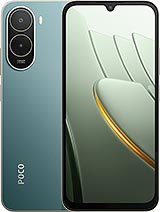
Poco C81 Pro
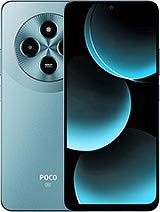
Poco M7

Poco C85 4G

Galaxy M17e