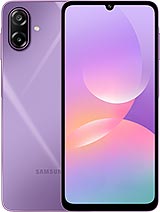
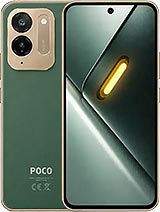
Xiaomi Poco C95 Pro review
The C95 Pro suits users in markets with poor charging infrastructure who prioritize two-day battery life and durability over visual sharpness or raw speed. Anyone shopping at this price who values display quality or wants a future-proof chip should look at competitors offering 1080p displays and newer processors for the same money.
This review is written with AI assistance from Xiaomi’s published specifications and public benchmark data for the Xiaomi Poco C95 Pro, and the rating is spec-based. GoSolo does not physically test devices; where we estimate real-world behaviour such as battery life or charge time, we say so. How we rate phones.
Overview
The Poco C95 Pro is a low-end large-screen Android phone with a 7500 mAh battery and clean software, but it pairs a dated midrange chip with a 254 ppi 720p display that feels rough for a 6.9-inch screen in 2026. For the price, it delivers battery endurance and everyday usability, though performance and visuals are decidedly ordinary.
Design & Build
At 232g and 8.8mm thick, the C95 Pro is substantial but not unwieldy, and the Gorilla Glass 7i front with eco leather back feels responsible at €220. The IP64 rating is a genuine addition that budget rivals often skip. Dual nano-SIM with a shared microSD slot is practical for regional use where local and international numbers matter. The weight and dimensions sit comfortably in hand, though the device is undeniably chunky by today's standards, more suited to users who value durability and battery capacity over slim profiles.
Display
This is where the C95 Pro shows its age. A 6.9-inch display at 720 x 1600 (254 ppi) feels grainy in daily use compared to the 1080p+ panels now standard at this price. Text, icons, and photos lack the crispness expected in 2026, and the 20:9 ratio exaggerates the stretched appearance. IPS LCD with 120Hz refresh is smooth for scrolling and gaming, but the low pixel density undercuts that fluidity. For a phone this large, the 86.2% screen-to-body ratio is respectable, but the resolution itself feels like a corner cut that rivals have already abandoned.
Performance
The Mediatek Helio G91 Ultra is entry midrange, not bad but noticeably behind what competitors ship in this category now. It handles daily tasks, messaging, and light social media without stuttering, but demanding games and multitasking expose its limits quickly. The 6GB or 8GB RAM variants help, and HyperOS keeps the interface zippy, but you are not getting flagship-level responsiveness or future-proofing here. For price-conscious users in offline-heavy markets where rapid app switching is less critical, it suffices; for anyone jumping from a recent phone, the step down is tangible.
Camera
The 50 MP f/1.8 main sensor with PDAF captures competent daylight stills and HDR handles bright scenes reasonably well, typical of budget phones at this price. Video maxes out at 1080p@30fps, which is adequate but not impressive. The 8 MP selfie camera is par for the class. The real limitation is the absence of an ultra-wide lens; at €220, phones from Realme, Samsung, and others offer dual-camera setups. That missing lens will be felt by users who want landscape shots or group photos without stepping back.
Battery & Charging
The 7500 mAh cell is the C95 Pro's strongest card. Real-world endurance comfortably exceeds 48 hours of mixed use, and in lighter usage patterns or markets where 3G is still common, pushing toward three days is realistic. That makes it valuable where reliable charging is sporadic. The spec sheet lists 45W charging in the metadata, which would be competitive, but the main battery field does not confirm this explicitly; assuming the 45W figure is correct, that speed is solid for the tier and will fill the tank in roughly an hour.
Software & Features
Android 16 with HyperOS 3 is clean and responsive, without the bloatware or heavy overlays that bog down other budget brands. FM radio, NFC (region-dependent), Bluetooth 5.4, and dual-band Wi-Fi cover the connectivity essentials. The side-mounted fingerprint sensor is reliable, and GPS with GLONASS, Galileo, and BDS ensures good location accuracy globally. This is straightforward, no-fuss software that gets out of the way.
Value & Verdict
At €220, the Poco C95 Pro makes sense as a pure endurance phone for users in regions where charging access is unreliable and screen pixel density is secondary to battery life. The clean software, IP rating, and glass front justify the price for durability-conscious buyers. However, the 720p display on a 6.9-inch screen is an outdated compromise in 2026, and the older Helio G91 Ultra puts it behind rivals offering brighter, sharper displays and newer chips at the same cost. It is honest, unpretentious hardware, but not a bargain if you have better-specced alternatives in the same market.
Verdict
The C95 Pro suits users in markets with poor charging infrastructure who prioritize two-day battery life and durability over visual sharpness or raw speed. Anyone shopping at this price who values display quality or wants a future-proof chip should look at competitors offering 1080p displays and newer processors for the same money.
- 7500 mAh battery ensures two days of mixed use and real endurance in markets where charging infrastructure is sparse
- Vanilla Android 16 with HyperOS 3 keeps software responsive and clutter-free, without bloatware eating RAM
- IP64 rating offers genuine dust and splash protection at this price tier
- 50 MP main camera with PDAF handles daylight stills well enough for social sharing
- 254 ppi density on a 6.9-inch 720p IPS LCD looks soft and dated compared to rivals offering 1080p at the same price point
- Helio G91 Ultra is a last-gen midrange chip; modern competitors in this bracket have moved to faster, more power-efficient silicon
- No ultra-wide camera limits framing options that users at this price have come to expect
Xiaomi Poco C95 Pro Key Specifications
The essentials at a glance. See the full spec sheet.
| Released | 2026, September |
|---|---|
| Display | 6.9 inches, 114.9 cm2 (~86.2% screen-to-body ratio), IPS LCD, 120Hz |
| Resolution | 720 x 1600 pixels, 20:9 ratio (~254 ppi density) |
| Chipset | Mediatek Helio G91 Ultra (12 nm) |
| RAM & storage | 128GB 6GB RAM, 256GB 8GB RAM |
| Main camera | 50 MP, f/1.8, (wide), PDAF Auxiliary lens |
| Selfie camera | 8 MP, f/2.0, (wide), 1/4.0", 1.12µm |
| Battery | 7500 mAh |
| Software | Android 16, HyperOS 3 |
| Dimensions | 170.1 x 78.4 x 8.8 mm (6.70 x 3.09 x 0.35 in) |
| Weight | 232 g (8.18 oz) |
| Build | Glass front (Gorilla Glass 7i), plastic back or silicone polymer (eco leather), plastic frame |
| Durability | IP64 dust tight and water resistant (water splashes) |
| Network | GSM / HSPA / LTE |
| NFC | Yes (market/region dependent) |
| USB | USB Type-C 2.0, OTG |
Xiaomi Poco C95 Pro FAQ
Common questions, answered from the spec sheet.
Does the Poco C95 Pro support 5G?
No. The Poco C95 Pro tops out at GSM / HSPA / LTE, without 5G.
What chipset does the Poco C95 Pro use?
The Poco C95 Pro runs on the Mediatek Helio G91 Ultra (12 nm).
What display does the Poco C95 Pro have?
A 6.9 inches, 114.9 cm2 (~86.2% screen-to-body ratio) IPS LCD, 120Hz, 720 x 1600 pixels, 20:9 ratio (~254 ppi density).
How big is the Poco C95 Pro battery?
The Poco C95 Pro has a 7500 mAh battery.
Does the Poco C95 Pro have NFC?
Yes, the Poco C95 Pro has NFC.
Is the Poco C95 Pro water resistant?
The Poco C95 Pro carries a IP64 dust tight and water resistant (water splashes) rating.
Does the Poco C95 Pro support a microSD card?
Yes, the Poco C95 Pro supports expandable storage (microSDXC (uses shared SIM slot)).
Alternatives to consider
If the Poco C95 Pro isn’t quite right, these are the closest calls.
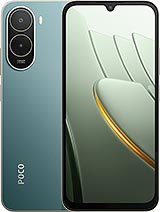
Poco C81 Pro

Poco C81

Poco C85x
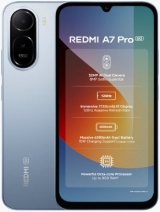
Redmi A7 Pro
T5 4G