Xiaomi Poco M7 review
The M7 suits daily users who prioritize battery life, 5G connectivity, a headphone jack, and microSD expansion over raw speed or camera quality. Those who game often, value fast charging, or demand sharp displays should look at competitors in the £180–£250 range instead.

This review is written with AI assistance from Xiaomi’s published specifications and public benchmark data for the Xiaomi Poco M7, and the rating is spec-based. GoSolo does not physically test devices; where we estimate real-world behaviour such as battery life or charge time, we say so. How we rate phones.
Overview
The Poco M7 is a budget 5G phone that prioritizes everyday practicality—a headphone jack, microSD expansion, 5160mAh battery, and 120Hz display—over raw power. It's a straightforward daily driver for users who value reliability and connectivity more than performance or cameras, and the price is fair for what you get.
Design & build
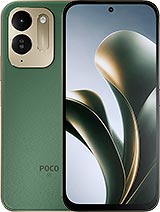
At 205g and 8.2mm thick, the M7 feels solid without being hefty. Glass front and back with a plastic frame is standard for the price, and the dust and splash resistance (no formal IP rating, mind you) covers light rain and pocket dust without the premium associated with full water-sealing. The 6.88-inch body is tall but not uncomfortable to hold, and side-mounted fingerprint sensor feels more reliable in pocket than front-facing alternatives. Three colour options (Ocean Blue, Satin Black, Mint Green) offer some visual choice. Build quality reads competent rather than luxurious, which matches the price tag and target buyer.
Display
The 6.88-inch IPS LCD with 120Hz refresh and 600 nits peak brightness (HBM) is a genuine strength for a £145 phone. 120Hz scrolling feels noticeably smoother than 60Hz rivals, and 600 nits keeps the screen readable in direct sunlight—a real comfort if you spend time outdoors. The weak point is resolution: 720 x 1640 pixels on such a large screen yields just 260 ppi, so text and icons show visible pixelation when you hold the phone at normal distance. Watching video or browsing is fine; reading fine print less so. For the price, though, brightness and refresh matter more than sharpness at this size, and Xiaomi has prioritized correctly.
Performance
The Snapdragon 4 Gen 2 is strictly entry-level. Messaging, web browsing, social media, and video streaming run without hiccups, and the Adreno 613 GPU handles casual games (Candy Crush, Among Us tier) at full settings. Ask it for demanding 3D titles—Call of Duty Mobile, Genshin Impact—and you'll either hit frame drops or need to dial down graphics. Multitasking with 6GB RAM (base) can feel a shade laggy if you flip between heavy apps; the 8GB option is the smarter pick here. For a daily workhorse that avoids demanding gaming, the chip is adequate; for anything else, it will show its limits. This is the honest constraint of the price.
Software
Android 14 with HyperOS runs clean on the M7, and Xiaomi promises two major version upgrades—a modest but not shameful commitment for a budget phone. HyperOS adds Xiaomi's UI tweaks on top of stock Android, which is either a convenience or bloat depending on taste; no dealbreaker either way. Security patches and stability will depend on Xiaomi's follow-through, which has been patchy in the past. You are not getting cutting-edge update support like a flagship, but the baseline software experience is solid for the segment.
Camera
The 50MP f/1.8 main sensor with PDAF captures sharp daylight shots and handles moderate low-light scenes better than many peers at this price. Colours are punchy and exposure is balanced, without the oversaturation that plagues some budget phones. The wide f/1.8 aperture helps. Video is capped at 1080p@30fps—serviceable for clips but nothing ambitious—and the 8MP selfie is basic for video calls or photos. Macro and ultra-wide are absent; you get a single focal length. For everyday snapshots and social media, the main camera delivers; for anything beyond that, you are limited.
Battery & charging
The 5160mAh battery should see you through a day of moderate use (calls, messages, some video, light social media) without stress. Heavy streaming or gaming will pull you toward a mid-afternoon top-up, and always-on 120Hz refresh does tax the cell noticeably. Charging, though, is where the M7 stumbles: 18W wired takes roughly 60–90 minutes to reach 100%, which is slow by 2025 standards. Rivals at this price have moved to 33W or higher, so you cannot grab a quick 20-minute boost and run. For a phone aimed at daily drivers, the slow charge is a genuine irritant.
Value & verdict-context
At £145, the M7 targets buyers who value practical features (5G, headphone jack, microSD, battery endurance) over processing grunt or camera wow. It sits squarely in the segment where price sensitivity is high and brand loyalty low; you are buying a workhorse, not a statement. The 5G connectivity and full band portfolio is a real win for the price, and the inclusion of a 3.5mm jack and dedicated microSD slot—increasingly rare—will appeal to users burnt by their absence elsewhere. Slow charging and entry-level performance are the trade-offs, but neither disqualifies the phone if you know what you are getting. Xiaomi has built a credible daily driver for users willing to forgo speed and accept a modest display sharpness in exchange for practicality and a full day of battery life.
Verdict
The M7 suits daily users who prioritize battery life, 5G connectivity, a headphone jack, and microSD expansion over raw speed or camera quality. Those who game often, value fast charging, or demand sharp displays should look at competitors in the £180–£250 range instead.
- 5G connectivity at under £150, backed by a solid network band portfolio
- Headphone jack and microSD slot—rare amenities that actually matter for this audience
- 5160mAh battery with moderate use reaching a full day; 120Hz display adds fluidity despite the 720p resolution
- 50MP main camera with f/1.8 aperture and PDAF performs decently in daylight, supported by sturdy stereo speakers and Bluetooth 5.0
- 18W charging is slow for 2025; rivals at this price now push 33–66W, leaving you tethered for 60–90 minutes
- Snapdragon 4 Gen 2 is entry-level; demanding games and heavy multitasking will stutter or require graphical compromises
- 720p on a 6.88-inch screen means visible pixelation up close, and 1080p video caps your recording ambitions
Xiaomi Poco M7 Key Specifications
The essentials at a glance. See the full spec sheet.
| Released | 2025, March 03 |
|---|---|
| Display | 6.88 inches, 112.4 cm2 (~84.0% screen-to-body ratio), IPS LCD, 120Hz, 450 nits (typ), 600 nits (HBM) |
| Resolution | 720 x 1640 pixels (~260 ppi density) |
| Chipset | Qualcomm SM4450 Snapdragon 4 Gen 2 (4 nm) |
| RAM & storage | 128GB 6GB RAM, 128GB 8GB RAM |
| Main camera | 50 MP, f/1.8, (wide), 1/2.96", PDAF |
| Selfie camera | 8 MP, f/2.0, (wide) |
| Battery | 5160 mAh |
| Charging | 18W wired |
| Software | Android 14, up to 2 major Android upgrades, HyperOS |
| Dimensions | 171.9 x 77.8 x 8.2 mm (6.77 x 3.06 x 0.32 in) |
| Weight | 205.4 g (7.23 oz) |
| Build | Glass front, glass back, plastic frame |
| Durability | Dust and splash resistant |
| Network | GSM / HSPA / LTE / 5G |
| NFC | No |
| USB | USB Type-C 2.0 |
Xiaomi Poco M7 FAQ
Common questions, answered from the spec sheet.
Does the Poco M7 support 5G?
Yes. The Poco M7 supports 5G networks.
What chipset does the Poco M7 use?
The Poco M7 runs on the Qualcomm SM4450 Snapdragon 4 Gen 2 (4 nm).
What display does the Poco M7 have?
A 6.88 inches, 112.4 cm2 (~84.0% screen-to-body ratio) IPS LCD, 120Hz, 450 nits (typ), 600 nits (HBM), 720 x 1640 pixels (~260 ppi density).
How big is the Poco M7 battery?
The Poco M7 has a 5160 mAh battery. Charging is rated at 18W wired.
Does the Poco M7 have NFC?
No, the Poco M7 does not list NFC support.
Is the Poco M7 water resistant?
The Poco M7 carries a Dust and splash resistant rating.
Does the Poco M7 support a microSD card?
Yes, the Poco M7 supports expandable storage (microSDXC (dedicated slot)).
Does the Poco M7 have a headphone jack?
Yes, the Poco M7 has a 3.5mm headphone jack.
Alternatives to consider
If the Poco M7 isn’t quite right, these are the closest calls.

Poco M8 Power

Poco M7 Plus

Poco M7 4G
Poco M8x

A5 5G