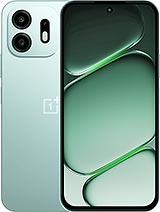
Xiaomi Poco M8 Power review
The M8 Power is a niche device: genuinely appealing if you watch videos, read, or message all day and despise hunting for an outlet, but miscast as a general-purpose phone. Its display and battery are legitimate strengths; its performance, camera, and heft are liabilities. Those prioritizing endurance and screen quality will get value; everyone else has better options for the money."
This review is written with AI assistance from Xiaomi’s published specifications and public benchmark data for the Xiaomi Poco M8 Power, and the rating is spec-based. GoSolo does not physically test devices; where we estimate real-world behaviour such as battery life or charge time, we say so. How we rate phones.
Overview
The Poco M8 Power is a large, heavy budget phone with an unexpectedly good AMOLED display and enormous battery, but held back by an entry-level chipset and bare-bones camera performance. For the price, the screen and endurance make it a solid choice for video watching and all-day use, though performance and photography remain budget-tier.
Design & build
The M8 Power is unapologetically large and heavy. At 225g and 8.5mm thick, it feels solid in hand but not in a premium sense—more like carrying a small tablet. The 7-inch display dominates the front with an 88% screen-to-body ratio, leaving minimal bezels, but the overall footprint (169.7 x 79.1mm) is bulky enough that one-handed use is a non-starter for most. IP65 water and dust resistance is a genuine plus for this price tier, offering protection against splashes and light jets without the durability theatre of higher IP ratings. The frame and back are presumably plastic, and while Corning Gorilla Glass 7i on the front suggests durability, the weight distribution feels unbalanced—this phone wants to be a media device, and the engineering backs that up at the cost of portability.
Display
This is where the M8 Power surprises. A 7-inch AMOLED panel at 120Hz and 1800 nits peak brightness is genuinely rare below €250, and it shows. Colors are vivid, blacks are deep, and the 1080 x 2396 resolution (375 ppi) is sharp enough that pixel structure disappears at normal viewing distance. Yes, 375 ppi is lower than flagship density, but on a 7-inch screen, the difference is negligible. The 120Hz refresh rate is smooth and makes scrolling feel fluid—not essential at this price, but a real quality-of-life gain. Gorilla Glass 7i adds scratch resistance. This is legitimately the phone's strongest point and what justifies its sheer bulk. Video and streaming content look excellent, making it an genuinely appealing device for media consumption on a budget.
Performance
The Snapdragon 4 Gen 4 is an entry-level chipset, and that's what you get here. It handles basic tasks—calls, messaging, light browsing, social media—without hiccups, but app launches are sluggish, gaming is out of the question, and multitasking feels constrained. The Adreno 613 GPU is capable enough for casual use but not for anything demanding. Pair this with 6GB or 8GB of RAM and UFS 2.2 storage, and you have a phone that works but doesn't feel snappy. This is the floor of modern smartphone performance; it's not broken, but it's noticeably slower than mid-range rivals and a distant echo of flagship responsiveness. For buyers content with email, YouTube, and WhatsApp, it suffices. Anyone else should look up the price ladder.
Software
Android 16 with HyperOS 3 runs on top, offering four major OS updates worth of support—solid for longevity at this price. HyperOS is Xiaomi's skin, and on a entry-level device, it tends toward bloat and aggressive optimization requests. The interface is functional rather than elegant, and performance ceiling limits how smoothly everything lands. Updates over time should improve things, but out of the box, the software experience feels utilitarian, matching the hardware's no-frills ethos.
Camera
The 50MP main sensor is a spec-sheet win that delivers almost nothing in practice. A 1/2.76" sensor with 0.64µm pixels is tiny, and cramming 50MP into that means each pixel is light-starved. F/1.8 helps a little, but the photo output is muddy in shadow, oversaturated in daylight, and soft in fine detail. PDAF and LED flash don't salvage this. The 8MP front-facing camera is purely functional for video calls. Most brutally, video is capped at 1080p@30fps—adequate but static and lacking dynamism. If photography matters to you at all, even marginally, skip this phone. The camera is the phone's biggest weakness relative to even nearby budget rivals.
Battery & charging
The 8000 mAh battery is enormous—the kind of capacity that promises genuine two-day endurance with moderate use and easy three days of light use. Battery life here is a major draw and one of the few quantifiable reasons to choose this over a sleeker phone. Charging speed is not listed in the spec sheet, which is suspect for a device named "Power," suggesting it may not be a strong point or that it's mediocre enough to omit. Without confirmed wattage, assume it's slow; 8000 mAh takes time to refill regardless, likely 90 minutes or more even at moderate power. This is a phone you buy if you want all-day, every-day runtime and you're willing to charge overnight.
Value & verdict
At around €230, the M8 Power is priced for buyers who value screen real estate and battery endurance over speed and camera quality. For video watching, reading, and light communication, it's a functional choice. The AMOLED display is genuinely impressive at this price, and the battery is class-leading. But the entry-level chipset, weak camera, and brick-like bulk mean you're making real compromises. This phone suits people who hate charging their device and spend most of their time on-screen with large text and video; it's poor for anyone needing responsive performance, decent photos, or portability. Mid-range alternatives at or near this price will outpace it on processor and camera. Look elsewhere if you game, shoot, or use your phone for more than five hours away from power.
Verdict
The M8 Power is a niche device: genuinely appealing if you watch videos, read, or message all day and despise hunting for an outlet, but miscast as a general-purpose phone. Its display and battery are legitimate strengths; its performance, camera, and heft are liabilities. Those prioritizing endurance and screen quality will get value; everyone else has better options for the money."
- 7-inch AMOLED at 120Hz with 1800 nits peak brightness makes this a rare sub-€250 phone that doesn't rely on cheap LCD, delivering rich blacks and smooth scrolling.
- 8000 mAh battery promises genuine 2-day endurance even with moderate use; bigger than most flagships and a real reason to buy this over a slimmer rival.
- IP65 rating and microSDXC card slot (dedicated) at this price point—rare redundancies that add practical durability and expandability without the usual cost bump.
- Snapdragon 4 Gen 4 is entry-level by design; don't expect fast app launches, smooth gaming, or multitasking grace—it's adequate for messaging and video, not much else.
- 50MP camera is spec-sheet posturing: 1080p video only, 0.64µm pixels, and f/1.8 doesn't compensate for the tiny 1/2.76" sensor. Photos are flat, low-light is weak, and it falls behind even mid-range phones here.
- 225g and 8.5mm thick makes this a brick in the hand—heavier than many 2026 flagships and genuinely awkward to grip or pocket for extended periods.
Xiaomi Poco M8 Power Key Specifications
The essentials at a glance. See the full spec sheet.
| Released | 2026, August 04 |
|---|---|
| Display | 7.0 inches, 118.4 cm2 (~88.2% screen-to-body ratio), AMOLED, 120Hz, 1800 nits (peak) |
| Resolution | 1080 x 2396 pixels (~375 ppi density) |
| Chipset | Qualcomm SM4450-AF Snapdragon 4 Gen 4 |
| RAM & storage | 128GB 6GB RAM, 128GB 8GB RAM |
| Main camera | 50 MP, f/1.8, 26mm (wide), 1/2.76", 0.64µm, PDAF |
| Selfie camera | 8 MP, f/2.0, (wide) |
| Battery | 8000 mAh |
| Software | Android 16, up to 4 major OS updates, HyperOS 3 |
| Dimensions | 169.7 x 79.1 x 8.5 mm (6.68 x 3.11 x 0.33 in) |
| Weight | 225 g (7.94 oz) |
| Durability | IP65 dust tight and water resistant (low pressure water jets) |
| Network | GSM / HSPA / LTE / 5G |
| NFC | Yes (market/region dependent) |
| USB | USB Type-C 2.0, OTG |
Xiaomi Poco M8 Power FAQ
Common questions, answered from the spec sheet.
Does the Poco M8 Power support 5G?
Yes. The Poco M8 Power supports 5G networks.
What chipset does the Poco M8 Power use?
The Poco M8 Power runs on the Qualcomm SM4450-AF Snapdragon 4 Gen 4.
What display does the Poco M8 Power have?
A 7.0 inches, 118.4 cm2 (~88.2% screen-to-body ratio) AMOLED, 120Hz, 1800 nits (peak), 1080 x 2396 pixels (~375 ppi density).
How big is the Poco M8 Power battery?
The Poco M8 Power has a 8000 mAh battery.
Does the Poco M8 Power have NFC?
Yes, the Poco M8 Power has NFC.
Is the Poco M8 Power water resistant?
The Poco M8 Power carries a IP65 dust tight and water resistant (low pressure water jets) rating.
Does the Poco M8 Power support a microSD card?
Yes, the Poco M8 Power supports expandable storage (microSDXC (dedicated slot)).
Alternatives to consider
If the Poco M8 Power isn’t quite right, these are the closest calls.
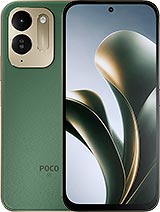
Poco M8x
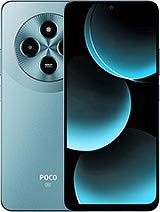
Poco M7
Poco M8s
Poco M8
Galaxy M17e