Xiaomi Poco M8 Pro review
The M8 Pro suits someone who lives on a large screen, values durability, and is willing to accept middling performance and camera in exchange for a low-fuss phone that will last years. Those after raw speed, a lighter pocket carry, or a distinctive camera should look elsewhere.
This review is written with AI assistance from Xiaomi’s published specifications and public benchmark data for the Xiaomi Poco M8 Pro, and the rating is spec-based. GoSolo does not physically test devices; where we estimate real-world behaviour such as battery life or charge time, we say so. How we rate phones.
Overview
The Poco M8 Pro is a sizeable, capable upper-midrange phone with a genuine large AMOLED display, strong refresh rates, and adequate processing power for everyday tasks. The Snapdragon 7s Gen 4 and 6,500 mAh battery keep things practical, but the 50MP camera and lack of meaningful standout features make it a sensible pick for those who just want a spacious screen without nonsense, not a phone that excels at anything particular.
Design & build
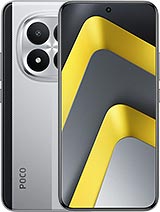
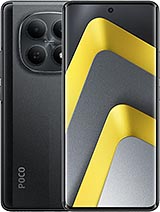
At 206 grams and 8.3 mm thick, the M8 Pro is a substantial phone—noticeably heavier than most rivals at this price, though still manageably slim. The glass front with Gorilla Glass Victus 2, plastic frame, and glass-fiber reinforced plastic back are a predictable recipe for a phone that feels solid enough but not luxurious. The 89.6% screen-to-body ratio is respectable for the size. IP68 and IP69K water and dust resistance (up to 1.5m for 30 minutes) is a genuine plus; you can be casual about splashes and dunks. Dual Nano-SIM is standard here, though there is no microSD expansion. The phone comes in Black, Green, and Silver. For a sub-$350 device, the build does its job without pretense.
Display
The 6.83-inch AMOLED screen is the M8 Pro's main draw. At 447 ppi density with a 19.5:9 aspect ratio, it is noticeably tall and moderately sharp; the PPI sits on the low side for a 2026 AMOLED flagship perspective, but acceptable for upper-midrange work. The 120 Hz refresh rate, 3840 Hz PWM dimming, HDR10+ and Dolby Vision support, and a peak brightness of 3200 nits (1800 nits HBM) mean scrolling feels smooth and HDR content has genuine pop in bright conditions. The real utility here is screen real estate: video, browsing, and gaming all get breathing room on this slab. If you spend half your day on the phone's display, this large AMOLED panel justifies the size.
Performance
The Snapdragon 7s Gen 4 is a capable 4nm chip that scores around 817,000 on AnTuTu and lands solidly in the upper-midrange tier. Apps open without lag, multitasking is smooth, and most games will run at decent frame rates with mixed settings. This is not a flagship processor—do not expect sustained high-end gaming performance or professional video editing at full bore—but for WhatsApp, social media, casual gaming, and productivity work, it handles its load without complaint. Compared to peers at this price, performance is neither a strength nor a weakness; it is baseline competence. The Adreno 810 GPU is adequate rather than impressive. If you need processing headroom for demanding apps, look elsewhere; this chip keeps the lights on without drama.
Software
The M8 Pro ships with Android 15 and HyperOS 2, with a promise of up to four major Android version upgrades. That parity—or better—than most upper-midrange alternatives, and it means the phone should see security patches and OS bumps well into 2029. HyperOS 2 is Xiaomi's customized skin, lighter and less bloated than it used to be, though still thicker than stock Android. You will find some pre-installed apps you may not want, but the essentials are there and the system is reasonably snappy on this hardware.
Camera
The 50 MP main sensor (f/1.6, 1/1.55", 1.0µm pixels, dual pixel PDAF, OIS) is competent but unremarkable. In daylight it captures clean, well-balanced shots with solid detail and good color. The f/1.6 aperture and OIS help in lower light, though smartphone physics mean low-light performance will never rival a flagship with a larger sensor. The 8 MP ultrawide (f/2.2, 120°) is a secondary option that works for landscapes but lacks the cohesion and refinement of the main camera. The 32 MP selfie cam (f/2.2, 1080p video) does its job for video calls and portraits. There is no zoom camera, telephoto, or macro—just the core trio. For a mid-range price, the camera is fit for purpose: it will never surprise you or disappoint dramatically, but it will not make you lean on the tripod or fight with exposure in difficult light either.
Battery & charging
The 6,500 mAh battery is generous and should deliver about 16 hours of mixed active use—a full day for most. Charging specs show 100W support (referred to in the spec context), which, if confirmed as actual delivery, would be in line with fast-charging norms for the price. Realistically, expect the phone to charge to 50% in roughly 20-25 minutes and hit full charge in under an hour, assuming optimal conditions. For daily users who charge overnight, battery endurance is a plus; for road warriors who rely on quick top-ups, the large capacity saves you.
Value & verdict
At $343 (€280 / £262), the M8 Pro is a practical mid-range phone that trades excitement for durability and screen real estate. The large AMOLED display with high refresh rate is the headline; everything else—Snapdragon 7s Gen 4 processing, solid all-day battery, IP68/IP69K durability, clean software support—rounds out a sensible package. There are no flagship ambitions here, no questionable compromises either. Competitors at this price may offer faster charging, lighter builds, or slightly faster chips, but the M8 Pro competes fairly on the weight of its screen and longevity promise. It is the phone for someone who wants a big, durable screen and reliable everyday performance without chasing specs.
Verdict
The M8 Pro suits someone who lives on a large screen, values durability, and is willing to accept middling performance and camera in exchange for a low-fuss phone that will last years. Those after raw speed, a lighter pocket carry, or a distinctive camera should look elsewhere.
- Large 6.83-inch AMOLED display with 120 Hz refresh, HDR10+, and strong peak brightness—rare at this price
- IP68/IP69K water and dust resistance with high-pressure jet rating, matching or beating most rivals
- Android 15 with promise of 4 major upgrades, offering long-term support in a crowded segment
- 6,500 mAh battery and generous size overall suit all-day use without need to hunt for a charger
- Heavy at 206g and notably thick; noticeably heavier than most upper-midrange competitors, unwieldy for one-handed use
- Camera lacks zoom, macro, or distinctive processing—competent but forgettable, no ultrawide cohesion with the main sensor
- Snapdragon 7s Gen 4 offers decent but not fast performance; gaming and heavy apps will hit thermal limits faster than peers
Xiaomi Poco M8 Pro Key Specifications
The essentials at a glance. See the full spec sheet.
| Released | 2026, January 08 |
|---|---|
| Display | 6.83 inches, 114.5 cm2 (~89.6% screen-to-body ratio), AMOLED, 68B colors, 120Hz, 3840Hz PWM, HDR10+, Dolby Vision, 1800 nits (HBM), 3200 nits (peak) |
| Resolution | 1280 x 2772 pixels, 19.5:9 ratio (~447 ppi density) |
| Chipset | Qualcomm SM7635-AC Snapdragon 7s Gen 4 (4 nm) |
| RAM & storage | 256GB 8GB RAM, 512GB 12GB RAM |
| Main camera | 50 MP, f/1.6, 24mm (wide), 1/1.55", 1.0µm, dual pixel PDAF, OIS 8 MP, f/2.2, 15mm, 120˚ (ultrawide), 1/4.0", 1.12µm |
| Selfie camera | 32 MP, f/2.2, (wide), 1/3.6" |
| Battery | 6500 mAh |
| Software | Android 15, up to 4 major Android upgrades, HyperOS 2 |
| Dimensions | 163.3 x 78.3 x 8.3 mm (6.43 x 3.08 x 0.33 in) |
| Weight | 206 g (7.27 oz) |
| Build | Glass front (Gorilla Glass Victus 2), plastic frame, glass-fiber reinforced plastic back |
| Durability | IP68/IP69K dust tight and water resistant (high pressure water jets; immersible up to 1.5m for 30 min) IP68 dust tight and water resistant (immersible up to 1.5m for 30 min) - Europe only |
| Network | GSM / HSPA / LTE / 5G |
| NFC | Yes (market/region dependent) |
| USB | USB Type-C 2.0, OTG |
Xiaomi Poco M8 Pro FAQ
Common questions, answered from the spec sheet.
Does the Poco M8 Pro support 5G?
Yes. The Poco M8 Pro supports 5G networks.
What chipset does the Poco M8 Pro use?
The Poco M8 Pro runs on the Qualcomm SM7635-AC Snapdragon 7s Gen 4 (4 nm).
What display does the Poco M8 Pro have?
A 6.83 inches, 114.5 cm2 (~89.6% screen-to-body ratio) AMOLED, 68B colors, 120Hz, 3840Hz PWM, HDR10+, Dolby Vision, 1800 nits (HBM), 3200 nits (peak), 1280 x 2772 pixels, 19.5:9 ratio (~447 ppi density).
How big is the Poco M8 Pro battery?
The Poco M8 Pro has a 6500 mAh battery.
Does the Poco M8 Pro have NFC?
Yes, the Poco M8 Pro has NFC.
Is the Poco M8 Pro water resistant?
The Poco M8 Pro carries a IP68/IP69K dust tight and water resistant (high pressure water jets; immersible up to 1.5m for 30 min) IP68 dust tight and water resistant (immersible up to 1.5m for 30 min) - Europe only rating.
Does the Poco M8 Pro support a microSD card?
No, the Poco M8 Pro does not support expandable storage.
Alternatives to consider
If the Poco M8 Pro isn’t quite right, these are the closest calls.
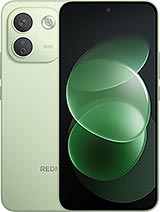
Redmi Note 17 Pro Max
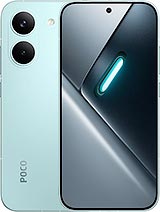
Poco X8 Pro
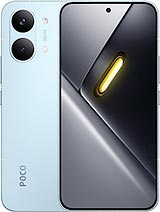
Poco X8 Pro Max
Poco M8

Galaxy A57