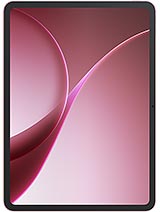
Xiaomi Poco Pad review
This tablet suits anyone who wants a large, responsive screen and multiday battery for reading and streaming without spending flagship money. Skip it if you need decent cameras, fast charging, or plan to use it as a productivity or creative hub.
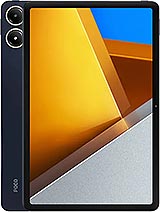
This review is based on Xiaomi’s published specifications and public benchmark data for the Xiaomi Poco Pad, and the rating is spec-based. GoSolo does not physically test devices; where we estimate real-world behaviour such as battery life or charge time, we say so. How we rate phones.
Overview
The Poco Pad is a 12.1-inch tablet built for reading, media, and productivity on a budget—its large screen and 120Hz refresh are genuinely useful, but 33W charging and underwhelming 8MP cameras mean you're buying the display and battery life, not a multimedia powerhouse.
Design & build
At 571 grams and 7.5mm thin, the Poco Pad is light and compact for its 12.1-inch footprint—easy to hold one-handed for reading or prop on a lap. The glass front and aluminum frame feel solid, and magnetic stylus attachment is a genuine convenience. Gorilla Glass 3 is the weak point; it's an older formula now, and you'll notice it's more prone to micro-scratches than the Glass 5 or higher you see on newer competitors. Still, for a tablet at this price, it's durable enough for daily use without a case if you're careful.
Display
The 12.1-inch IPS LCD with 120Hz refresh and 600 nits peak brightness is the Poco Pad's best feature. Scrolling through text, websites, and social media feels smooth; reading books or PDFs is genuinely comfortable thanks to the large, well-lit screen. The 1600×2560 resolution at 249 ppi is sharp enough—not Retina-grade, but no pixels are visible at arm's length. Dolby Vision support adds a nice touch, though you'll only notice it if you watch compatible content. For the price, this is a solid display that does exactly what a budget tablet buyer needs.
Performance
The Snapdragon 7s Gen 2 is mid-range capable: everyday apps, streaming video, light web browsing, and casual gaming run without hiccups. Demanding 3D games will need settings turned down, and if you're rendering video or editing large documents, don't expect speed. For reading, email, Netflix, YouTube, and productivity apps like Docs or Sheets, it's enough. This tablet is not a content-creation machine, but it's honest work for what costs about 280 EUR. The Adreno 710 GPU is competent, not impressive—adequate for the screen size and refresh rate without thrashing the battery.
Software
Android 14 with HyperOS is clean and responsive. Xiaomi's overlay is lighter than it once was, and the tablet interface works well across the large screen. Updates should be steady enough for a couple of years, though Xiaomi's track record on long-term support is mixed. No bloatware beyond the usual Xiaomi apps, which you can disable if they clutter your home screen.
Camera
The 8MP rear and front cameras are the Poco Pad's awkward corner. Tablet cameras are often secondary, but 8MP in 2024 is genuinely thin—most rivals at this price offer 13MP or better on the back. Photos are soft, color is muted, and the 1080p video at 30fps caps your options. The LED flash helps in dim light but doesn't save the image quality. If you occasionally snap reference photos or join video calls, it works. Anything beyond that, and you'll wish you had a smartphone's camera instead.
Battery & charging
The 10000 mAh battery is ample and lasts easily 10–12 hours of mixed use at moderate brightness; idle standby stretches toward 2–3 days. That's the tablet experience done right. Charging via 33W USB Power Delivery fills the tank in about 60–90 minutes, which is practical for a quick top-up before travel. It's not cutting-edge—rivals in the tablet space have moved to 50W, 65W, or higher—but it's not a bottleneck for most users who charge overnight or leave it on a desk.
Value & verdict
At 280 EUR, the Poco Pad is one of the few 12-inch+ tablets that doesn't demand a flagship price. You are buying a large, smooth display and all-day battery for readers, students, and light-media consumers. The weak cameras, dated Gorilla Glass, and modest charging speed are honest compromises at this cost. Compared to Samsung or iPad budget options, it trades away some durability and ecosystem lock-in for a bigger screen and lower price. If you need a second device for reading, streaming, and web browsing—not a laptop replacement or content studio—it delivers. Heavy users and those who shoot video or photos often should look elsewhere.
Verdict
This tablet suits anyone who wants a large, responsive screen and multiday battery for reading and streaming without spending flagship money. Skip it if you need decent cameras, fast charging, or plan to use it as a productivity or creative hub.
- 12.1-inch 120Hz display with 600 nits peak brightness makes scrolling and outdoor readability genuinely pleasant
- 10000 mAh battery easily stretches 10–12 hours of screen-on time; idle standby goes days
- 33W charging fills the tank in roughly 60–90 minutes, practical for quick top-ups
- Includes microSD slot for storage expansion and 3.5mm headphone jack—rare amenities on tablets now
- 8MP rear and front cameras are weak for a tablet in 2024; video is capped at 1080p@30fps
- 33W charging lags behind rivals; some mid-range tablets now charge at 50W or faster
- Gorilla Glass 3 is dated protection; newer tablets use Glass 5 or stronger
Xiaomi Poco Pad Key Specifications
The essentials at a glance. See the full spec sheet.
| Released | 2024, May 23 |
|---|---|
| Display | 12.1 inches, 424.5 cm2 (~83.4% screen-to-body ratio), IPS LCD, 68B colors, 120Hz, Dolby Vision, 600 nits (HBM) |
| Resolution | 1600 x 2560 pixels, 16:10 ratio (~249 ppi density) |
| Chipset | Qualcomm SM7435-AB Snapdragon 7s Gen 2 (4 nm) |
| RAM & storage | 256GB 8GB RAM |
| Main camera | 8 MP, f/2.0, (wide), 1/4.0", 1.12µm |
| Selfie camera | 8 MP, f/2.3, (wide), 1/4.0", 1.12µm |
| Battery | 10000 mAh |
| Charging | 33W wired, PD3.0, QC3+ |
| Software | Android 14, HyperOS |
| Dimensions | 280 x 181.9 x 7.5 mm (11.02 x 7.16 x 0.30 in) |
| Weight | 571 g (1.26 lb) |
| Build | Glass front (Gorilla Glass 3), aluminum frame, aluminum back |
| Durability | Stylus support (magnetic) |
| Network | No cellular connectivity |
| NFC | No |
| USB | USB Type-C 2.0 |
Xiaomi Poco Pad FAQ
Common questions, answered from the spec sheet.
Does the Poco Pad support 5G?
No. The Poco Pad tops out at No cellular connectivity, without 5G.
What chipset does the Poco Pad use?
The Poco Pad runs on the Qualcomm SM7435-AB Snapdragon 7s Gen 2 (4 nm).
What display does the Poco Pad have?
A 12.1 inches, 424.5 cm2 (~83.4% screen-to-body ratio) IPS LCD, 68B colors, 120Hz, Dolby Vision, 600 nits (HBM), 1600 x 2560 pixels, 16:10 ratio (~249 ppi density).
How big is the Poco Pad battery?
The Poco Pad has a 10000 mAh battery. Charging is rated at 33W wired, PD3.0, QC3+.
Does the Poco Pad have NFC?
No, the Poco Pad does not list NFC support.
Is the Poco Pad water resistant?
The Poco Pad carries a Stylus support (magnetic) rating.
Does the Poco Pad support a microSD card?
Yes, the Poco Pad supports expandable storage (microSDXC (dedicated slot)).
Does the Poco Pad have a headphone jack?
Yes, the Poco Pad has a 3.5mm headphone jack.
Alternatives to consider
If the Poco Pad isn’t quite right, these are the closest calls.
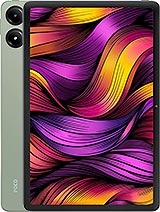
Poco Pad 5G
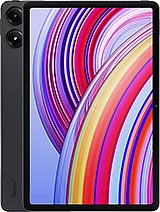
Redmi Pad Pro 5G
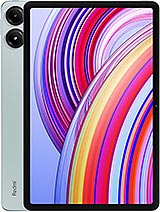
Redmi Pad Pro
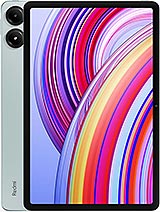
Redmi Pad 2 Pro
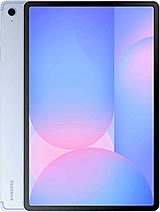
Galaxy Tab S10 FE