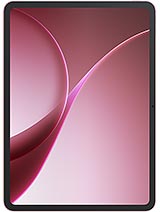
Xiaomi Poco Pad 5G review
This tablet suits readers, students, and remote workers who value portability, screen time per charge, and smooth everyday performance over cameras and processing power. Anyone who games seriously or creates content should look at tablets with stronger chipsets and camera systems, regardless of budget.
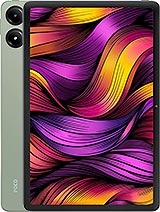
This review is based on Xiaomi’s published specifications and public benchmark data for the Xiaomi Poco Pad 5G, and the rating is spec-based. GoSolo does not physically test devices; where we estimate real-world behaviour such as battery life or charge time, we say so. How we rate phones.
Overview
A 12-inch tablet built for streaming, reading, and casual productivity, with a smooth 120Hz display and all-day battery. The Snapdragon 7s Gen 2 and 8GB RAM handle everyday tasks without drama, but the 8MP cameras and slower charging confirm this is not meant for work that demands processing power or content creation.
Design & build
The Poco Pad 5G strikes a practical balance between durability and portability. At 568 grams and 7.5mm thick, it feels light enough for one-handed holding during reading sessions, yet solid enough thanks to its aluminum frame and Gorilla Glass 3 front. The build quality is straightforward—no premium materials, but the glass and metal withstand everyday fumbles and minor spills (splash-resistant coating, though not waterproof). The 12.1-inch frame is narrower than some rivals, making it easier to slip into a bag. Magnetic stylus support adds utility if you want to sketch or annotate, though the stylus is an accessory you'll need to buy separately. For a tablet at this price, the engineering is honest: it will take a beating without falling apart, but it does not feel expensive.
Display
The 12.1-inch IPS LCD screen is the heart of this tablet's appeal. At 1600 x 2560 pixels (249 ppi), the resolution is sharp enough for reading text and watching video without seeing individual pixels, and the 16:10 aspect ratio suits both landscape streaming and portrait reading. The 120Hz refresh rate makes scrolling buttery smooth—a real quality-of-life feature that separates this from cheaper slates that feel sluggish. Peak brightness hits 600 nits in high brightness mode, which is adequate outdoors but not brilliant in harsh direct sunlight; you will still need to angle the screen or find shade in bright conditions. Dolby Vision support is a nice touch for compatible streaming content, and the colors are accurate for an IPS panel, though not as vivid as OLED. Overall, it is a screen built for consumption rather than creation, and it does that job well.
Performance
The Snapdragon 7s Gen 2 is a capable mid-range chipset that handles everyday work without breaking a sweat. Web browsing, email, note-taking, and video streaming run without lag or frame drops. With 8GB of RAM and UFS 2.2 storage, app switching is fast, and files load quickly. The weak point emerges with demanding 3D games: titles at high graphics settings will stutter, and performance-hungry apps that rely on sustained compute power struggle. For a tablet at €220, this is exactly the right balance—you are not paying for flagship performance you do not need, but you get enough horsepower that the tablet never feels held back during typical use. If your day revolves around spreadsheets, PDFs, and Netflix, the Poco Pad 5G will keep pace. If you want to run demanding games or video editing software, look elsewhere.
Software
The tablet runs Android 14 with Xiaomi's HyperOS overlay, which adds some extras like gesture controls and cloud integration but does not substantially depart from stock Android. The interface is responsive and intuitive. Updates are likely to come regularly in the first year or two given Xiaomi's track record, though long-term support on a budget tablet is never a given. No bloatware surprises here; the OS is clean out of the box. HyperOS itself is lightweight enough that it does not bog down the Snapdragon 7s Gen 2, leaving plenty of headroom for multitasking.
Camera
The camera systems are purely functional. An 8MP sensor on the rear with f/2.0 aperture and a matching 8MP front camera can handle video calls and basic document scanning, but little else. Both max out at 1080p video, which feels dated by 2024 standards even for budget devices. Do not expect decent low-light shots or any versatility beyond a video call. If photography or content creation matters to you—vlogging, product shots, or even polished social media content—this tablet is not built for it. The cameras exist because tablets need cameras, not because Xiaomi spent engineering effort on them.
Battery & charging
The 10,000mAh battery is one of the Poco Pad 5G's genuine strengths. In real use, expect 10 to 12 hours of screen-on time with typical brightness and mixed web, video, and app use. That is a full working day or a long flight without hunting for an outlet. The caveat is charging speed: 33W wired power takes roughly 45 to 60 minutes to reach 100%, which is slow for such a large battery. Flagship tablets and even some phones charge faster now. There is no wireless charging, which is standard across this price tier. If you are commuting daily and can top up at home, the battery more than suffices. If you need a quick charge before heading out, plan ahead.
Value & verdict
At €220, the Poco Pad 5G occupies a practical niche: it is not trying to undercut iPad entry models on price alone, nor is it chasing gaming performance. It is a media and productivity tablet that knows its lane. The 120Hz display, long battery life, and lightweight build justify the price for anyone who reads, watches, or works with documents regularly. The trade-offs are honest ones: cameras are weak, charging is slow, and raw performance has limits. If you want a second screen for Netflix and email without spending flagship money, the Poco Pad 5G delivers. If you need gaming grunt or camera quality, you will find neither here, and that is okay because the tablet never promises them.
Verdict
This tablet suits readers, students, and remote workers who value portability, screen time per charge, and smooth everyday performance over cameras and processing power. Anyone who games seriously or creates content should look at tablets with stronger chipsets and camera systems, regardless of budget.
- 12.1-inch 120Hz display with reasonable outdoor brightness (600 nits peak) and solid color depth for media consumption and reading
- 10,000mAh battery delivers a genuine full day of mixed use without needing a charger mid-afternoon
- Lightweight for its size at 568g and only 7.5mm thick, making it portable enough for travel without feeling bulky
- Snapdragon 7s Gen 2 with 8GB RAM handles web, email, video streaming, and everyday multitasking smoothly without stuttering
- 33W charging takes roughly 45 to 60 minutes to fill the 10,000mAh battery, which is slow compared to flagship tablets and even some phones in 2024
- Camera setup is purely functional: 8MP sensors and 1080p video only, ruling out any serious photography, content creation, or even high-quality document scanning
- Snapdragon 7s Gen 2 hits its ceiling quickly with 3D games at high graphics settings, where frame rates noticeably drop
Xiaomi Poco Pad 5G Key Specifications
The essentials at a glance. See the full spec sheet.
| Released | 2024, August 23 |
|---|---|
| Display | 12.1 inches, 424.5 cm2 (~83.4% screen-to-body ratio), IPS LCD, 68B colors, 120Hz, Dolby Vision, 600 nits (HBM) |
| Resolution | 1600 x 2560 pixels, 16:10 ratio (~249 ppi density) |
| Chipset | Qualcomm SM7435-AB Snapdragon 7s Gen 2 (4 nm) |
| RAM & storage | 128GB 8GB RAM, 256GB 8GB RAM |
| Main camera | 8 MP, f/2.0, (wide), 1/4.0", 1.12µm |
| Selfie camera | 8 MP, f/2.3, (wide), 1/4.0", 1.12µm |
| Battery | 10000 mAh |
| Charging | 33W wired, PD3.0, QC3+ |
| Software | Android 14, HyperOS |
| Dimensions | 280 x 181.9 x 7.5 mm (11.02 x 7.16 x 0.30 in) |
| Weight | 568 g (1.25 lb) |
| Build | Glass front (Gorilla Glass 3), aluminum frame, aluminum back |
| Durability | Stylus support (magnetic) Splash resistant |
| Network | GSM / HSPA / LTE / 5G |
| NFC | No |
| USB | USB Type-C 2.0 |
Xiaomi Poco Pad 5G FAQ
Common questions, answered from the spec sheet.
Does the Poco Pad 5G support 5G?
Yes. The Poco Pad 5G supports 5G networks.
What chipset does the Poco Pad 5G use?
The Poco Pad 5G runs on the Qualcomm SM7435-AB Snapdragon 7s Gen 2 (4 nm).
What display does the Poco Pad 5G have?
A 12.1 inches, 424.5 cm2 (~83.4% screen-to-body ratio) IPS LCD, 68B colors, 120Hz, Dolby Vision, 600 nits (HBM), 1600 x 2560 pixels, 16:10 ratio (~249 ppi density).
How big is the Poco Pad 5G battery?
The Poco Pad 5G has a 10000 mAh battery. Charging is rated at 33W wired, PD3.0, QC3+.
Does the Poco Pad 5G have NFC?
No, the Poco Pad 5G does not list NFC support.
Is the Poco Pad 5G water resistant?
The Poco Pad 5G carries a Stylus support (magnetic) Splash resistant rating.
Does the Poco Pad 5G support a microSD card?
Yes, the Poco Pad 5G supports expandable storage (microSDXC (dedicated slot)).
Does the Poco Pad 5G have a headphone jack?
Yes, the Poco Pad 5G has a 3.5mm headphone jack.
Alternatives to consider
If the Poco Pad 5G isn’t quite right, these are the closest calls.
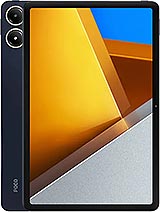
Poco Pad
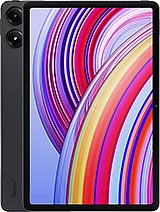
Redmi Pad Pro 5G
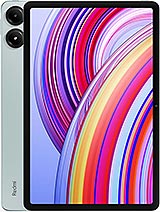
Redmi Pad 2 Pro
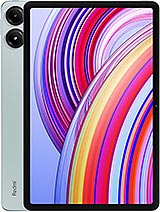
Redmi Pad Pro
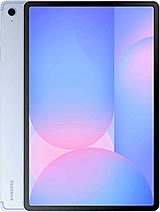
Galaxy Tab S10 FE