Xiaomi Poco X8 Pro review
The X8 Pro suits someone who values a good display and peace-of-mind water resistance and doesn't mind waiting for charge. Anyone prioritizing fast charging, a stronger ultrawide camera, or the absolute most capability per rupee should look at direct rivals from Poco, Xiaomi, Realme, or Samsung in the same tier.

This review is written with AI assistance from Xiaomi’s published specifications and public benchmark data for the Xiaomi Poco X8 Pro, and the rating is spec-based. GoSolo does not physically test devices; where we estimate real-world behaviour such as battery life or charge time, we say so. How we rate phones.
Overview
The Poco X8 Pro lands as a solid mid-range phone with a crisp AMOLED display, reliable performance from the Dimensity 8500 Ultra, and good build quality, but it doesn't break ground in any particular area—and at this price, rivals offer faster charging or better low-light cameras for similar money.
Design & Build
At 201.5g and 8.4mm thick, this is a solidly built phone without being light or slim. Glass front with Gorilla Glass 7i, aluminum frame, and Nano-SIM dual-slot layout are all expected fare for the price. What stands out is the IP68/IP69K rating—not just water resistance, but certified for 1.5-meter submersion and high-pressure water jets, which goes beyond the typical "splash-proof" marketing of rivals at this tier. If you actually take your phone near construction sites, boats, or heavy rain, that matters. The finish feels more restrained than plasticky, though at this price point you're not looking for flagship materials anyway.
Display
The 6.59-inch AMOLED is genuinely one of the X8 Pro's strongest points. At 1268 x 2756 pixels and 460ppi, text and UI are sharp, and the 120Hz refresh makes scrolling smooth—not a shock at this price, but still a real quality jump from budget LCDs. Peak brightness of 3500 nits (HBM mode) and 2000 nits sustained are well above what you need for sunlight visibility, and most phones at this tier max out lower. PWM at 3840Hz means no visible flicker if you're sensitive to that. HDR10+ and Dolby Vision support is there, though the actual impact depends on content availability. The narrow 19.5:9 aspect ratio makes the display tall and narrow, which some find cramped and others prefer for one-handed use.
Performance
The Mediatek Dimensity 8500 Ultra is a competent chip that lands in the comfortable mid-range. With an AnTuTu score around 1.66M, it's quick enough for daily apps, social media, light gaming, and video editing—no lag in real use. The Mali-G720 GPU handles games at respectable frame rates, though don't expect high settings across every title. It's not flagship-level performance (which costs more), but it's not the stuttering budget chip either. For most people, this is more than sufficient. RAM options run 8GB or 12GB paired with 256GB or 512GB storage, all on UFS 4.1, so file transfers and app launches are snappy. The lack of microSD expansion is standard for this class now, but worth noting if you hoard video files.
Software
Android 16 with HyperOS 3 is current and clean by Xiaomi standards. HyperOS has shed much of the bloat that older MIUI versions carried, and the update promise is typically 3-4 years of OS upgrades and 5 years of security patches for mid-range Xiaomi phones, though that varies by region. Out of the box you'll see some pre-installed apps, but fewer than before. The interface is intuitive if you've used Android; if you're coming from stock Android or a different skin, there's a minor learning curve around navigation and settings organization. Nothing remarkable, nothing frustrating.
Camera
The dual setup is mixed. The 50MP main camera with f/1.5 aperture, 1/1.95" sensor, and OIS sounds strong on paper and handles daylight and mid-light scenes well—good detail, accurate colors, and stable video from the optical stabilization. The problem is the 8MP ultrawide, which is severely limited. A 1/4.0" sensor with 1.12µm pixels is small and dim, making it struggle in anything but bright sunlight. You lose detail, edge sharpness, and most of the ultrawide's purpose in low light. If wide-angle photography matters to you, this is a real compromise. The 20MP selfie is adequate for video calls and casual selfies. Video capture up to 4K at 60fps is solid, with HDR10+ support, but again the weak ultrawide means you're locked into the main camera for most shots.
Battery & Charging
The 6500mAh cell with an active-use score of 16:52 hours suggests genuine all-day battery life—you'll likely get through a full day of moderate use and hit evening with 10-20% remaining. Charging is spec'd at 100W, which is respectable but no longer leading for this price. Rivals launched at the same time are hitting 120-140W, cutting 30-60 seconds off your daily charge time. The difference doesn't sound large until you do it every day; it adds up. Battery health should remain good given the Si/C chemistry, but Xiaomi's software optimization varies by region.
Value & Verdict
At around ₹37,000 (or $408 / €380), the X8 Pro is priced as a capable mid-range phone with no major holes. It excels in display quality and durability (the IP69K rating is genuinely rare at this price), and the Dimensity 8500 Ultra keeps things responsive. However, it doesn't lead in any area that justifies choosing it over close competitors. The camera is decent but not better than what you'll find in phones at this price, and the ultrawide is actively weak. Charging speed is keeping pace with 2025 standards but losing ground to 2026 rivals. The design is solid but unremarkable. If you prioritize a bright, sharp AMOLED screen, good water resistance, and solid everyday performance, and you're not fussy about charging speed, this is a sensible buy. If you want faster charging, a more versatile camera system, or maximum value-for-money, you're better served elsewhere.
Verdict
The X8 Pro suits someone who values a good display and peace-of-mind water resistance and doesn't mind waiting for charge. Anyone prioritizing fast charging, a stronger ultrawide camera, or the absolute most capability per rupee should look at direct rivals from Poco, Xiaomi, Realme, or Samsung in the same tier.
- Excellent 6.59-inch AMOLED display at 460ppi with 120Hz refresh and 3500 nits peak brightness—genuinely sharp and bright for outdoor use
- Solid all-day battery from 6500mAh, with the active-use score suggesting 16-17 hours of real work
- Dimensity 8500 Ultra handles daily apps and gaming without stuttering; AnTuTu scores around 1.66M put it in the comfortable mid-range tier
- IP68/IP69K water and dust resistance is thorough—rated for 1.5m submersion and high-pressure jets, not just marketing theater
- 100W charging is adequate but falling behind; rivals at this price now routinely hit 120-140W, cutting charge time noticeably
- 50MP main camera with f/1.5 aperture looks strong on paper but the 8MP ultrawide is genuinely weak—1/4.0 sensor and 1.12µm pixels mean poor low-light reach and limited composition choice
- Priced at ₹36,999 (around $408) it sits awkwardly between budget flagships that offer more punch and cheaper phones with similar all-day performance
Xiaomi Poco X8 Pro Key Specifications
The essentials at a glance. See the full spec sheet.
| Released | 2026, March 17 |
|---|---|
| Display | 6.59 inches, 106.4 cm2 (~89.8% screen-to-body ratio), AMOLED, 68B colors, 120Hz, 3840Hz PWM, Dolby Vision, HDR10+, 2000 nits (HBM), 3500 nits (peak) |
| Resolution | 1268 x 2756 pixels, 19.5:9 ratio (~460 ppi density) |
| Chipset | Mediatek Dimensity 8500 Ultra (4 nm) |
| RAM & storage | 256GB 8GB RAM, 256GB 12GB RAM, 512GB 8GB RAM, 512GB 12GB RAM |
| Main camera | 50 MP, f/1.5, 26mm (wide), 1/1.95", 0.8µm, PDAF, OIS 8 MP, f/2.2, 15mm (ultrawide), 1/4.0", 1.12µm |
| Selfie camera | 20 MP, f/2.2, (wide), 1/4" |
| Battery | 6500 mAh |
| Software | Android 16, HyperOS 3 |
| Dimensions | 157.5 x 75.2 x 8.4 mm (6.20 x 2.96 x 0.33 in) |
| Weight | 201.5 g (7.13 oz) |
| Build | Glass front (Gorilla Glass 7i), aluminum frame |
| Durability | IP68/IP69K dust tight and water resistant (high pressure water jets; immersible up to 1.5m for 30 min) IP69K (market/region dependent) |
| Network | GSM / HSPA / LTE / 5G |
| NFC | Yes (market/region dependent) |
| USB | USB Type-C 2.0, OTG |
Xiaomi Poco X8 Pro FAQ
Common questions, answered from the spec sheet.
Does the Poco X8 Pro support 5G?
Yes. The Poco X8 Pro supports 5G networks.
What chipset does the Poco X8 Pro use?
The Poco X8 Pro runs on the Mediatek Dimensity 8500 Ultra (4 nm).
What display does the Poco X8 Pro have?
A 6.59 inches, 106.4 cm2 (~89.8% screen-to-body ratio) AMOLED, 68B colors, 120Hz, 3840Hz PWM, Dolby Vision, HDR10+, 2000 nits (HBM), 3500 nits (peak), 1268 x 2756 pixels, 19.5:9 ratio (~460 ppi density).
How big is the Poco X8 Pro battery?
The Poco X8 Pro has a 6500 mAh battery.
Does the Poco X8 Pro have NFC?
Yes, the Poco X8 Pro has NFC.
Is the Poco X8 Pro water resistant?
The Poco X8 Pro carries a IP68/IP69K dust tight and water resistant (high pressure water jets; immersible up to 1.5m for 30 min) IP69K (market/region dependent) rating.
Does the Poco X8 Pro support a microSD card?
No, the Poco X8 Pro does not support expandable storage.
Alternatives to consider
If the Poco X8 Pro isn’t quite right, these are the closest calls.
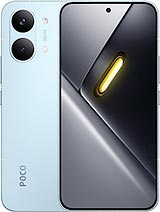
Poco X8 Pro Max
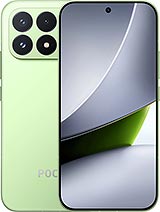
Poco F9 Pro

Poco M8 Pro
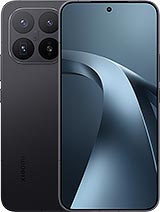
17T Pro

Galaxy A57