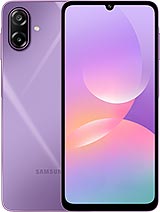
Xiaomi Redmi 13x review
The Redmi 13x suits casual users, students, and anyone who prioritizes a large, bright screen and all-day battery over outright speed. Anyone planning to game seriously or needing fast charging should cross-shop newer midrangers from Realme, POCO, or Samsung in the same price range.

This review is based on Xiaomi’s published specifications and public benchmark data for the Xiaomi Redmi 13x, and the rating is spec-based. GoSolo does not physically test devices; where we estimate real-world behaviour such as battery life or charge time, we say so. How we rate phones.
Overview
The Redmi 13x is a large-screened, battery-focused phone for users who prioritize screen real estate and endurance over speed. At 150 EUR it undercuts rivals with a capable 108MP camera and 90Hz display, but the aging Helio G91 Ultra chipset and 1080p-only video cap its appeal to casual users and students.
Design & build
At 205 grams and 8.3 mm thick, the Redmi 13x is a comfortable hold despite its tall frame. Glass front and back over a plastic frame feels familiar for the price; it's neither flimsy nor premium. IP53 rating handles dust and vertical spray (brief rain or tap-water splashes), but don't submerge it or rely on it during downpours. The side-mounted fingerprint scanner is reliable, and USB Type-C charging is standard. Build is solid enough for a student's backpack, but the glass back means a case is a good idea if you want to avoid scratches.
Display
The 6.79-inch LCD screen is the real star. At 1080 x 2460 pixels (396 ppi), it's sharp enough at arm's length; the 90Hz refresh rate makes scrolling feel fluid compared to 60Hz budget rivals. Peak brightness of 550 nits means the screen remains legible in direct sunlight, a genuine plus for a phone you'll use outdoors. The 85% screen-to-body ratio is impressive for a mid-ranger. Colour accuracy and viewing angles are typical IPS; don't expect OLED contrast, but it's a fine everyday display for watching videos, reading, and browsing.
Performance
The Mediatek Helio G91 Ultra runs casual tasks and everyday apps without hiccups, but it's a mainstream midrange chip from 2023, and that age shows. Match-3 puzzlers and turn-based games run smoothly; anything demanding (high-end 3D games, heavy multitasking) will throttle or need graphics dialed back. Apps open in reasonable time, and scrolling through social media is smooth. For word processing, web browsing, and video calls, it's adequate. If you game seriously or run processor-heavy software, this won't keep up with rivals using newer chips at the same price.
Software
HyperOS (Xiaomi's current skin over Android 14) is relatively clean and snappy. Update support isn't guaranteed to be lavish for a budget Redmi, so expect security patches for a year or two and OS updates contingent on region and demand. No bloatware beyond Xiaomi's own suite, which is manageable. The side-mounted fingerprint sensor is snappy and reliable.
Camera
The 108MP main sensor with f/1.8 aperture and PDAF delivers sharp, detailed photos in daylight; the wide aperture helps in lower light without requiring long exposure times. A 2MP macro adds little practical value. Video is locked to 1080p@30fps, a significant limitation for anyone who wants 4K or high-frame-rate slow-motion; for casual clips and TikTok-style content it's fine. The 13MP selfie camera is competent for video calls and casual portraits. Don't expect flagship night mode prowess or cinematic video, but for a 150 EUR phone, the still images hold up well.
Battery & charging
The 5030 mAh battery offers genuine staying power. Light users (browsing, calls, messaging) will see a full day-plus; moderate use (videos, apps, moderate gaming) yields 6 to 8 hours of screen time. Standby is measured in days. The downside is 33W charging, which takes roughly 60–75 minutes to fill from flat—slower than rivals that hit 60W or 80W at similar prices. Overnight charging or a top-up before heading out is the rhythm most users will fall into.
Value & verdict
At 150 EUR, the Redmi 13x slots into a crowded budget segment. It is not the fastest or most feature-complete phone in its price bracket, but it delivers on screen, battery, and practicality—dual SIM, microSD, headphone jack, FM radio—in a way many rivals have abandoned. The camera is genuinely solid for stills, and the display brightness is a real-world advantage in sunny climates. The catch is the aging Helio G91 Ultra and slow charging; newer competitors offer faster processors or quicker top-ups for not much more. If you value screen real estate, battery endurance, and classic connectivity (microSD, 3.5mm), this is a defensible choice. If you want raw performance or fast charging, look elsewhere.
Verdict
The Redmi 13x suits casual users, students, and anyone who prioritizes a large, bright screen and all-day battery over outright speed. Anyone planning to game seriously or needing fast charging should cross-shop newer midrangers from Realme, POCO, or Samsung in the same price range.
- 6.79-inch, 90Hz display with 550-nit brightness—genuinely spacious and readable outdoors for the price
- 5030 mAh battery with reasonable real-world stamina; light users will see a full day-plus
- 108MP main camera with f/1.8 aperture and PDAF delivers sharp stills in good light
- Dual SIM, microSD slot, 3.5mm jack, and FM radio—practical features many rivals have dropped at this price
- Helio G91 Ultra is two generations behind; demanding apps and games will stutter or require settings cuts
- 33W charging takes over an hour and lags rivals hitting 60-80W at similar prices
- 1080p video only, even at 30fps—no 4K, no 60fps options
Xiaomi Redmi 13x Key Specifications
The essentials at a glance. See the full spec sheet.
| Released | 2025, March 28 |
|---|---|
| Display | 6.79 inches, 109.5 cm2 (~85.1% screen-to-body ratio), IPS LCD, 90Hz, 550 nits (HBM) |
| Resolution | 1080 x 2460 pixels (~396 ppi density) |
| Chipset | Mediatek Helio G91 Ultra (12 nm) |
| RAM & storage | 128GB 6GB RAM, 128GB 8GB RAM, 256GB 8GB RAM |
| Main camera | 108 MP, f/1.8, (wide), 1/1.67", 0.64µm, PDAF 2 MP (macro) |
| Selfie camera | 13 MP, f/2.5, (wide) |
| Battery | 5030 mAh |
| Charging | 33W wired |
| Software | Android 14, HyperOS |
| Dimensions | 168.6 x 76.3 x 8.3 mm (6.64 x 3.00 x 0.33 in) |
| Weight | 205 g (7.23 oz) |
| Build | Glass front, plastic frame, glass back |
| Durability | IP53 dust protected and water resistant (vertical water sprays) |
| Network | GSM / HSPA / LTE |
| NFC | Yes (market/region dependent) |
| USB | USB Type-C |
Xiaomi Redmi 13x FAQ
Common questions, answered from the spec sheet.
Does the Redmi 13x support 5G?
No. The Redmi 13x tops out at GSM / HSPA / LTE, without 5G.
What chipset does the Redmi 13x use?
The Redmi 13x runs on the Mediatek Helio G91 Ultra (12 nm).
What display does the Redmi 13x have?
A 6.79 inches, 109.5 cm2 (~85.1% screen-to-body ratio) IPS LCD, 90Hz, 550 nits (HBM), 1080 x 2460 pixels (~396 ppi density).
How big is the Redmi 13x battery?
The Redmi 13x has a 5030 mAh battery. Charging is rated at 33W wired.
Does the Redmi 13x have NFC?
Yes, the Redmi 13x has NFC.
Is the Redmi 13x water resistant?
The Redmi 13x carries a IP53 dust protected and water resistant (vertical water sprays) rating.
Does the Redmi 13x support a microSD card?
Yes, the Redmi 13x supports expandable storage (microSDXC (uses shared SIM slot)).
Does the Redmi 13x have a headphone jack?
Yes, the Redmi 13x has a 3.5mm headphone jack.
Alternatives to consider
If the Redmi 13x isn’t quite right, these are the closest calls.

Redmi Note 17 4G
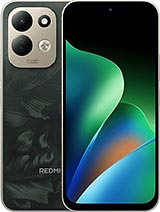
Redmi 17 4G
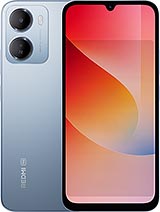
Redmi 15a

Redmi R70
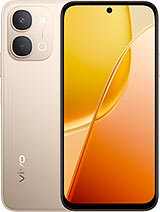
T5 4G