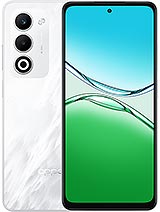
Xiaomi Redmi 14R review
Buy this if you need a dual-SIM phone for basic calls, messages, and streaming on a tight budget and will keep it in a protective case. Anyone wanting a brighter screen, faster charging, or more durable construction should look at other budget phones in the same price range.
This review is based on Xiaomi’s published specifications and public benchmark data for the Xiaomi Redmi 14R, and the rating is spec-based. GoSolo does not physically test devices; where we estimate real-world behaviour such as battery life or charge time, we say so. How we rate phones.
Overview
The Redmi 14R is a budget dual-SIM phone that delivers bare-bones everyday use—calls, messages, streaming—at around €140, but the dim 720p screen, weak Snapdragon 4 chip, and lack of any durability rating make it feel like a phone for someone who cannot afford anything better rather than someone who chooses it.
Design & build
At 205–212 grams, the Redmi 14R sits heavy for a phone with a 720p screen; it feels like weight for weight's sake. The glass front and back sandwiched around a plastic frame look conventional enough in Midnight Black or Sage Green, but without an IP rating or drop certification, the glass is a vulnerability. The 8.2mm thickness is neat, and the side-mounted fingerprint sensor is reliable, but the overall construction screams budget phone: nice to hold in a case, risky without one. The inclusion of a 3.5mm jack and dual SIM slots is genuinely useful for travelers or anyone juggling two numbers, though it is increasingly rare to get both in one device at this price.
Display
The 6.88-inch screen is spacious, and 120Hz scrolling does make the interface feel less sluggish than a 60Hz budget phone. But the 720p resolution at 260 ppi means you will see pixelation in text and icons if you look closely, and the 450-nit typical brightness is the real letdown. In shade or indoors it is fine; in daylight or outside, the screen dims noticeably and becomes hard to read without tilting. The 600-nit high brightness mode kicks in for HDR content, but everyday use sits at 450 nits, which is below what rivals at this price now deliver. It is an LCD panel, so viewing angles are decent but colour accuracy is basic.
Performance
The Snapdragon 4 Gen 2 is an entry-level chip designed for messaging, social media, and light video consumption. Everyday apps—WhatsApp, YouTube, Chrome—run without noticeable lag, and multitasking between a few open windows does not cause stuttering. Gaming is where it stumbles. Modern games like Genshin Impact or PUBG will demand low or medium settings with reduced resolution, and even then you may see frame drops. The 4–12 GB of RAM depending on your config helps with app persistence, but the GPU (Adreno 613) is simply not powerful enough for serious play. For someone using this phone for calls, messaging, streaming, and light productivity, performance is fit for purpose; anyone expecting more will be disappointed.
Software
HyperOS over Android 14 is Xiaomi's customized spin on Google's OS, and on this hardware it feels bloated. The interface is functional, but you notice animation lag and occasional stutters that a vanilla Android would not exhibit. Xiaomi's launcher and default apps are serviceable, though you will likely swap some of them out. Updates are a concern at this price tier; budget Xiaomi phones often receive 1–2 years of major OS updates, so longevity is limited. Security patches may lag, too. If stock Android matters to you, this is not the phone to choose.
Camera
A single 13MP main sensor and a 2MP auxiliary lens (used for depth in portraits) is a bare minimum camera setup. Daylight photos are acceptable for social media; colours are present, and sharpness is adequate at normal viewing sizes. Once you zoom in or print, the limitations show. There is no ultrawide, no telephoto, no night mode—just LED flash and basic HDR. The 1080p video at 30fps is smooth but lacks stabilization and colour grading options. For casual snapshots and video calls, it works; if you want zoom, low-light capability, or cinematic video, look elsewhere. The 5MP front camera is adequate for video calls and selfies on that same casual basis.
Battery & charging
The 5160 mAh battery will stretch past a full day with typical mixed use on this power-efficient 720p screen, but heavy users will be plugged in by evening. Real-world endurance depends on network—5G drains faster than LTE, so your mileage varies. The bigger issue is 18W charging, which takes about 90 minutes to fill the tank from zero. At a time when mid-range phones hit 60–100W, 18W feels deliberately slow. If you need a quick top-up, you are waiting. The battery is non-removable and there is no wireless charging, so a power bank is worth carrying.
Value & verdict-context
At around €140, the Redmi 14R is positioned as a beater phone for emerging markets or anyone on a strict budget. It does the bare minimum—calls, messages, social media, streaming—without crashing. But corners were cut where they hurt most: the dim screen is genuinely frustrating in daylight, the 18W charging is unnecessarily slow, and the lack of any durability rating on a fragile glass device means you need to buy a case immediately, eating into that low price. For the same money or less, competitors offer better brightness, faster charging, or more robust builds. This phone exists for people who cannot afford better, not for those choosing it over alternatives.
Verdict
Buy this if you need a dual-SIM phone for basic calls, messages, and streaming on a tight budget and will keep it in a protective case. Anyone wanting a brighter screen, faster charging, or more durable construction should look at other budget phones in the same price range.
- Dual SIM with 5G support where available, useful for multi-carrier or travel scenarios
- Large 6.88-inch screen and 120Hz refresh keep scrolling smooth on everyday apps
- Dedicated microSDXC slot lets you expand storage without sacrificing a SIM card
- Compact 8.2mm thickness and 3.5mm jack are practical if you still use wired headphones
- 450-nit brightness is noticeably dim in direct sunlight despite 600 nits in high brightness mode
- 18W charging takes 90 minutes-plus to fill the tank, slow even by budget standards
- No durability rating and fragile glass sandwich build means you need a case from day one
Xiaomi Redmi 14R Key Specifications
The essentials at a glance. See the full spec sheet.
| Released | 2024, September 14 |
|---|---|
| Display | 6.88 inches, 112.4 cm2 (~84.0% screen-to-body ratio), IPS LCD, 120Hz, 450 nits (typ), 600 nits (HBM) |
| Resolution | 720 x 1640 pixels (~260 ppi density) |
| Chipset | Qualcomm SM4450 Snapdragon 4 Gen 2 (4 nm) |
| RAM & storage | 128GB 4GB RAM, 128GB 6GB RAM, 128GB 8GB RAM, 256GB 8GB RAM, 256GB 12GB RAM |
| Main camera | 13 MP, (wide), AF 2 MP Auxiliary lens |
| Selfie camera | 5 MP |
| Battery | 5160 mAh |
| Charging | 18W wired, PD |
| Software | Android 14, HyperOS |
| Dimensions | 171.9 x 77.8 x 8.2 mm (6.77 x 3.06 x 0.32 in) |
| Weight | 205.4 / 208.5 / 212.4 g (7.23 oz) |
| Build | Glass front, plastic frame, glass back or silicone polymer (eco leather) back |
| Network | GSM / CDMA / HSPA / CDMA2000 / LTE / 5G |
| NFC | No |
| USB | USB Type-C 2.0 |
Xiaomi Redmi 14R FAQ
Common questions, answered from the spec sheet.
Does the Redmi 14R support 5G?
Yes. The Redmi 14R supports 5G networks.
What chipset does the Redmi 14R use?
The Redmi 14R runs on the Qualcomm SM4450 Snapdragon 4 Gen 2 (4 nm).
What display does the Redmi 14R have?
A 6.88 inches, 112.4 cm2 (~84.0% screen-to-body ratio) IPS LCD, 120Hz, 450 nits (typ), 600 nits (HBM), 720 x 1640 pixels (~260 ppi density).
How big is the Redmi 14R battery?
The Redmi 14R has a 5160 mAh battery. Charging is rated at 18W wired, PD.
Does the Redmi 14R have NFC?
No, the Redmi 14R does not list NFC support.
Does the Redmi 14R support a microSD card?
Yes, the Redmi 14R supports expandable storage (microSDXC (dedicated slot)).
Does the Redmi 14R have a headphone jack?
Yes, the Redmi 14R has a 3.5mm headphone jack.
Alternatives to consider
If the Redmi 14R isn’t quite right, these are the closest calls.
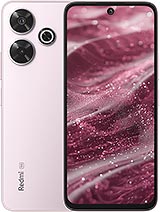
Redmi 13 5G

Redmi A4
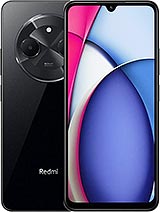
Redmi A3 Pro
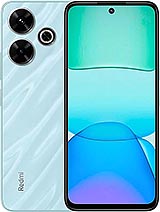
Redmi 13
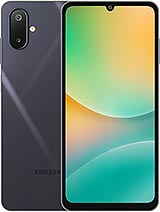
Galaxy M06 5G