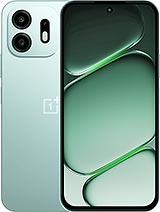
Xiaomi Redmi 17 review
This phone suits heavy users in markets where charging is inconvenient or unreliable and battery life is the priority. For anyone with access to daily charging or willing to spend slightly more, a mid-range phone with a better display and faster processor will feel less compromised.

This review is written with AI assistance from Xiaomi’s published specifications and public benchmark data for the Xiaomi Redmi 17, and the rating is spec-based. GoSolo does not physically test devices; where we estimate real-world behaviour such as battery life or charge time, we say so. How we rate phones.
Overview
The Redmi 17 is a large, budget-friendly phone with a massive battery and 5G that punches above its price for everyday use, but the low-res display and entry-level processor reveal its cost-cutting at the wrong places.
Design & build
At 232g and 8.8mm thick, this is a substantial phone that feels heavier than most rivals at the price. The glass front and plastic frame are standard for budget 5G, but the eco leather back option is a practical touch for grip without adding bulk. IP64 dust and splash resistance is adequate for casual use, though not the full immersion rating you'd find in mid-range rivals. The RGB light on the back is purely decorative—a toy feature that does not offset the weight penalty or add real utility. Build feels solid enough for the asking price, but this is not a phone you'll forget is in your pocket.
Display
The 6.9-inch screen is genuinely large, but the 720p resolution at 254 ppi density is the weak point of this phone. In 2026, even budget competitors have moved to at least 1080p on screens this size, and the low density becomes obvious when reading text or viewing photos—jagged edges are noticeable. The 120Hz refresh and 825 nits (HBM) brightness are real strengths that keep it usable outdoors and smooth in scrolling, but they cannot hide the pixelation. The IPS LCD is fine for colors and angles, but the low resolution fundamentally limits what this screen can do. For the money, this feels like a corner cut too far—a 1080p panel would barely cost more and would change the whole experience.
Performance
The Snapdragon 4 Gen 5 is entry-level silicon designed for basic tasks: messaging, social media, light gaming, and video playback. It does all of this without stuttering, especially with the 120Hz display smoothing out the everyday experience. The 4GB or 6GB RAM options are paired appropriately—4GB is tight but functional with HyperOS, 6GB is the safer choice. Do not expect high frame rates in demanding games or fast photo processing in computational apps; this chip is built for long battery life and modest sustained loads, not peak performance. For the price, it is adequate, but do not mistake adequacy for excitement. If you are a light user, it will feel fine. If you install heavy apps or play online games, you will feel the ceiling quickly.
Software
Android 16 with HyperOS 3 is the latest software stack Xiaomi offers, and it arrives on this budget phone day one. HyperOS is clean and responsive at this price point—noticeably less bloated than older Xiaomi skins. The customization is deeper than stock Android, but it does not slow the phone noticeably thanks to the light loads you'll throw at the Snapdragon 4. The side-mounted fingerprint sensor is fast and reliable. Updates will likely arrive for two years, though Xiaomi's track record on budget lines is mixed. You are not getting the longest software support in the class, but you are getting current software today.
Camera
The 50MP main camera with f/1.8 aperture and PDAF sounds solid on paper, but execution is where budget phones often falter. 1080p video capture, no 4K option, and the lack of an ultrawide (something rivals are adding at this price) are real omissions. The 8MP selfie is competent for video calls but will not flatter in bright light. In daylight, the main camera will deliver acceptable detail and color; in low light, do not expect much beyond a blurry, noisy result. The PDAF helps, but the small sensor and limited processing power mean this is a shoot-in-good-light camera. For social media and casual documentation, it works. For any photography ambition beyond that, look elsewhere.
Battery & charging
The 7500mAh battery is the standout. At this capacity, expect two full days of moderate use, and closer to three if you are light on gaming and streaming. The large battery more than makes up for the modest processor's efficiency—this phone will outlast much pricier rivals on a charge. The 45W charging speed is reasonable but not fast; rivals increasingly hit 65W or 100W at similar prices, so refills take noticeably longer than newer competition. Wireless charging is absent, as expected at this price, but the wired speed is the real drawback here. The big battery is the phone's best argument for itself.
Value & verdict
At around 160 EUR, the Redmi 17 is cheap for 5G and a 7500mAh battery. The trade-offs are clear: you are not paying for a sharp display, powerful processor, or versatile camera. You are buying a phone that will last you two days without charging and handle routine tasks without complaint. In markets where budget means truly tight money and big battery life translates to fewer charges per week, this phone makes sense. For users who can stretch to 200 EUR or a little more, a phone with 1080p resolution, faster charging, or an ultrawide camera will feel more balanced. The Redmi 17 is honest about what it is: a battery-first phone for people who value runtime over everything else. That is a legitimate niche, but it is not the best all-around choice at the price.
Verdict
This phone suits heavy users in markets where charging is inconvenient or unreliable and battery life is the priority. For anyone with access to daily charging or willing to spend slightly more, a mid-range phone with a better display and faster processor will feel less compromised.
- 7500mAh battery delivers two to three days of real-world runtime, a genuine edge over rivals in this class
- 5G connectivity and latest Android 16 software stack included at 160 EUR
- Slim 8.8mm frame and available eco leather back keep it reasonably pocketable for its capacity
- 120Hz IPS LCD with solid brightness makes everyday scrolling smooth and usable in sunlight
- 720p display at 6.9 inches is noticeably pixelated in 2026, when competitors offer 1080p at the same price
- 45W charging is slow for the battery size; rivals now push 65W or faster, adding hours to refill time
- Snapdragon 4 Gen 5 is basic for 2026—light games and heavy apps will show performance limits quickly
Xiaomi Redmi 17 Key Specifications
The essentials at a glance. See the full spec sheet.
| Released | 2026, August 10 |
|---|---|
| Display | 6.9 inches, 114.9 cm2 (~86.2% screen-to-body ratio), IPS LCD, 120Hz, 825 nits (HBM) |
| Resolution | 720 x 1600 pixels, 20:9 ratio (~254 ppi density) |
| Chipset | Qualcomm Snapdragon 4 Gen 5 |
| RAM & storage | 128GB 4GB RAM, 128GB 6GB RAM, 256GB 4GB RAM, 256GB 6GB RAM |
| Main camera | 50 MP, f/1.8, (wide), PDAF Auxiliary lens |
| Selfie camera | 8 MP, f/2.1, (wide) |
| Battery | 7500 mAh |
| Software | Android 16, HyperOS 3 |
| Dimensions | 170.1 x 78.4 x 8.8 mm (6.70 x 3.09 x 0.35 in) |
| Weight | 232 g (8.18 oz) |
| Build | Glass front (Gorilla Glass 7i), plastic back or silicone polymer (eco leather) back, plastic frame |
| Durability | IP64 dust tight and water resistant (water splashes) RGB light (on the back) |
| Network | GSM / HSPA / LTE / 5G |
| NFC | Yes (market/region dependent) |
| USB | USB Type-C 2.0 |
Xiaomi Redmi 17 FAQ
Common questions, answered from the spec sheet.
Does the Redmi 17 support 5G?
Yes. The Redmi 17 supports 5G networks.
What chipset does the Redmi 17 use?
The Redmi 17 runs on the Qualcomm Snapdragon 4 Gen 5.
What display does the Redmi 17 have?
A 6.9 inches, 114.9 cm2 (~86.2% screen-to-body ratio) IPS LCD, 120Hz, 825 nits (HBM), 720 x 1600 pixels, 20:9 ratio (~254 ppi density).
How big is the Redmi 17 battery?
The Redmi 17 has a 7500 mAh battery.
Does the Redmi 17 have NFC?
Yes, the Redmi 17 has NFC.
Is the Redmi 17 water resistant?
The Redmi 17 carries a IP64 dust tight and water resistant (water splashes) RGB light (on the back) rating.
Does the Redmi 17 support a microSD card?
Yes, the Redmi 17 supports expandable storage (microSDXC (uses shared SIM slot)).
Alternatives to consider
If the Redmi 17 isn’t quite right, these are the closest calls.

Redmi Note 17
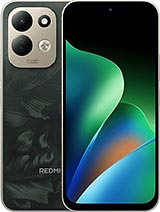
Redmi 17 4G
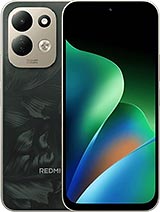
Redmi M100
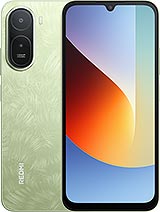
Redmi A7 Pro 4G
Galaxy M17e