Xiaomi Redmi 17C review
The Redmi 17C suits users in markets where €100 is real money and battery life trumps experience—shift workers, frequent travelers on tight budgets, or anyone replacing a broken ancient phone. Skip it if you can stretch the budget to €140 or higher; there is sharper competition just up the price ladder.

This review is written with AI assistance from Xiaomi’s published specifications and public benchmark data for the Xiaomi Redmi 17C, and the rating is spec-based. GoSolo does not physically test devices; where we estimate real-world behaviour such as battery life or charge time, we say so. How we rate phones.
Overview
The Redmi 17C is a bare-bones budget phone with a huge 6.88-inch display, vanilla Android 16, and enough battery to last the day—but its 720p screen, weak processor, and minimal camera make it a device you buy only when price is everything.
Design & build
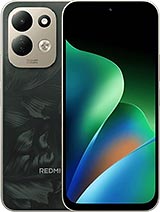
At 206 grams and 8.2mm thick, the Redmi 17C is neither light nor slim, but for a €100 phone with a battery that size, the weight is acceptable. The glass front, plastic frame, and plastic or eco-leather back feel industrial rather than refined—this is budget-tier tooling. Dual nano-SIM and a dedicated microSDXC slot are practical for users juggling networks or needing breathing room for media, though the plastic chassis will show fingerprints and scratches faster than glass-backed rivals.
Display
A 6.88-inch IPS LCD with 120Hz refresh is the headline, but the 720p resolution is the problem. At 260 ppi density, text is noticeably soft and fine detail blurs compared to phones at this price that now routinely ship with 720p on 6.5-inch screens or full 1080p panels. The 450 nits typical brightness and 600 nits peak (HBM) are adequate for indoor use and decent in sunlight, but the low density makes everything feel cheaper than it costs. For everyday scrolling and video it works, but switching from any modern phone will feel like a step back.
Performance
The Helio G81 Ultra sits at the entry end of midrange—adequate for calls, messaging, and web browsing but slow for demanding games and heavy multitasking. Apps launch noticeably slower than mid-tier rivals, and fill the 64GB base model with media or apps and you will feel stutters. The Mali-G52 MC2 GPU is basic. 4GB RAM paired with Android 16 keeps things running, but this is not a phone you load with 50 apps and expect snappy performance. Real-world use is sluggish enough that budget shoppers should consider a 128GB variant and keep installations lean.
Software
Android 16 with HyperOS 3 arrives clean and bloat-free, a genuine strength at this price where some competitors ship laden with ads and sponsored apps. The interface is vanilla and responsive, though performance limitations of the chip mean actual system animation feels choppy despite a 120Hz screen. Updates will likely be thin—Xiaomi typically offers one or two OS upgrades for entry-level Redmi models—so buyer expectations for long-term software support should be modest.
Camera
The 13MP main sensor with f/2.2 aperture and 25mm lens is the bare minimum for a 2026 phone. No ultra-wide, no macro, no depth sensor—just one camera that struggles in low light due to the tight aperture and small sensor. Videos shoot at 1080p@30fps, passable but not smooth. The 5MP selfie is adequate for calls and social media snaps. This is strictly point-and-shoot territory; if you take photos seriously, even slightly higher-priced rivals offer 50MP mains or ultra-wide depth.
Battery & charging
The 5160 mAh battery is this phone's strongest asset. With modest performance and a 120Hz display on a mid-range chip, you will realistically hit a full day of mixed use and often push into a second day on light workloads. The 18W charging is slow by modern standards (rivals at this price now offer 30W to 65W), meaning a full charge takes about 2.5 to 3 hours, but for a phone at €100 the battery longevity is genuinely useful and reduces the anxiety of tethering to a plug constantly.
Value & verdict-context
At €100, the Redmi 17C undercuts most budget rivals, but for good reason. The 720p display feels outdated, the processor is sluggish, and the camera is spartan. You are paying less than a tank of petrol, so expectations must align with that: this is a phone for calls, messaging, light social media, and all-day battery life. If you have flexibility in budget and can stretch to €130–150, you will find phones with 1080p screens, faster processors, and more camera versatility. The Redmi 17C appeals only to buyers for whom battery longevity, storage expansion, and rock-bottom price matter more than screen quality and responsiveness.
Verdict
The Redmi 17C suits users in markets where €100 is real money and battery life trumps experience—shift workers, frequent travelers on tight budgets, or anyone replacing a broken ancient phone. Skip it if you can stretch the budget to €140 or higher; there is sharper competition just up the price ladder.
- 5160 mAh battery with a large 6.88-inch display means you can realistically go a full day without hunting for power
- Dedicated microSDXC slot lets you expand storage without trading a SIM slot
- Side-mounted fingerprint sensor and dual SIM flexibility for multi-network users
- Clean Android 16 with HyperOS 3 keeps the interface light and free of bloat
- 720p resolution on a 6.88-inch screen yields 260 ppi density—noticeably grainy text and blurry images compared to modern budget rivals that routinely hit 720p on smaller panels or 1080p on 6.5-inch screens
- Helio G81 Ultra is entry-level midrange; expect lag in games and slow app launches, especially as you fill storage
- 13MP main camera with f/2.2 aperture and no ultra-wide or depth sensor means limited versatility and weak low-light capture
Xiaomi Redmi 17C Key Specifications
The essentials at a glance. See the full spec sheet.
| Released | 2026, June 23 |
|---|---|
| Display | 6.88 inches, 112.4 cm2 (~84.0% screen-to-body ratio), IPS LCD, 120Hz, 450 nits (typ), 600 nits (HBM) |
| Resolution | 720 x 1640 pixels (~260 ppi density) |
| Chipset | Mediatek Helio G81 Ultra (12 nm) |
| RAM & storage | 64GB 4GB RAM, 128GB 4GB RAM |
| Main camera | 13 MP, f/2.2, 25mm (wide) |
| Selfie camera | 5 MP |
| Battery | 5160 mAh |
| Software | Android 16, HyperOS 3 |
| Dimensions | 171.9 x 77.8 x 8.2 mm (6.77 x 3.06 x 0.32 in) |
| Weight | 206 g (7.27 oz) |
| Build | Glass front, plastic frame, plastic back or silicone polymer back (eco leather) |
| Network | GSM / CDMA / HSPA / LTE |
| NFC | No |
| USB | USB Type-C 2.0 |
Xiaomi Redmi 17C FAQ
Common questions, answered from the spec sheet.
Does the Redmi 17C support 5G?
No. The Redmi 17C tops out at GSM / CDMA / HSPA / LTE, without 5G.
What chipset does the Redmi 17C use?
The Redmi 17C runs on the Mediatek Helio G81 Ultra (12 nm).
What display does the Redmi 17C have?
A 6.88 inches, 112.4 cm2 (~84.0% screen-to-body ratio) IPS LCD, 120Hz, 450 nits (typ), 600 nits (HBM), 720 x 1640 pixels (~260 ppi density).
How big is the Redmi 17C battery?
The Redmi 17C has a 5160 mAh battery.
Does the Redmi 17C have NFC?
No, the Redmi 17C does not list NFC support.
Does the Redmi 17C support a microSD card?
Yes, the Redmi 17C supports expandable storage (microSDXC (dedicated slot)).
Alternatives to consider
If the Redmi 17C isn’t quite right, these are the closest calls.

Redmi 17C 4G
Redmi M100

Redmi 17

Redmi A7 Pro 4G

Galaxy M17e