Xiaomi Redmi A2+ review
The Redmi A2+ suits light users in cost-conscious markets who value battery life and dual SIM over performance and display quality. If you need gaming, smooth multitasking, or a phone that feels quick in 2024 and beyond, the Helio G36 and 720p screen will disappoint—spend a bit more for a Snapdragon 680 or Helio G85 device with 1080p."

This review is based on Xiaomi’s published specifications and public benchmark data for the Xiaomi Redmi A2+, and the rating is spec-based. GoSolo does not physically test devices; where we estimate real-world behaviour such as battery life or charge time, we say so. How we rate phones.
Overview
The Redmi A2+ is a no-frills budget phone built around a large 5000 mAh battery and dual SIM, designed for light daily use and long standby. At 100 EUR, it delivers basic calling, messaging, and social media, but the Helio G36 and 720p display pull it down in an era when affordable phones now offer faster chips and sharper screens.
Design & build
At 192 g and 9.1 mm thick, the A2+ sits comfortably in hand. The 6.52-inch frame is tall and narrow by modern standards, but that 20:9 ratio has become the norm for budget phones. There is no mention of glass or metal, and the lack of detail in Xiaomi's spec sheet suggests plastic throughout, which is fine for the price. The phone feels present and solid enough for daily carry, and the dual SIM tray is a real draw for users who need work and personal lines. No water resistance is listed, so keep it away from moisture.
Display
The 6.52-inch IPS LCD is bright enough to read indoors at 400 nits, but it starts to wash out in direct sunlight. The 720x1600 resolution at 269 ppi is well below what flagship and even mid-range phones now offer; text will look slightly grainy compared to a 1080p+ screen at the same size. Colors are flat and muted, as IPS always is at the low end. For browsing, messaging, and video calls, it is passable. For photo editing or detailed work, you will notice the shortfall.
Performance
The Mediatek Helio G36 is an entry-level chipset designed for light workloads, and that is exactly what you get. Calling, messaging, light social media, and simple games run without stuttering. Load a heavy game, open many apps at once, or try to edit a video and the phone will stall. The 2–4 GB RAM options do not help; even the 4 GB variant struggles with sustained multitasking. For a device in 2023 costing 100 EUR, rivals were already stepping up to Snapdragon 680 or Helio G85, which offer noticeably faster cores. If you need a phone that lasts three years without feeling slow, this is not it.
Software
Android 12 or 13 (Go edition) is a lightweight OS designed for budget hardware, and MIUI sits on top to add Xiaomi customizations. Go edition means fewer background processes and system bloat compared to full Android, which is sensible for 2–3 GB RAM devices. You will see ads in some preloaded apps, and the UI is not as polished as MIUI on higher-end Xiaomi phones, but it is stable and usable. Security updates are a question mark—Xiaomi does not promise long-term patches on budget Go devices, so plan for a 1–2 year window before security drift becomes a risk.
Camera
The 8 MP rear camera with f/2.0 and HDR is simplistic but serviceable in good light. Daylight photos have acceptable color and sharpness for social media posting, though detail is soft and zoom is not an option. The 5 MP selfie is good enough for video calls and casual snapshots. Low light is where the A2+ shows its limits; a larger sensor and faster aperture are absent, so night photos are noisy and dim. Video tops out at 1080p@30fps, which is acceptable but unremarkable. For a budget phone, this is baseline—not a strength, not a dealbreaker.
Battery & charging
The 5000 mAh cell is the phone's standout feature. Expect about 1.5 days of mixed use, or close to 2 days if you are not constantly scrolling. Light users will stretch it to 2–3 days. The 10W charging is glacially slow by modern standards—a full charge takes 2.5 to 3 hours—but the large battery means you are not charging daily anyway. This is a phone you plug in overnight, not one you top up between meetings. For markets without reliable power, the capacity is a real asset.
Value & verdict
At 100 EUR, the A2+ competes with ultra-budget phones from OnePlus Nord N10, Samsung Galaxy A13, and local brands. It undercuts most on battery life and offers dual SIM and a microSD slot, but it falls behind on performance and display quality. The Helio G36 is noticeably slower than Snapdragon 680 chips now common at this price, and the 720p screen is a step down from rivals offering 1080p. For a user who primarily calls, texts, listens to music, and browses lightly, the A2+ is good enough and the battery is a genuine advantage. For anyone who games, edits, or expects the phone to remain snappy beyond one year, look elsewhere. The Go edition and slower SoC signal this is a phone designed to fade gracefully rather than stand the test of time.
Verdict
The Redmi A2+ suits light users in cost-conscious markets who value battery life and dual SIM over performance and display quality. If you need gaming, smooth multitasking, or a phone that feels quick in 2024 and beyond, the Helio G36 and 720p screen will disappoint—spend a bit more for a Snapdragon 680 or Helio G85 device with 1080p."
- 5000 mAh battery delivers 1.5+ days on mixed use, with the 10W charging giving a full charge in about 2.5–3 hours—solid for a budget device
- Dual Nano-SIM and a dedicated microSDXC slot let you run two lines and expand storage without sacrifice
- Rear fingerprint sensor and FM radio remain useful for markets where these still matter
- Comfortable 6.52-inch 20:9 screen with an 81% screen-to-body ratio feels modern in hand, even at 720p
- Helio G36 stumbles on anything beyond light apps—no gaming, no multitasking, no video editing without frustration
- 720x1600 LCD at 269 ppi looks slightly soft on text and lacks the vibrancy of modern budget IPS panels; 400 nits is enough indoors but weak in strong sunlight
- 10W charging and 2G/3G radio bands feel dated even for 2023; rivals at this price now hit 30W+ and have more future-proof LTE coverage
Xiaomi Redmi A2+ Key Specifications
The essentials at a glance. See the full spec sheet.
| Released | 2023, March 24 |
|---|---|
| Display | 6.52 inches, 102.6 cm2 (~81.0% screen-to-body ratio), IPS LCD, 400 nits (typ) |
| Resolution | 720 x 1600 pixels, 20:9 ratio (~269 ppi density) |
| Chipset | Mediatek Helio G36 (12 nm) |
| RAM & storage | 32GB 2GB RAM, 32GB 3GB RAM, 64GB 3GB RAM, 64GB 4GB RAM, 128GB 4GB RAM |
| Main camera | 8 MP, f/2.0, (wide) Auxiliary lens |
| Selfie camera | 5 MP, f/2.2 |
| Battery | 5000 mAh |
| Charging | 10W wired |
| Software | Android 12 or 13 (Go edition), MIUI |
| Dimensions | 164.9 x 76.8 x 9.1 mm (6.49 x 3.02 x 0.36 in) |
| Weight | 192 g (6.77 oz) |
| Network | GSM / HSPA / LTE |
| NFC | No |
| USB | microUSB 2.0 |
Xiaomi Redmi A2+ FAQ
Common questions, answered from the spec sheet.
Does the Redmi A2+ support 5G?
No. The Redmi A2+ tops out at GSM / HSPA / LTE, without 5G.
What chipset does the Redmi A2+ use?
The Redmi A2+ runs on the Mediatek Helio G36 (12 nm).
What display does the Redmi A2+ have?
A 6.52 inches, 102.6 cm2 (~81.0% screen-to-body ratio) IPS LCD, 400 nits (typ), 720 x 1600 pixels, 20:9 ratio (~269 ppi density).
How big is the Redmi A2+ battery?
The Redmi A2+ has a 5000 mAh battery. Charging is rated at 10W wired.
Does the Redmi A2+ have NFC?
No, the Redmi A2+ does not list NFC support.
Does the Redmi A2+ support a microSD card?
Yes, the Redmi A2+ supports expandable storage (microSDXC (dedicated slot)).
Does the Redmi A2+ have a headphone jack?
Yes, the Redmi A2+ has a 3.5mm headphone jack.
Alternatives to consider
If the Redmi A2+ isn’t quite right, these are the closest calls.
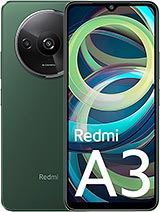
Redmi A3

Redmi 12C

Redmi A3x
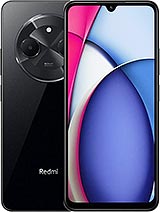
Redmi A3 Pro
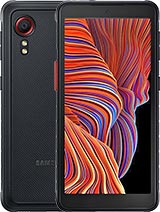
Galaxy XCover 7