Xiaomi Redmi A3 Pro review
The Redmi A3 Pro suits someone who prioritizes a large display and all-day battery life over speed and charging convenience, and is willing to tolerate single-lens photography and no water resistance. Anyone who games, needs quick charging, or expects water protection should skip this and spend a little more elsewhere.
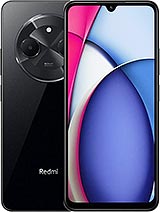
This review is based on Xiaomi’s published specifications and public benchmark data for the Xiaomi Redmi A3 Pro, and the rating is spec-based. GoSolo does not physically test devices; where we estimate real-world behaviour such as battery life or charge time, we say so. How we rate phones.
Overview
The Redmi A3 Pro is a budget phone built for the screen size and battery life you'd want on a tight budget, with a passable 50MP camera and 90Hz display. It works fine for everyday apps and messaging, but slow charging and an underpowered chip mean it's not the phone to buy if you game or multitask heavily.
Design & build
At 204g and 8.2mm thick, the Redmi A3 Pro is chunky but not unwieldy for its 6.88-inch footprint. The weight sits between a budget midrange phone and an older flagship, so it's noticeable in hand but not unusual for something this large. Build materials are not specified, which in the budget space usually means plastic body and standard durability. The side-mounted fingerprint sensor is a practical inclusion and works quickly, though there is no IP rating for water or dust resistance—a real omission at this price in 2024, even if not universal across budget phones. Dual Nano-SIM and a dedicated microSD slot mean you can carry two lines and store hundreds of photos without trade-offs, which is a genuine convenience.
Display
The 6.88-inch IPS LCD is the Redmi A3 Pro's headline feature, and it delivers what that spec suggests: a large canvas for video and reading without forcing you into phablet territory. At 260 ppi, text and icons are legible but softer than a 1080p display, so up-close reading of fine print feels slightly blurry compared to phones with sharper screens. The 90Hz refresh rate makes scrolling through feeds and lists noticeably smoother than a standard 60Hz panel, a feel that sticks with you once you notice it. The trade-off is that Xiaomi has not published brightness figures, so sunlight readability is a question mark; budget IPS screens often struggle in bright light, and this one may too. For indoor use and video consumption, the size and smoothness win out; outdoor daylight use is a gamble.
Performance
The Helio G81 Ultra and Mali-G52 MC2 are entry-level tools. They handle browsing, messaging, social apps, and streaming without complaint, and can manage light gaming at medium settings on less demanding titles. Anything demanding—PUBG, Genshin Impact, heavy multitasking—will hit a wall: framerates drop, load times stretch, and app switching slows. The 4GB RAM compounds this; you will notice stutters when jumping between apps or loading tabs. Compared to phones at the same price, this is standard for an ultra-budget model, but if you play games or work heavily on your phone, this will frustrate you quickly. For calls, email, and casual YouTube, it is sufficient.
Software
Android 14 with HyperOS promises updates and security patches, and HyperOS on budget hardware tends to be reasonably responsive. There is no word on how long Xiaomi will support this model with updates, a blind spot on many budget phones. Out of the box, expect a layer of Xiaomi apps and potentially some preloads, typical for the brand. Performance should remain usable for at least a year before gradual slowdown sets in, a baseline expectation at this tier.
Camera
The 50MP f/1.8 main sensor with LED flash is a respectable spec that works in practice. Daylight photos come out detailed enough for crops and small prints, and the wide aperture handles indoor and dusk shots reasonably well without turning to a murky mess. However, there is no ultrawide, telephoto, or even a macro lens—just one lens—so you cannot frame differently without stepping. Video is limited to 1080p at 30fps, a dated limitation that feels long overdue for replacement in 2024. A selfie camera is present but its megapixel count is not listed, so assume it is modest. For a phone at 100 EUR that does not claim to excel at photography, the single-lens setup and 1080p video are fair concessions; they are not dealbreakers unless you shoot video often.
Battery & charging
At 5160 mAh, the battery is genuinely large for the price and delivers about 5–6 hours of screen-on time under moderate use, meaning you will likely stretch it to a full day without pushing hard. Standby stamina is solid. The problem is charging: 10W is glacially slow by 2024 standards. A full cycle takes roughly 2–3 hours, and even a quick 30-minute top-up gets you maybe 20–30% charge. Rivals at this price are already shipping 33W or 65W chargers, so the Redmi A3 Pro falls notably behind in daily convenience. If you have access to a charger during the day, the large battery softens the blow; if you rely on overnight charging or quick top-ups, this will annoy you.
Value & verdict
At about 100 EUR, the Redmi A3 Pro sits at the ultra-budget ceiling, where every cent counts and trade-offs are baked in. The large display and 90Hz smoothness are genuine perks for media consumption. The big battery is a strength. But the 10W charging is a headache, the Helio G81 is not built for anything demanding, and the lack of an IP rating in 2024 is disappointing even at this price. This phone is best suited to someone who values screen size, all-day battery, and the microSD slot, and can live with slow charging and no gaming. For anyone who needs faster charging, tougher durability, or better performance, look at alternatives in the 130–150 EUR range where you start to find more balanced options.
Verdict
The Redmi A3 Pro suits someone who prioritizes a large display and all-day battery life over speed and charging convenience, and is willing to tolerate single-lens photography and no water resistance. Anyone who games, needs quick charging, or expects water protection should skip this and spend a little more elsewhere.
- 6.88-inch display with 90Hz refresh gives you more screen real estate and noticeably smoother scrolling than a standard 60Hz budget phone at this price
- 5160 mAh battery easily handles 5–6 hours of screen-on time, and the large capacity keeps you off the charger longer than smaller competitors
- 50MP main camera with f/1.8 aperture and LED flash captures enough detail for social media and modest prints without pretending to be a flagship
- Dedicated microSD slot lets you expand storage without sacrificing the dual SIM, rare on phones under 120 EUR
- 10W charging takes 2–3 hours for a full cycle, making it one of the slowest in its price band—rivals now offer 30W or higher
- Helio G81 Ultra is entry-level; demanding games stutter at medium settings, and app switching can feel sluggish with only 4GB RAM
- No water or dust protection and no brightness spec makes it risky near water and unclear how readable it is in sunlight
Xiaomi Redmi A3 Pro Key Specifications
The essentials at a glance. See the full spec sheet.
| Released | 2024, October |
|---|---|
| Display | 6.88 inches, 112.4 cm2 (~84.0% screen-to-body ratio), IPS LCD, 90Hz |
| Resolution | 720 x 1640 pixels (~260 ppi density) |
| Chipset | Mediatek Helio G81 Ultra |
| RAM & storage | 128GB 4GB RAM |
| Main camera | 50 MP, f/1.8, (wide) Auxiliary lens |
| Selfie camera | Yes |
| Battery | 5160 mAh |
| Charging | 10W wired |
| Software | Android 14, HyperOS |
| Dimensions | 171.9 x 77.8 x 8.2 mm (6.77 x 3.06 x 0.32 in) |
| Weight | 204 g (7.20 oz) |
| Network | GSM / HSPA / LTE |
| NFC | Yes (market/region dependent) |
| USB | USB Type-C 2.0 |
Xiaomi Redmi A3 Pro FAQ
Common questions, answered from the spec sheet.
Does the Redmi A3 Pro support 5G?
No. The Redmi A3 Pro tops out at GSM / HSPA / LTE, without 5G.
What chipset does the Redmi A3 Pro use?
The Redmi A3 Pro runs on the Mediatek Helio G81 Ultra.
What display does the Redmi A3 Pro have?
A 6.88 inches, 112.4 cm2 (~84.0% screen-to-body ratio) IPS LCD, 90Hz, 720 x 1640 pixels (~260 ppi density).
How big is the Redmi A3 Pro battery?
The Redmi A3 Pro has a 5160 mAh battery. Charging is rated at 10W wired.
Does the Redmi A3 Pro have NFC?
Yes, the Redmi A3 Pro has NFC.
Does the Redmi A3 Pro support a microSD card?
Yes, the Redmi A3 Pro supports expandable storage (microSDXC (dedicated slot)).
Does the Redmi A3 Pro have a headphone jack?
Yes, the Redmi A3 Pro has a 3.5mm headphone jack.
Alternatives to consider
If the Redmi A3 Pro isn’t quite right, these are the closest calls.

Redmi A4
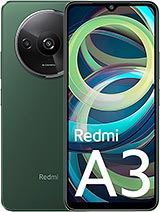
Redmi A3
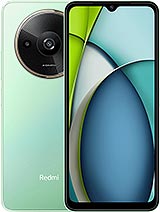
Redmi A3x

Redmi 13 5G
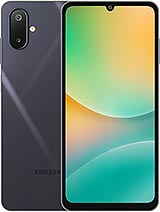
Galaxy M06 5G