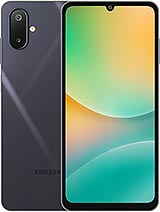
Xiaomi Redmi A3x review
This phone is for someone who needs reliable battery endurance and does not care about display crispness or charging speed. Anyone else shopping this price tier should spend a few euros more and avoid the 720p compromise.
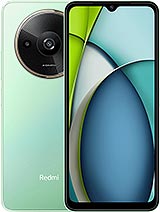
This review is based on Xiaomi’s published specifications and public benchmark data for the Xiaomi Redmi A3x, and the rating is spec-based. GoSolo does not physically test devices; where we estimate real-world behaviour such as battery life or charge time, we say so. How we rate phones.
Overview
The Redmi A3x is a budget phone built to survive, not impress. It handles calls, texts, and light browsing on a 5000 mAh battery that lasts 1.5 days, but the 720p display and glacial 10W charging wear thin fast at this price point.
Design & build
The Redmi A3x feels solid for its price bracket: dual glass panels with a plastic frame, side-mounted fingerprint, and USB Type-C. At 193g and 8.3mm, it sits comfortably in hand and doesn't feel cheap, but there's a catch. Gorilla Glass 3 is an old standard that predates the current generation by years—it scratches more easily and offers weaker drop protection than modern slab-glass rivals. The glass back looks premium until you realize it demands a case, adding bulk to an already wide phone. The included charger and headphone jack are bonuses many skip now, but 10W charging speed makes the latter almost redundant for daily top-ups.
Display
The 6.71-inch IPS LCD is a mixed bag. 500 nits brightness handles sunlight reasonably well, and 90Hz scrolling feels noticeably smoother than the 60Hz phones it sits next to. But 720p resolution is the real compromise: at 268 ppi, individual pixels are visible at arm's length, especially when reading text. Rivals in the same price bracket have moved to 720p on smaller screens (under 6.5 inches) or HD+ (1600p) on this size—this phone offers neither. For casual scrolling and video it passes, but pixel density here is a step backward even for 2024 entry-level.
Performance
The Unisoc T603 is entry-level silicon that knows its limits. It handles email, messaging, and social media without hiccups, but ask it for multitasking and it slows. The base 3GB RAM variant is especially tight—app switching causes visible stutters and games stutter at low framerates. The 4GB variant improves this slightly, but neither model offers comfortable headroom. Web browsing works, but loading heavy pages takes patience. This chipset won't run demanding apps or gaming smoothly; it's honest budget performance, not a hidden performer.
Software
Android 14 ships with MIUI, Xiaomi's interface layer. It's functional and cluttered—useful features buried among toggles and menus most users never find. The promise of two major Android upgrades (to Android 16) is solid for this tier, though real-world timelines vary. Updates are slower than stock Android phones, and MIUI's bloat means the 64GB storage variants feel cramped once the OS, preloads, and a few apps take their share. The dedicated microSD slot helps, but relying on expandable storage to add breathing room is telling.
Camera
The 8MP main camera with f/2.0 aperture and LED flash is bare-bones but predictable. In daylight it produces acceptable snapshots—colors are flat and detail is soft, but fine for casual use. Low light is its downfall: the LED flash is harsh, and 1080p video looks grainy and stutters at 30fps. The 5MP selfie camera is passable for video calls but unremarkable. This is not a phone for anyone who cares about photos; it's for functional documentation when you have no choice.
Battery & charging
The 5000 mAh battery is the phone's strongest feature. On light use—messaging, calls, browsing—it stretches to 1.5 days comfortably. Heavy use cuts that to 6-8 hours of screen time. Where it falters is charging: 10W is slow by current standards, taking 2 to 2.5 hours for a full charge. Rivals at this price now offer 18-25W, which cuts charge time in half. If the battery dies mid-afternoon, you cannot quickly recover—you will wait most of an evening to top up. This is a genuine friction point for a daily driver.
Value & verdict
At around 110 EUR, the Redmi A3x is priced for buyers in markets where budget matters more than features. It does not try to punch above its weight: the build is honest, the battery endurance is real, and the core software works. The problem is that 2024 entry-level phones have raised the bar slightly. 720p screens on 6.7-inch phones have become a red flag, and 10W charging is now behind the curve. A few euros more unlock phones with brighter screens, faster charging, or more RAM, making this a narrow choice. It works best for someone upgrading from an ancient device and prioritizing battery life over everything else.
Verdict
This phone is for someone who needs reliable battery endurance and does not care about display crispness or charging speed. Anyone else shopping this price tier should spend a few euros more and avoid the 720p compromise.
- 5000 mAh battery gives genuine 1.5-day endurance on light use
- 90Hz IPS display with 500 nits brightness outdoors, smoother than 60Hz rivals
- Dedicated microSD slot for storage expansion without trade-offs
- Side-mounted fingerprint and headphone jack retain practical conveniences
- 10W charging is painfully slow—rivals at this price hit 18-25W now
- 720p on a 6.71-inch screen looks pixelated up close, a step back even for budget phones in 2024
- Unisoc T603 and 3GB RAM variant leave almost no headroom for app switching or light gaming
Xiaomi Redmi A3x Key Specifications
The essentials at a glance. See the full spec sheet.
| Released | 2024, May 24 |
|---|---|
| Display | 6.71 inches, 106.5 cm2 (~82.9% screen-to-body ratio), IPS LCD, 90Hz, 500 nits |
| Resolution | 720 x 1650 pixels (~268 ppi density) |
| Chipset | Unisoc T603 (22 nm) |
| RAM & storage | 64GB 3GB RAM, 64GB 4GB RAM, 128GB 4GB RAM |
| Main camera | 8 MP, f/2.0, (wide) Auxiliary lens |
| Selfie camera | 5 MP, f/2.2, (wide) |
| Battery | 5000 mAh |
| Charging | 10W wired |
| Software | Android 14, up to 2 major Android upgrades, MIUI |
| Dimensions | 168.4 x 76.3 x 8.3 mm (6.63 x 3.00 x 0.33 in) |
| Weight | 193 g (6.81 oz) |
| Build | Glass front (Gorilla Glass 3), glass back, plastic frame |
| Network | GSM / HSPA / LTE |
| NFC | No |
| USB | USB Type-C |
Xiaomi Redmi A3x FAQ
Common questions, answered from the spec sheet.
Does the Redmi A3x support 5G?
No. The Redmi A3x tops out at GSM / HSPA / LTE, without 5G.
What chipset does the Redmi A3x use?
The Redmi A3x runs on the Unisoc T603 (22 nm).
What display does the Redmi A3x have?
A 6.71 inches, 106.5 cm2 (~82.9% screen-to-body ratio) IPS LCD, 90Hz, 500 nits, 720 x 1650 pixels (~268 ppi density).
How big is the Redmi A3x battery?
The Redmi A3x has a 5000 mAh battery. Charging is rated at 10W wired.
Does the Redmi A3x have NFC?
No, the Redmi A3x does not list NFC support.
Does the Redmi A3x support a microSD card?
Yes, the Redmi A3x supports expandable storage (microSDXC (dedicated slot)).
Does the Redmi A3x have a headphone jack?
Yes, the Redmi A3x has a 3.5mm headphone jack.
Alternatives to consider
If the Redmi A3x isn’t quite right, these are the closest calls.
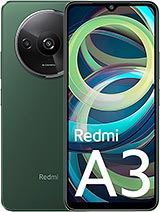
Redmi A3
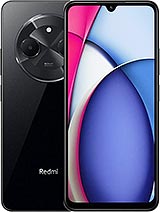
Redmi A3 Pro

Poco C61

Redmi A2+

Y50 5G