Xiaomi Redmi A7 review
The Redmi A7 suits buyers who value battery life and size over sharpness and speed, or who are upgrading from very old hardware. Others should look at Realme or Infinix rivals in this price band—they offer better displays and faster processors for the same money.

This review is written with AI assistance from Xiaomi’s published specifications and public benchmark data for the Xiaomi Redmi A7, and the rating is spec-based. GoSolo does not physically test devices; where we estimate real-world behaviour such as battery life or charge time, we say so. How we rate phones.
Overview
The Redmi A7 is a straightforward budget phone: a large 6.88-inch display with 120Hz refresh, a 5200 mAh battery, and enough durability for everyday use at ₹12,499. It's honest work for the price, but the weak processor and dim screen make it feel a step behind rivals with better value.
Design & build
The Redmi A7 is unremarkable in hand. At 193 grams and 8.3mm thick, it's light and slim—actually a strength for this category, where budget phones often feel cheap and heavy. The plastic back and frame are standard fare. Dual Nano-SIM slots and a dedicated microSD tray are practical for Indian users who juggle networks or need storage headroom without sacrificing a SIM. Dust and splash resistance (IP rating not specified, but mentioned) adds a layer of peace of mind that many phones at this price skip. It's not going to wow anyone, but it feels assembled with restraint rather than skimped.
Display
The 6.88-inch screen is large and the 120Hz refresh is a welcome lift from 60Hz standard at this tier. But here's the rub: 720 x 1640 pixels on a 6.88-inch display means 260 ppi, which is noticeably soft. Text and icons lack sharpness; you notice it within an hour. Rivals at or near this price now offer 1080p panels or even higher, and the jump in clarity is real. The IPS technology is fine for angles and color, and 600 nits peak brightness is livable indoors and in shade, but it's dim for daylight use in bright environments—a significant drawback for a phone sold in India where outdoor brightness is intense. The 120Hz helps scrolling feel smoother, but it cannot mask the resolution shortfall.
Performance
The Unisoc T7250 is an entry-level processor that matches the price. It will handle messaging, light browsing, and social media without stutter. Gaming and heavy multitasking will feel sluggish; anything demanding reveals the chip's limits quickly. The Mali-G57 MP1 GPU is basic. By 2026 standards, this is the floor of acceptable for budget segments. Rivals like the Realme and Infinix offer MediaTek Helio or Dimensity chips at the same price, which pull meaningfully ahead in real-world feel. Paired with only 3GB of RAM, the Redmi A7 is reliant on aggressive app management to stay responsive. It's not broken, but it's not competitive either.
Software
Android 15 out of the box is current and appreciated. Xiaomi promises up to two major Android upgrades, which is decent for an entry phone—you'll see Android 16 and 17 if Xiaomi holds to it. MIUI, Xiaomi's overlay, has improved over time but remains more intrusive than some competitors. There's bloatware here, and you'll spend time disabling pre-installed apps that don't fit your needs. Battery optimizations are present, which helps the modest hardware stretch. The interface itself is familiar and learnable for first-time or budget-conscious buyers.
Camera
The 13 MP main camera is modest: f/2.2, LED flash, HDR. In daylight, it captures serviceable photos for social media and sharing. Contrast and detail suffer compared to even mid-range rivals; colors can look washed unless lighting is ideal. The 8 MP selfie camera is adequate for video calls and casual selfies. Both cameras shoot 1080p video at 30fps, which is baseline and feels choppy compared to 60fps options now common at this price. Night mode isn't mentioned, and the lack of it shows in low light—photos become noisy and dark. This is the phone's biggest weakness for a generation used to swapping photos instantly. It is not unusable, but it is a step down from what rivals offer.
Battery & charging
The 5200 mAh battery is substantial and should comfortably last a day with normal to moderate use. The Unisoc chipset's modest power appetite helps. Charging speed is listed as 15W, which is slow by modern standards—budget rivals now ship 18W, 22W, or higher. A full charge will take close to two hours from empty, a frustration if you need quick top-ups. The lack of wireless charging is expected and not a knock at this price, but the wired speed is a genuine weakness for a battery this size.
Value & verdict-context
At ₹12,499, the Redmi A7 sits in a competitive and crowded space. It does some things right—battery endurance, build restraint, screen size, and software support—but it stumbles on the bits that matter most in daily use. The 720p display is blurry in 2026, the Unisoc chip is a tier behind what rivals offer for the same rupee, and the camera feels like a concession. For buyers who prioritize battery life and screen real estate, and who don't mind slower processing or fuzzy text, it is a reasonable choice. But for most, a rival with a Helio or Dimensity chip, a 1080p screen, and faster charging will feel less frustrating within weeks of ownership.
Verdict
The Redmi A7 suits buyers who value battery life and size over sharpness and speed, or who are upgrading from very old hardware. Others should look at Realme or Infinix rivals in this price band—they offer better displays and faster processors for the same money.
- 5200 mAh battery with modest power draw should last a full day of real use
- 120Hz IPS LCD and reasonably large 6.88-inch screen for media and reading
- Dust and splash resistance plus microSD expansion in a ₹12,499 phone
- Side-mounted fingerprint sensor and dual-SIM flexibility for Indian market
- Unisoc T7250 chipset lags behind competing Helio and MediaTek processors at this price point
- 720p resolution at 260 ppi is fuzzy at this screen size; rivals offer 1080p or better even lower
- 600 nits peak brightness is dim for outdoor use in South Asian sunlight
Xiaomi Redmi A7 Key Specifications
The essentials at a glance. See the full spec sheet.
| Released | 2026, April 21 |
|---|---|
| Display | 6.88 inches, 112.4 cm2 (~82.0% screen-to-body ratio), IPS LCD, 120Hz, 600 nits (peak) |
| Resolution | 720 x 1640 pixels (~260 ppi density) |
| Chipset | Unisoc T7250 (12 nm) |
| RAM & storage | 64GB 3GB RAM |
| Main camera | 13 MP, f/2.2, (wide) |
| Selfie camera | 8 MP, f/2.0, (wide) |
| Battery | 5200 mAh |
| Software | Android 15, up to 2 major Android upgrades |
| Dimensions | 171.8 x 79.8 x 8.3 mm (6.76 x 3.14 x 0.33 in) |
| Weight | 193 g (6.81 oz) |
| Durability | Dust and splash resistant |
| Network | GSM / HSPA / LTE |
| NFC | No |
| USB | USB Type-C 2.0, OTG |
Xiaomi Redmi A7 FAQ
Common questions, answered from the spec sheet.
Does the Redmi A7 support 5G?
No. The Redmi A7 tops out at GSM / HSPA / LTE, without 5G.
What chipset does the Redmi A7 use?
The Redmi A7 runs on the Unisoc T7250 (12 nm).
What display does the Redmi A7 have?
A 6.88 inches, 112.4 cm2 (~82.0% screen-to-body ratio) IPS LCD, 120Hz, 600 nits (peak), 720 x 1640 pixels (~260 ppi density).
How big is the Redmi A7 battery?
The Redmi A7 has a 5200 mAh battery.
Does the Redmi A7 have NFC?
No, the Redmi A7 does not list NFC support.
Is the Redmi A7 water resistant?
The Redmi A7 carries a Dust and splash resistant rating.
Does the Redmi A7 support a microSD card?
Yes, the Redmi A7 supports expandable storage (microSDXC (dedicated slot)).
Alternatives to consider
If the Redmi A7 isn’t quite right, these are the closest calls.

Redmi A7 Pro 4G
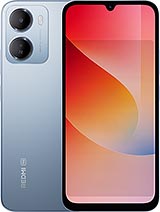
Redmi 15a
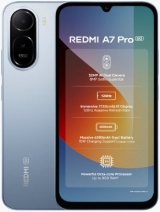
Redmi A7 Pro

Redmi M100

Galaxy M17e