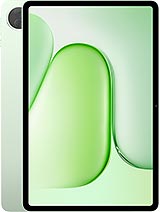
Xiaomi Redmi K Pad review
The Redmi Pad suits readers, students, and home users who value all-day battery life and light portability over cutting-edge performance or a crisp display. If you need a fast processor for gaming, a bright screen for outdoor work, or a camera that matters, look at rivals in the €300-plus range or consider a older flagship phone repurposed as a tablet.
This review is based on Xiaomi’s published specifications and public benchmark data for the Xiaomi Redmi K Pad, and the rating is spec-based. GoSolo does not physically test devices; where we estimate real-world behaviour such as battery life or charge time, we say so. How we rate phones.
Overview
The Redmi Pad is a straightforward 10.6-inch tablet built for reading, light video work, and productivity on a budget—the Helio G99 and 8000mAh battery handle day-long use without drama, but the 220ppi display and basic 8MP camera mean it's not trying to replace a premium device or a flagship phone.
Design & build
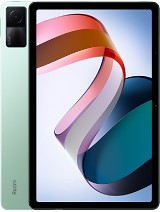
At 465 grams and 7.1mm thick, the Redmi Pad sits comfortably in one hand—a trait that sets it apart from heavier 10-inch tablets that feel more like a chore to hold for reading or web browsing. The glass and aluminum construction is standard at this price and doesn't feel cheap, though it will attract fingerprints and needs a case for drops. Magnetic stylus support is a thoughtful add that costs Xiaomi nothing to enable but gives sketching and note-taking real utility without needing a clip-on pen. The flat, industrial design is unremarkable but inoffensive; you won't mistake it for anything but what it is, and that's fine for a budget device.
Display
The 10.61-inch IPS LCD with 1200 x 2000 resolution pushes 80.9% screen-to-body ratio, which means the bezels are appropriately slim for a device sold at €250. However, 220ppi density is soft by today's standards—text in reading apps and PDFs won't be as crisp as on a sharper display, and you will notice it if you are used to recent mid-range phones or tablets. The 90Hz refresh is present but not aggressive; scrolling is smooth enough, not silky. The real constraint is brightness: 400 nits typical is adequate indoors but leaves the display hard to read in direct sunlight, especially for the kind of content-heavy work this device targets. For casual video and reading in controlled lighting, it works; for outdoor productivity or photo editing, you will squint.
Performance
The Helio G99 is a 2022 chipset designed for budget phones and entry tablets. By 2024 standards, it is aging, and rivals in this price bracket increasingly pair newer mid-range processors that offer better efficiency and sustained performance. Day-to-day navigation through apps, web browsing, and email remains smooth; the Antutu score of around 319,000 reflects capability in that realm. Gaming is not the Redmi Pad's purpose. Genshin Impact and similar titles run but will require low graphics settings and may struggle during intense scenes. For light multitasking—reading, note-taking, streaming video—the performance is never the bottleneck. The 3GB or 4GB RAM configurations are tight by 2024 standards and may cause app reloads if you switch between several heavy apps; the 6GB option offers more breathing room, though the base tiers are what most buyers will see at this price.
Software
The tablet shipped with Android 12 and is upgradable to Android 13, with MIUI 14 layered on top. MIUI is Xiaomi's interpretation of Android and brings useful additions like a file manager, app drawer customization, and split-screen tools suited to tablet use. The downside is bloatware: pre-installed apps and frequent prompts for cloud services and Xiaomi ecosystem sign-ups clutter the experience out of the box. A factory reset and selective disabling are common first steps. The software is not slow or broken, and for a device at this price, the add-ons are expected. Longer-term support is not Xiaomi's strength; expect two major updates and security patches for a couple of years, not a decade of promises.
Camera
The Redmi Pad pairs an 8MP f/2.0 rear camera with fixed focus and an 8MP 105-degree ultrawide front shooter. Both record 1080p at 30fps. This is not a camera tablet in any sense. The rear camera is useful for scanning documents, capturing reference photos, or video calls when the ultrawide front isn't in frame; neither excels in low light, and the lack of autofocus on the rear limits its reliability for close-up work. If you are considering this device as a camera upgrade or for content creation, you would be disappointed. For occasional reference shots or document backup, it suffices and asks nothing more of the user.
Battery & charging
The 8000mAh battery is the Redmi Pad's strongest suit. With moderate to heavy use—reading, video, some app work—expect 10 to 12 hours of screen-on time, easily carrying you through a full day and into the evening. Standby is respectable; the tablet does not drain perceptibly when idle. The 67W wired charging refills the battery from empty in roughly 45 to 60 minutes, which is fast for a tablet and means you are not tethered to an outlet overnight. There is no wireless charging, which is standard at this price. The real-world impact is simple: you can grab a few hours of work or entertainment, top up in under an hour, and continue without anxiety.
Value & verdict-context
At around €250, the Redmi Pad positions itself as an entry tablet for light work and media consumption. It excels at that remit: the battery, weight, and screen size create a device that feels built for reading, video, and casual browsing. The Helio G99 is past its best-before date for a 2022 release in 2024, and the 220ppi, 400-nit display is a noticeable step down from rivals climbing slightly into the €300 to €350 bracket. Stylus support and microSD expansion give you more versatility than the specs alone suggest, and MIUI's tablet-friendly tweaks make day-to-day use intuitive. The trade-off is clear: save money and accept a dimmer screen and aging chipset, or stretch the budget and gain a sharper display and fresher performance. For buyers in markets where €250 is a serious budget and long battery life trumps refresh-rate bragging, this remains a rational choice.
Verdict
The Redmi Pad suits readers, students, and home users who value all-day battery life and light portability over cutting-edge performance or a crisp display. If you need a fast processor for gaming, a bright screen for outdoor work, or a camera that matters, look at rivals in the €300-plus range or consider a older flagship phone repurposed as a tablet.
- 8000mAh battery runs a full day of mixed use without strain, and 67W charging refills it in under an hour
- 10.6-inch IPS display with 80.9% screen-to-body ratio leaves little bezel for the price, good for reading and video
- Lightweight at 465 grams and slim at 7.1mm—easy to hold one-handed for longer than a typical tablet
- Stylus support and microSD expansion let you extend storage and sketch or annotate without compromise
- The Helio G99 is past its prime for gaming and demanding apps; rivals at this price tier often pair newer mid-range chips
- 220ppi screen and 400-nit peak brightness make fine text softer and outdoor use harder than tablets at the next price step
- Only 8MP rear camera with no autofocus beyond basic shots; PDF scanning and reference photos work but low light is weak
Xiaomi Redmi K Pad Key Specifications
The essentials at a glance. See the full spec sheet.
| Released | 2022, October 04 |
|---|---|
| Display | 10.61 inches, 320.4 cm2 (~80.9% screen-to-body ratio), IPS LCD, 1B colors, 90Hz, 400 nits (typ) |
| Resolution | 1200 x 2000 pixels, 5:3 ratio (~220 ppi density) |
| Chipset | Mediatek Helio G99 (6 nm) |
| RAM & storage | 64GB 3GB RAM, 128GB 4GB RAM, 128GB 6GB RAM |
| Main camera | 8 MP, f/2.0, (wide), AF |
| Selfie camera | 8 MP, f/2.3, 105° (ultrawide) |
| Battery | 8000 mAh |
| Charging | 67W wired, PD3.0, QC3+18W reverse wiredBypass charging |
| Software | Android 12, upgradable to Android 13, MIUI 14 |
| Dimensions | 250.5 x 158.1 x 7.1 mm (9.86 x 6.22 x 0.28 in) |
| Weight | 465 g (1.03 lb) |
| Build | Glass front, aluminum frame |
| Durability | Stylus support (magnetic) |
| Network | No cellular connectivity |
| NFC | No |
| USB | USB Type-C, OTG |
Xiaomi Redmi K Pad FAQ
Common questions, answered from the spec sheet.
Does the Redmi K Pad support 5G?
No. The Redmi K Pad tops out at No cellular connectivity, without 5G.
What chipset does the Redmi K Pad use?
The Redmi K Pad runs on the Mediatek Helio G99 (6 nm).
What display does the Redmi K Pad have?
A 10.61 inches, 320.4 cm2 (~80.9% screen-to-body ratio) IPS LCD, 1B colors, 90Hz, 400 nits (typ), 1200 x 2000 pixels, 5:3 ratio (~220 ppi density).
How big is the Redmi K Pad battery?
The Redmi K Pad has a 8000 mAh battery. Charging is rated at 67W wired, PD3.0, QC3+18W reverse wiredBypass charging.
Does the Redmi K Pad have NFC?
No, the Redmi K Pad does not list NFC support.
Is the Redmi K Pad water resistant?
The Redmi K Pad carries a Stylus support (magnetic) rating.
Does the Redmi K Pad support a microSD card?
Yes, the Redmi K Pad supports expandable storage (microSDXC).
Does the Redmi K Pad have a headphone jack?
No, the Redmi K Pad does not have a 3.5mm headphone jack.
Alternatives to consider
If the Redmi K Pad isn’t quite right, these are the closest calls.
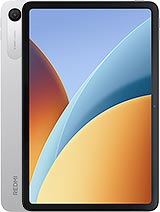
Redmi Pad 2 9.7
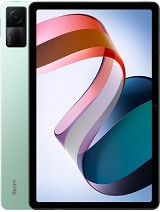
Redmi Pad 2
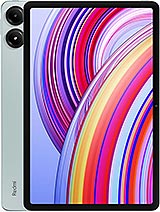
Redmi Pad 2 Pro
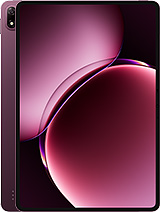
Pad 9 Pro Max
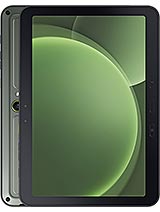
Galaxy Tab Active5 Pro