Xiaomi Redmi K70 Pro review
The K70 Pro suits someone who values fast gaming, strong low-light photography, and rapid charging over longevity between charges or pixel-perfect text size. If you mostly browse text, prefer wireless charging, or expect battery life beyond a full workday without top-ups, look at a lower-res alternative or a bigger battery in the same tier.
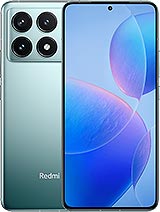
This review is based on Xiaomi’s published specifications and public benchmark data for the Xiaomi Redmi K70 Pro, and the rating is spec-based. GoSolo does not physically test devices; where we estimate real-world behaviour such as battery life or charge time, we say so. How we rate phones.
Overview
The Redmi K70 Pro pairs a flagship Snapdragon 8 Gen 3 with a 50MP f/1.6 camera and 120W charging in a compact 8.2mm frame, hitting the sweet spot for someone who games hard, shoots often, and doesn't want to compromise on speed. It is a solid performer for its price, though the display needs close reading and battery life stays within ordinary bounds for the class.
Design & build
At 209 grams and 8.2mm thick, the K70 Pro sits comfortably between pocketability and presence, light enough to forget about but substantial enough to feel deliberate. Dual nano-SIM and USB Type-C anchor it to the modern standard, though the lack of a microSD slot means your storage tier is locked in at purchase. The fingerprint sensor sits under the display—optical, not ultrasonic—which is reliable if not quite as snappy as the newest capacitive readers. No headphone jack or FM radio are what every 2023 flagship omits by design, so there is nothing unexpected here.
Display
The 6.67-inch OLED panel delivers genuine clarity with its 1440×3200 resolution, though at 526 ppi you will notice smaller text and icons compared to lower-res 6.7-inch phones that prioritize pixel size over total resolution. The 120Hz refresh and 4000-nit peak brightness are real advantages: scrolling stays smooth and daylight readability is excellent, even with Dolby Vision and HDR10+ support adding color depth in compatible content. The trade-off is real though—if you read long articles or browse often, you may find yourself zooming in more than on a 1080p or 1440×2560 panel at the same screen diagonal.
Performance
The Snapdragon 8 Gen 3 with Adreno 750 is flagship-class silicon for its generation, and the K70 Pro makes full use of it. Genshin Impact and Honkai Star Rail run at high settings without noticeable lag, and jumping between dozens of apps stays instant. Under sustained load—long gaming sessions or video encoding—thermals will rise, but Xiaomi's design keeps throttling brief and rare. The step up from last-gen chips is real in raw speed and efficiency, though day-to-day tasks (messaging, social media, photos) feel snappy on any modern flagship. The 12–24GB RAM tiers mean even the base config handles multitasking without stuttering; the 1TB variant with 24GB RAM is overkill for most people but future-proofs storage and RAM-heavy apps across years.
Software
Android 14 runs under Xiaomi's HyperOS, a fork that adds customization and system-level tweaks. Updates and long-term support depend on your region and Xiaomi's commitment, which has historically lagged behind Google's Pixel line but outpaces many rivals. The software layer is polished and responsive, though some users report occasional bloat in pre-installed apps. For most users in emerging markets where Xiaomi has strong presence, this is functional and familiar.
Camera
The 50MP f/1.6 main sensor with optical image stabilization is the highlight. Its large 1/1.55-inch sensor and wide aperture pull in more light than competitors' smaller f/1.8 or f/1.9 setups, so low-light shots stay sharp without pushing ISO into the noise floor. The 50MP 2x optical zoom telephoto is useful for framing distant subjects without the quality loss that digital zoom alone would bring. The 12MP ultrawide is adequate for landscapes but no standout—its narrower aperture and smaller sensor make it the weakest link in the trio. Video can shoot 8K at 24fps and 4K at up to 60fps with gyro stabilization, though 8K files are massive and not practical for everyday use. The 16MP selfie camera handles video calls and self-portraits competently, nothing more. Overall, the camera system excels in stills over zoom range or video versatility.
Battery & charging
The 5000mAh battery delivers about 6 to 7 hours of screen-on time under moderate use—streaming, messaging, photos—which is ordinary for the class but not exceptional. Heavy gaming or video will drain it faster. The real strength is the 120W wired charging, which reaches full capacity in roughly 18 minutes. This matters if you have an erratic schedule or only grab 10 minutes at a plug; peers offering 65W or 80W need 30 to 40 minutes. No wireless charging means you are tethered to the cable, a minor omission in this price tier where every watt goes to wired speed.
Value & verdict-context
At roughly 430 EUR, the K70 Pro enters a crowded segment where rivals offer similar hardware with different trade-offs. The Snapdragon 8 Gen 3, 120W charging, and f/1.6 camera justify the price if you game regularly, shoot in varied light, or need storage up to 1TB. The high-res display is a constraint for text-heavy work, and battery endurance is not class-leading, but neither is a dealbreaker. If you are upgrading from a 2021 or older flagship, the speed and camera improvement are tangible. If you are comparing to this year's midrange Snapdragon 7 Gen 3 or last year's K60 Pro, the jump is noticeable but not transformative—you are paying more for headroom and a sharper camera, not a revolution.
Verdict
The K70 Pro suits someone who values fast gaming, strong low-light photography, and rapid charging over longevity between charges or pixel-perfect text size. If you mostly browse text, prefer wireless charging, or expect battery life beyond a full workday without top-ups, look at a lower-res alternative or a bigger battery in the same tier.
- 50MP f/1.6 main camera with optical stabilization captures sharp, detailed shots in variable light without relying on night mode
- Snapdragon 8 Gen 3 handles demanding games and multitasking without throttling, and the 1TB storage option gives years of room for apps and media
- 120W charging reaches full battery in about 18 minutes, letting you grab a meaningful charge before leaving
- OLED display reaches 4000 nits peak brightness and scrolls smoothly at 120Hz, making it legible in direct sunlight
- Battery life sits at 6 to 7 hours of screen time on moderate use—ordinary for a 5000mAh pack with a high-res display, but competitors now stretch beyond 8
- 1440×3200 resolution on a 6.67-inch screen makes text and icons noticeably smaller than lower-res rivals, demanding closer eyes
- No microSD slot and no thermal solution details suggest sustained gaming will climb thermals, though not to throttling point
Xiaomi Redmi K70 Pro Key Specifications
The essentials at a glance. See the full spec sheet.
| Released | 2023, November 29 |
|---|---|
| Display | 6.67 inches, 107.4 cm2 (~89.0% screen-to-body ratio), OLED, 68B colors, 120Hz, Dolby Vision, HDR10+, 4000 nits (peak) |
| Resolution | 1440 x 3200 pixels, 20:9 ratio (~526 ppi density) |
| Chipset | Qualcomm SM8650-AB Snapdragon 8 Gen 3 (4 nm) |
| RAM & storage | 256GB 12GB RAM, 256GB 16GB RAM, 512GB 12GB RAM, 512GB 16GB RAM, 1TB 24GB RAM |
| Main camera | 50 MP, f/1.6, (wide), 1/1.55", 1.0µm, PDAF, OIS 50 MP, (telephoto), PDAF, 2x optical zoom 12 MP, (ultrawide) |
| Selfie camera | 16 MP, (wide) |
| Battery | 5000 mAh |
| Charging | 120W wired, PD3.0, QC3+, 100% in 18 min |
| Software | Android 14, HyperOS |
| Dimensions | 160.9 x 75 x 8.2 mm (6.33 x 2.95 x 0.32 in) |
| Weight | 209 g (7.37 oz) |
| Network | GSM / CDMA / HSPA / CDMA2000 / LTE / 5G |
| NFC | Yes |
| USB | USB Type-C, OTG |
Xiaomi Redmi K70 Pro FAQ
Common questions, answered from the spec sheet.
Does the Redmi K70 Pro support 5G?
Yes. The Redmi K70 Pro supports 5G networks.
What chipset does the Redmi K70 Pro use?
The Redmi K70 Pro runs on the Qualcomm SM8650-AB Snapdragon 8 Gen 3 (4 nm).
What display does the Redmi K70 Pro have?
A 6.67 inches, 107.4 cm2 (~89.0% screen-to-body ratio) OLED, 68B colors, 120Hz, Dolby Vision, HDR10+, 4000 nits (peak), 1440 x 3200 pixels, 20:9 ratio (~526 ppi density).
How big is the Redmi K70 Pro battery?
The Redmi K70 Pro has a 5000 mAh battery. Charging is rated at 120W wired, PD3.0, QC3+, 100% in 18 min.
Does the Redmi K70 Pro have NFC?
Yes, the Redmi K70 Pro has NFC.
Does the Redmi K70 Pro support a microSD card?
No, the Redmi K70 Pro does not support expandable storage.
Does the Redmi K70 Pro have a headphone jack?
No, the Redmi K70 Pro does not have a 3.5mm headphone jack.
Alternatives to consider
If the Redmi K70 Pro isn’t quite right, these are the closest calls.
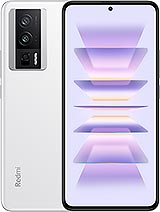
Redmi K60 Pro
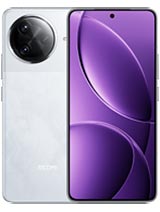
Redmi K80 Pro

Redmi K70 Ultra
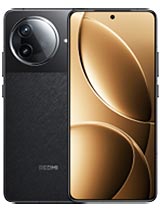
Redmi K80
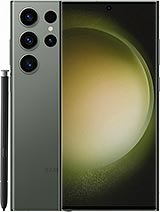
Galaxy S23 Ultra