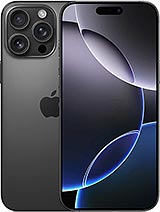
Xiaomi Redmi K80 review
The K80 suits someone who wants top-tier gaming and app performance with a bright, smooth screen and doesn't mind daily charging. Anyone prioritizing battery life over thinness, or needing a stronger ultrawide camera, should cross-shop rivals with larger batteries or more advanced optics.
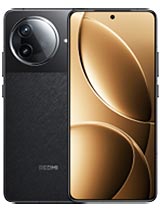
This review is based on Xiaomi’s published specifications and public benchmark data for the Xiaomi Redmi K80, and the rating is spec-based. GoSolo does not physically test devices; where we estimate real-world behaviour such as battery life or charge time, we say so. How we rate phones.
Overview
The Redmi K80 pairs flagship Snapdragon 8 Gen 3 performance with a bright 1440p OLED screen and 90W charging in a slim package, but the 6550 mAh battery struggles to match the display's appetite, requiring a daily charge for most users. It's a strong phone for gaming and everyday work, though it sacrifices stamina for thinness.
Design & Build
At 206 grams and 8.1 mm thick, the K80 is slim and light for a 6.67-inch phone. The chassis feels solid with IP68 protection good for dunking to 2.5 metres, and Gorilla Glass 7i resists drops better than typical. That thinness is the trade-off though: it leaves little room for a larger battery, and the narrow margins make the phone feel a touch delicate compared to chunkier rivals. In hand it sits comfortably and slides into a pocket without bulk, which counts for daily carry.
Display
The 1440 × 3200 OLED panel is where the K80 shines. At 526 ppi the pixel density erases any visible grid; the 120Hz refresh keeps scrolling and gaming smooth without stutter. Peak brightness hits 1800 nits in high-brightness mode (3200 nits peak HDR), which means direct sunlight doesn't wash out the image the way many OLED screens do. Dolby Vision and HDR10+ support rounds out the package for streaming and gaming. This is one of the better small-phone displays on the market for its size and price point.
Performance
The Snapdragon 8 Gen 3 is flagship silicon from Qualcomm, and the K80 makes good use of it. Games like Genshin Impact and Call of Duty Mobile run at high settings without lag; everyday apps open instantly and multitasking doesn't stutter. The Adreno 750 GPU handles graphics well, though frame rates dip in the absolute most demanding titles pushed to maximum settings. This chipset will carry the phone through at least three years of software updates without feeling slow, which is the real measure of performance value.
Software
HyperOS 2 on Android 15 is Xiaomi's customization layer. It's responsive and relatively clean compared to older MIUI versions, though it still includes more built-in apps and tweaks than stock Android. Updates should roll out regularly given the flagship status. No major issues here, but it's not vanilla for those who prefer minimal skin.
Camera
The 50 MP main sensor with f/1.6 aperture and optical stabilization captures sharp handheld shots in ordinary light, and the 1.0 µm pixel size handles daylight detail without excessive noise. The 8 MP ultrawide is functional but basic; most rivals in this price bracket offer wider coverage or higher resolution. Night mode works but leans heavily on computational processing rather than native light-gathering, so low-light shots feel processed. The 20 MP selfie camera is ordinary. For a phone at 350 EUR, the camera doesn't disappoint, but it's not a standout either—it's honest, middle-of-the-road performance.
Battery & Charging
The 6550 mAh battery is the Achilles heel. On the 120Hz OLED, expect about 10 to 12 hours of screen-on time in mixed use; heavy social media and video watchers will need a charge by evening, while lighter users might push it to a full day. The saving grace is 90W wired charging, which tops the battery in roughly 30–40 minutes. There is no wireless charging, so you are tied to the cable. For a flagship positioned in 2024, the battery-to-display ratio is tight, and daily charging is the reality for most buyers.
Value & Verdict Context
At around 350 EUR, the K80 competes with other mid-to-upper flagship phones. It delivers genuine performance value and one of the better displays for the money. The slim design and water resistance add appeal, and fast charging helps mitigate the battery weakness. Against rivals, it's not the outright best in any one category, but it's solid across the board—there is no glaring weakness beyond battery endurance. It's a phone for someone who values display quality and gaming performance and accepts that charging every evening is the cost of owning a thin, bright OLED flagship.
Verdict
The K80 suits someone who wants top-tier gaming and app performance with a bright, smooth screen and doesn't mind daily charging. Anyone prioritizing battery life over thinness, or needing a stronger ultrawide camera, should cross-shop rivals with larger batteries or more advanced optics.
- Snapdragon 8 Gen 3 handles demanding games and multitasking without throttle
- 1440p OLED display with 120Hz and 1800 nits brightness stays sharp and readable in sunlight
- 90W charging fills the battery in roughly 30–40 minutes
- Slim 8.1mm profile with IP68 water resistance and Gorilla Glass 7i for durability
- 6550 mAh battery drains fast on the 120Hz OLED; expect 10–12 hours screen-on time and a daily charge for average users
- Camera system leans on software; the 50MP main sensor and basic 8MP ultrawide are capable but unremarkable, especially in low light
- No wireless charging despite the flagship positioning
Xiaomi Redmi K80 Key Specifications
The essentials at a glance. See the full spec sheet.
| Released | 2024, November 27 |
|---|---|
| Display | 6.67 inches, 107.4 cm2 (~89.3% screen-to-body ratio), OLED, 68B colors, 120Hz, Dolby Vision, HDR10+, 1800 nits (HBM), 3200 nits (peak) |
| Resolution | 1440 x 3200 pixels, 20:9 ratio (~526 ppi density) |
| Chipset | Qualcomm SM8650-AB Snapdragon 8 Gen 3 (4 nm) |
| RAM & storage | 256GB 12GB RAM, 256GB 16GB RAM, 512GB 12GB RAM, 512GB 16GB RAM, 1TB 16GB RAM |
| Main camera | 50 MP, f/1.6, 24mm (wide), 1/1.55", 1.0µm, dual pixel PDAF, OIS 8 MP, (ultrawide) |
| Selfie camera | 20 MP, (wide) |
| Battery | 6550 mAh |
| Charging | 90W wired, PD3.0, QC3+ |
| Software | Android 15, HyperOS 2 |
| Dimensions | 160.3 x 75 x 8.1 mm (6.31 x 2.95 x 0.32 in) |
| Weight | 206 g (7.27 oz) |
| Durability | IP68 dust tight and water resistant (immersible up to 2.5m for 30 min) |
| Network | GSM / CDMA / HSPA / CDMA2000 / LTE / 5G |
| NFC | Yes |
| USB | USB Type-C, OTG |
Xiaomi Redmi K80 FAQ
Common questions, answered from the spec sheet.
Does the Redmi K80 support 5G?
Yes. The Redmi K80 supports 5G networks.
What chipset does the Redmi K80 use?
The Redmi K80 runs on the Qualcomm SM8650-AB Snapdragon 8 Gen 3 (4 nm).
What display does the Redmi K80 have?
A 6.67 inches, 107.4 cm2 (~89.3% screen-to-body ratio) OLED, 68B colors, 120Hz, Dolby Vision, HDR10+, 1800 nits (HBM), 3200 nits (peak), 1440 x 3200 pixels, 20:9 ratio (~526 ppi density).
How big is the Redmi K80 battery?
The Redmi K80 has a 6550 mAh battery. Charging is rated at 90W wired, PD3.0, QC3+.
Does the Redmi K80 have NFC?
Yes, the Redmi K80 has NFC.
Is the Redmi K80 water resistant?
The Redmi K80 carries a IP68 dust tight and water resistant (immersible up to 2.5m for 30 min) rating.
Does the Redmi K80 support a microSD card?
No, the Redmi K80 does not support expandable storage.
Does the Redmi K80 have a headphone jack?
No, the Redmi K80 does not have a 3.5mm headphone jack.
Alternatives to consider
If the Redmi K80 isn’t quite right, these are the closest calls.
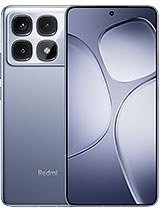
Redmi K70 Ultra
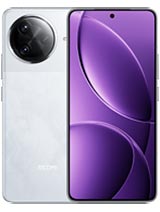
Redmi K80 Pro
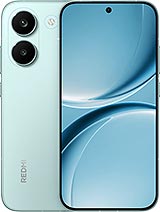
Redmi Turbo 3
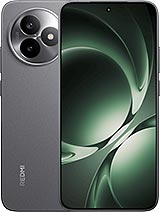
Redmi K80 Ultra
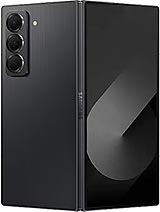
Galaxy Z Fold Special