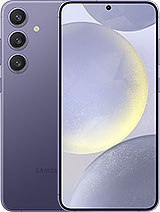
Xiaomi Redmi K80 Pro review
Buy this if you want a balanced flagship with fast charging and optical zoom, and you do not mind a heavier, larger phone. Skip it if you are hunting for a phone that excels in one particular area—camera, display, battery life—or prefer a lighter, smaller form factor; you will find a more specialized alternative at the same price.
This review is based on Xiaomi’s published specifications and public benchmark data for the Xiaomi Redmi K80 Pro, and the rating is spec-based. GoSolo does not physically test devices; where we estimate real-world behaviour such as battery life or charge time, we say so. How we rate phones.
Overview
The Redmi K80 Pro is a confident flagship that delivers genuine value for 500 EUR: a sharp 1440p OLED display, the current Snapdragon 8 Elite, and a telephoto camera with OIS. It does not excel in any single area, but does almost everything well enough that buyers looking for a balanced all-rounder will see their money's worth.
Design & Build
At 212–217g and 8.4mm thick, the K80 Pro is a substantial phone. It fills your hand and sits noticeably in a pocket, which matters if you're used to lighter midrange devices. The IP68 rating (immersible to 2.5m for 30 minutes) and Longjing glass 2 front cover are practical durability features; you can take this near water or dust without fearing a slip-up. The industrial design is clean—no gimmicks—but also unremarkable: a flat-sided slab in line with current Xiaomi house style. If you want to feel the phone, you will; if you want to forget you're holding it, you won't.
Display
The 6.67-inch OLED screen is the phone's straightforward strength. At 1440×3200 pixels and 526 ppi, text stays crisp and photos pop without obvious pixelation. The 120Hz refresh makes scrolling feel noticeably smoother than a 60Hz panel, a quality-of-life gain in everyday use. Peak brightness hits 3200 nits, which means you can read the screen in direct sunlight without hunting for shade or jacking up the brightness slider—a practical win for outdoor use. Dolby Vision and HDR10+ support round out the spec sheet, though content to take full advantage remains niche. Competitors at this price often max out at 1440p and 120Hz too, so the K80 Pro is doing what is expected, not surprising.
Performance
The Snapdragon 8 Elite and Adreno 830 GPU position this as a true flagship in computational terms. In practice, that means demanding games like Genshin Impact or Honkai Star Rail run at high settings and 60fps without flinching, or maximum settings at 30–40fps if you chase eye candy. Day-to-day multitasking, app switching, and web browsing feel instant; there is no stutter. Memory options top out at 16GB RAM with up to 1TB storage, which is overkill for most users but welcome if you hoard games or video. UFS 4.0 storage is standard issue for flagships now. The K80 Pro's silicon is not old or underpowered, but it is also not a generational leap; rivals at the same price point run the same chipset.
Software
HyperOS 2 on Android 15 is Xiaomi's take on visual simplification and speed. The interface is responsive and comes with less bloat than some Android skins, though Xiaomi still bundles apps you may not want. Customization is granular—icon shapes, gesture controls, privacy controls—if you like tinkering. Software support typically stretches to about 3 years of major Android updates and 4 years of security patches, standard for a Xiaomi flagship, though your mileage may vary by region. Nothing here stands out as a reason to buy or avoid the phone.
Camera
The main attraction is the dual-optical-zoom setup: a 50MP f/1.6 wide with dual-pixel PDAF and OIS, and a 50MP f/2.0 telephoto with 2.5x optical zoom and OIS. In daylight, the wide camera captures sharp detail and saturated color typical of Xiaomi's processing. The telephoto lens lets you frame distant subjects—stadium crowds, wildlife, street scenes—without degrading to grainy digital zoom, a real asset if you shoot beyond arm's reach. Low light is competent; the f/1.6 aperture and OIS help, though you will see some noise in extreme darkness. The 32MP ultrawide is the weak link: at 120 degrees and 15mm equivalent, it is narrower and softer than the flagship ultrawide sensors rivals are shipping at this price. Video maxes at 8K@24fps, which is more spec sheet than practical need, but 4K@60fps is solid. The 20MP selfie camera is sufficient for video calls and casual portraits.
Battery & Charging
The 6000 mAh battery lasts roughly 1.5 to 2 days on average use (email, messaging, social media), or a full day if you are gaming or video-heavy. That is consistent with other phones of this size and power draw. The charging speed is where Xiaomi made a real choice: 120W wired via USB-C hits 100% in about 28 minutes, which is genuinely fast—it leaves rivals at this price (typically 80–100W) a step behind. Wireless charging at 50W is available but will take 50–70 minutes, so it is a backup, not a primary method. The fast wired speed is useful if you are always on the move and forget to charge overnight.
Value & Verdict
At approximately 500 EUR, the K80 Pro is priced squarely in the flagship segment. For that money, you are getting a Snapdragon 8 Elite (current-gen silicon), a sharp 1440p OLED, fast charging, and a two-camera system that includes optical zoom. The catch is that none of these are outliers. Rivals offer similar chipsets, similar displays, and similar zoom setups at the same price. There is no trade-off angle, no flagship-killer positioning, and no feature that makes this phone the obvious choice over a OnePlus 13, Samsung Galaxy S25, or other 500-EUR contender. It is a well-rounded phone for someone who wants a bit of everything—good screen, good performance, good battery life, decent cameras—without overpaying for one hero feature. If you value the combination and do not need the phone to excel in one specific area, the K80 Pro delivers.
Verdict
Buy this if you want a balanced flagship with fast charging and optical zoom, and you do not mind a heavier, larger phone. Skip it if you are hunting for a phone that excels in one particular area—camera, display, battery life—or prefer a lighter, smaller form factor; you will find a more specialized alternative at the same price.
- 120W charging fills the 6000 mAh battery in 28 minutes, easily the fastest in its class
- 50MP telephoto with 2.5x optical zoom and OIS gives genuine framing flexibility without resorting to digital zoom
- 1440p OLED at 526 ppi renders text and images sharp; 3200-nit peak brightness handles outdoor use without compromise
- Snapdragon 8 Elite GPU handles modern games at high settings and 60fps without throttle
- 32MP ultrawide is narrower than rivals' ultrawide sensors and will feel soft compared to the main camera
- 6.67 inches and 212–217g lands it on the heavier, larger side for a mainstream flagship
- No defining standout: the display, camera, and chipset are competitive but not category-leading
Xiaomi Redmi K80 Pro Key Specifications
The essentials at a glance. See the full spec sheet.
| Released | 2024, November 27 |
|---|---|
| Display | 6.67 inches, 107.4 cm2 (~89.3% screen-to-body ratio), OLED, 68B colors, 120Hz, Dolby Vision, HDR10+, 1800 nits (HBM), 3200 nits (peak) |
| Resolution | 1440 x 3200 pixels, 20:9 ratio (~526 ppi density) |
| Chipset | Qualcomm SM8750-AB Snapdragon 8 Elite (3 nm) |
| RAM & storage | 256GB 12GB RAM, 512GB 12GB RAM, 512GB 16GB RAM, 1TB 16GB RAM |
| Main camera | 50 MP, f/1.6, 24mm (wide), 1/1.55", 1.0µm, dual pixel PDAF, OIS 50 MP, f/2.0, 60mm (telephoto), 1/2.76", 0.64µm, PDAF (10cm - ∞), OIS, 2.5x optical zoom 32 MP, f/2.2, 15mm, 120˚ (ultrawide) |
| Selfie camera | 20 MP, (wide) |
| Battery | 6000 mAh |
| Charging | 120W wired, PD3.0, QC3+, 100% in 28 min50W wireless |
| Software | Android 15, HyperOS 2 |
| Dimensions | 160.3 x 75 x 8.4 mm (6.31 x 2.95 x 0.33 in) |
| Weight | 212 g or 217 g (7.48 oz) |
| Durability | IP68 dust tight and water resistant (immersible up to 2.5m for 30 min) |
| Network | GSM / CDMA / HSPA / CDMA2000 / LTE / 5G |
| NFC | Yes |
| USB | USB Type-C, OTG |
Xiaomi Redmi K80 Pro FAQ
Common questions, answered from the spec sheet.
Does the Redmi K80 Pro support 5G?
Yes. The Redmi K80 Pro supports 5G networks.
What chipset does the Redmi K80 Pro use?
The Redmi K80 Pro runs on the Qualcomm SM8750-AB Snapdragon 8 Elite (3 nm).
What display does the Redmi K80 Pro have?
A 6.67 inches, 107.4 cm2 (~89.3% screen-to-body ratio) OLED, 68B colors, 120Hz, Dolby Vision, HDR10+, 1800 nits (HBM), 3200 nits (peak), 1440 x 3200 pixels, 20:9 ratio (~526 ppi density).
How big is the Redmi K80 Pro battery?
The Redmi K80 Pro has a 6000 mAh battery. Charging is rated at 120W wired, PD3.0, QC3+, 100% in 28 min50W wireless.
Does the Redmi K80 Pro have NFC?
Yes, the Redmi K80 Pro has NFC.
Is the Redmi K80 Pro water resistant?
The Redmi K80 Pro carries a IP68 dust tight and water resistant (immersible up to 2.5m for 30 min) rating.
Does the Redmi K80 Pro support a microSD card?
No, the Redmi K80 Pro does not support expandable storage.
Does the Redmi K80 Pro have a headphone jack?
No, the Redmi K80 Pro does not have a 3.5mm headphone jack.
Alternatives to consider
If the Redmi K80 Pro isn’t quite right, these are the closest calls.
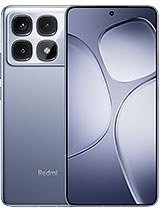
Redmi K70 Ultra
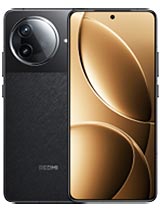
Redmi K80
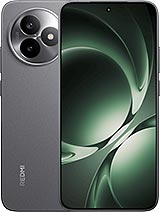
Redmi K80 Ultra
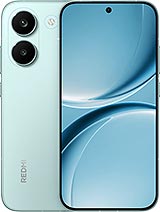
Redmi Turbo 3
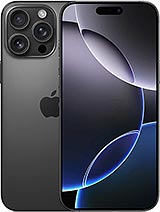
iPhone 16 Pro Max