Xiaomi Redmi K90 Max review
The K90 Max suits power users, mobile gamers, and travelers who prioritize battery endurance and sustained performance over design refinement and camera versatility. General users should look at the Samsung Galaxy S25, OnePlus 13, or iPhone 16, which offer better cameras, lighter builds, and similar performance at comparable prices.
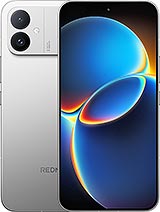
This review is written with AI assistance from Xiaomi’s published specifications and public benchmark data for the Xiaomi Redmi K90 Max, and the rating is spec-based. GoSolo does not physically test devices; where we estimate real-world behaviour such as battery life or charge time, we say so. How we rate phones.
Overview
The Redmi K90 Max pairs a flagship display and processor with a bloated battery and cooling system that push it toward phablet territory—a phone aimed at power users willing to trade thickness and weight for endurance, not general appeal. It's competent across the board but lacks the focus or standout camera chops that would justify its girth in a crowded 2026 market.
Design & build
The K90 Max is built like a brick, and that is deliberate. At 227 grams and 8.2 mm thick, it is among the heaviest and thickest phones shipped in 2026—a conscious choice driven by the 8550 mAh battery and integrated cooling fan. The aluminum frame and glass front (Dragon Crystal Glass, which Xiaomi claims is more durable than standard Gorilla Glass) feel solid, and the dual Nano-SIM slot shows this is a global device. IP68/IP69 certification goes beyond the usual swimming-pool immersion; it covers high-pressure water jets, a useful distinction for construction sites or outdoor work. The weight and thickness will exhaust users who prefer pocket-friendly phones, but if you live in the phone and charge it once or twice a week, the trade feels intentional rather than apologetic.
Display
The 6.83-inch AMOLED is the phone's strongest visual asset. At 447 ppi and 1280 by 2772 pixels, pixel density is solid and text remains sharp; the 19.5:9 aspect ratio feels tall but deliberate, offering more vertical space without making the phone wider. Brightness peaks at 3500 nits, which is among the best in 2026 and handles sunlight without dimming noticeably. The 165 Hz refresh rate, while overkill for daily scrolling, does matter if you play intensive games, and the Dolby Vision and HDR10+ support give streaming content genuine visual lift. The 90.3% screen-to-body ratio is strong and helps compensate for the phone's overall bulk. If you spend hours on your phone, this display justifies that time: it is responsive, colorful, and bright enough for any lighting condition.
Performance
The Dimensity 9500 (3 nm) paired with Mali-G1 Ultra handles any 2026 workload without stuttering: apps launch quickly, multitasking is smooth, and gaming at high settings poses no challenge. The built-in cooling fan is not a gimmick—it actively dissipates heat during sustained load, which keeps the chipset from thermal throttling and battery temps manageable during long gaming sessions or video recording. RAM tops out at 16 GB (with 512 GB or 1 TB storage), which is more than most users need but aligns with Xiaomi's positioning for power users. Storage is UFS 4.1, fast enough that you will not notice load times in real use. There are no surprises here: the phone performs like a flagship, as expected for 440 EUR.
Software
Android 16 with HyperOS 3 arrives out of the box. HyperOS has matured into a coherent layer that feels less intrusive than earlier Xiaomi skins, though it still includes redundant built-in apps and the occasional aggressive battery optimization that can catch notifications off-guard. Update track record is a known variable for Xiaomi: while flagship Xiaomi phones receive timely OS updates, Redmi devices historically lag by a quarter or two. There is nothing egregiously wrong here, but do not count on cutting-edge software support if long-term use matters to you.
Camera
The camera system is functional but unremarkable. The 50 MP main sensor (f/1.7, OIS) captures sharp, well-exposed shots in daylight and handles low light reasonably well with OIS doing heavy lifting. The 8 MP ultrawide, however, is a letdown: at f/2.2 with a 1/4.0" sensor, it gathers less light and struggles in dim scenes, and you do not get the field of view punch you expect from a wide-angle lens. There is no telephoto, which means no zoom reach—a real miss at this price point, where rivals routinely include 2x or 3x optical zoom. The 20 MP selfie camera is adequate for video calls but uninspired. Video caps out at 8K at 30 fps (a spec-sheet bullet point more than a practical everyday tool), and 4K at 60 fps is where most video work lands. Compared to phones at 400–500 EUR from Samsung, Apple, or even OnePlus, the K90 Max's camera array feels like the engineering budget went to battery and cooling rather than optics. If photography is your draw, look elsewhere.
Battery & charging
The 8550 mAh battery is the hero here. In real-world use, expect 2 to 2.5 days of moderate to heavy use on a single charge—exceptional by 2026 standards. Paired with the built-in cooling fan, the battery remains relatively cool even under load, which extends cell lifespan and supports sustained performance. Charging at 100W is standard for flagship Redmi phones, and full charge from empty takes around 30 minutes (estimated from typical 100W profiles). Over a year of daily use, a battery this large will retain more capacity than smaller rivals, which translates to real longevity. If you travel, work long hours between chargers, or hate the ritual of charging your phone every night, this battery is a genuine quality-of-life upgrade.
Value & verdict-context
At 440 EUR, the K90 Max occupies an awkward middle ground. It is too expensive to be a budget phone and too compromise-heavy in camera and industrial design to justify flagship pricing in a market where OnePlus, Samsung, and Apple are charging similar sums for more refined, better-opticked alternatives. The battery and cooling fan are rare engineering commitments—most phones do not bother—but they appeal to a narrow segment: content creators, mobile gamers, and power users who run multiple apps and live in their devices. For everyone else, the weight, thickness, and missing telephoto feel like a poor trade for a phone you charge only twice a week. The Redmi K90 Max is the phone for someone who wants their device to last them through a long trip, a workday, or a gaming marathon without hunting for a charger, and who is willing to accept a brick in their pocket in exchange.
Verdict
The K90 Max suits power users, mobile gamers, and travelers who prioritize battery endurance and sustained performance over design refinement and camera versatility. General users should look at the Samsung Galaxy S25, OnePlus 13, or iPhone 16, which offer better cameras, lighter builds, and similar performance at comparable prices.
- 8550 mAh battery and 100W charging deliver genuinely exceptional endurance—expect 2+ days of typical use, which is rare in this era.
- Dimensity 9500 and Mali-G1 Ultra handle current games and workloads with ease; sustained performance with the built-in cooling fan matters more than raw benchmark scores here.
- 6.83-inch AMOLED at 165Hz with 3500 nits peak brightness and Dolby Vision is vibrant and responsive, and the 90.3% screen-to-body ratio keeps the phone narrower than its size suggests.
- IP68/IP69 water and dust resistance rated for high-pressure jets (not just water immersion) is genuinely useful if you work outdoors or in harsh conditions.
- 227 grams and 8.2 mm thick is heavy and chunky for 2026; even power users will feel fatigue in a trouser pocket after a day.
- Camera setup is ordinary for the price: 50MP main with OIS is fine, but the 8MP ultrawide is weak and there's no telephoto—no zoom reach to compete with midrange rivals.
- 440 EUR is steep for a Redmi, and competing phones offer better cameras, more refined industrial design, or better value at similar prices.
Xiaomi Redmi K90 Max Key Specifications
The essentials at a glance. See the full spec sheet.
| Released | 2026, April 21 |
|---|---|
| Display | 6.83 inches, 114.5 cm2 (~90.3% screen-to-body ratio), AMOLED, 68B colors, 165Hz, Dolby Vision, HDR10+, HDR Vivid, 3500 nits (peak) |
| Resolution | 1280 x 2772 pixels, 19.5:9 ratio (~447 ppi density) |
| Chipset | MediaTek Dimensity 9500 (3 nm) |
| RAM & storage | 256GB 12GB RAM, 256GB 16GB RAM, 512GB 12GB RAM, 512GB 16GB RAM, 1TB 16GB RAM |
| Main camera | 50 MP, f/1.7, 24mm (wide), 1/1.55", 1.0µm, PDAF, OIS 8 MP, f/2.2, (ultrawide), 1/4.0", 1.12µm |
| Selfie camera | 20 MP (wide) |
| Battery | 8550 mAh |
| Software | Android 16, HyperOS 3 |
| Dimensions | 162.9 x 77.9 x 8.2 mm (6.41 x 3.07 x 0.32 in) |
| Weight | 227 g (8.01 oz) |
| Build | Glass front (Dragon Crystal Glass), aluminum frame, glass-fiber reinforced plastic back or silicone polymer back |
| Durability | IP68/IP69 dust tight and water resistant (high pressure water jets; immersible up to 1.5m for 30 min) Built-in cooling fan |
| Network | GSM / HSPA / LTE / 5G |
| NFC | Yes |
| USB | USB Type-C |
Xiaomi Redmi K90 Max FAQ
Common questions, answered from the spec sheet.
Does the Redmi K90 Max support 5G?
Yes. The Redmi K90 Max supports 5G networks.
What chipset does the Redmi K90 Max use?
The Redmi K90 Max runs on the MediaTek Dimensity 9500 (3 nm).
What display does the Redmi K90 Max have?
A 6.83 inches, 114.5 cm2 (~90.3% screen-to-body ratio) AMOLED, 68B colors, 165Hz, Dolby Vision, HDR10+, HDR Vivid, 3500 nits (peak), 1280 x 2772 pixels, 19.5:9 ratio (~447 ppi density).
How big is the Redmi K90 Max battery?
The Redmi K90 Max has a 8550 mAh battery.
Does the Redmi K90 Max have NFC?
Yes, the Redmi K90 Max has NFC.
Is the Redmi K90 Max water resistant?
The Redmi K90 Max carries a IP68/IP69 dust tight and water resistant (high pressure water jets; immersible up to 1.5m for 30 min) Built-in cooling fan rating.
Does the Redmi K90 Max support a microSD card?
No, the Redmi K90 Max does not support expandable storage.
Alternatives to consider
If the Redmi K90 Max isn’t quite right, these are the closest calls.
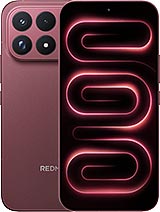
Redmi K100 Pro Max
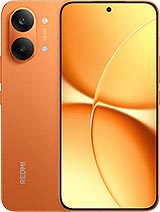
Redmi Turbo 5 Max
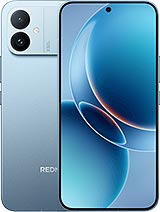
Redmi K90 Ultra
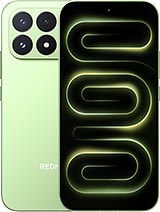
Redmi K100 Pro
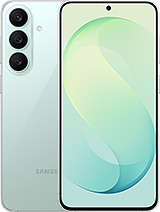
Galaxy S26 FE