Xiaomi Redmi Note 12 Turbo review
The Redmi Note 12 Turbo suits everyday users who care about display quality and battery endurance and do not need flagship performance or camera skills. If you are a heavy gamer, photo enthusiast, or expect three years of fast performance, look at a Snapdragon 8-series phone or a more recent mid-ranger with a sharper screen and faster charging.
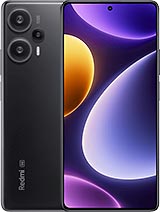
This review is based on Xiaomi’s published specifications and public benchmark data for the Xiaomi Redmi Note 12 Turbo, and the rating is spec-based. GoSolo does not physically test devices; where we estimate real-world behaviour such as battery life or charge time, we say so. How we rate phones.
Overview
The Redmi Note 12 Turbo is a 2023 mid-ranger built around an OLED display and reliable all-day battery, landing at a fair price for its class. It is a straightforward phone that does the fundamentals—smooth scrolling, solid brightness, responsive handling of everyday apps—without pretending to be a flagship, and for that modest aim it succeeds.
Design & build
The Redmi Note 12 Turbo is slim and light—181 grams and 7.9mm thick—which matters if you hate pocket bulk. The glass-front-plastic-back-and-frame construction is an honest trade-off: it feels less premium than all-metal or all-glass rivals, but it absorbs drops better and keeps the phone nimble. The side-mounted fingerprint sensor works fast in practice. Expect the glass front to need a screen protector; Xiaomi's glass is prone to scratching without one, and there is no mention of Gorilla Glass here, suggesting standard tempered glass.
Display
The 6.67-inch OLED is the main reason to consider this phone. 120Hz refresh, 1000 nits peak brightness (HDR mode), Dolby Vision, and HDR10+ add up to a display that is genuinely smooth and readable in sunlight—a real strength for the mid-range in 2023. The catch: 1080p at 395 ppi is soft by modern standards. Text at arm's length shows jagged edges, and zoomed-in photos feel less crisp than a 1440p panel would. It is not unusable, but it is a noticeable step down from phones at similar or only slightly higher prices. If screen sharpness matters to you, this is a compromise.
Performance
The Snapdragon 7+ Gen 2 and 8 to 16GB of RAM (depending on variant) handle everyday use—social media, email, browsing, messaging, and even video playback—with no lag. Games like Call of Duty Mobile and lighter titles run fine on medium settings. Genshin Impact at high graphics will stumble, though medium settings keep it playable. This is not a performance flagship; it is a mid-range chip that does what a mid-range chip should. For people who do not game or who play casually, it is plenty. The lack of LPDDR5X RAM or the latest thermal management also means sustained performance during heavy loads is not as robust as flagship chips, though you will not notice in real life unless you are recording 4K video while gaming.
Software
Android 13 with MIUI 14 runs here. MIUI is Xiaomi's skin, and it is feature-rich—lots of customization, good gesture support, and decent optimization. The downside is bloatware and ads scattered through system apps, which many users find intrusive. After-sales support and OS updates for a 2023 Redmi Note are typically three major updates, so you will be on Android 16 by 2027 or so. That is acceptable for the price, though not generous. No headphone jack—wait, yes there is. This phone has one, a rarity even in 2023.
Camera
The 64MP f/1.8 main sensor with OIS and PDAF takes sharp, well-exposed daylight photos. The 0.7µm pixel size is small, but the large aperture and stabilization help. Low-light shots are usable—not class-leading, but better than smaller aperture rivals—thanks to the f/1.8 lens and decent computational photography. The 8MP ultrawide is serviceable for wide shots but soft and prone to distortion. The 2MP macro is essentially a joke; it adds nothing real to the package. The 16MP selfie is adequate for video calls and social media. Video tops out at 4K 30fps, which is fine, though rivals in this price now offer 4K 60fps as standard. This is not a camera phone; it is a competent backup camera that does not ruin your photos.
Battery & charging
The 5000mAh battery is big enough to last a full day for most people on moderate use (social media, messaging, an hour or two of video). Heavy usage—gaming, constant video playback, or screen-on time above 6 hours—will drag you to bed with the charger tethered. 67W charging refills the battery to roughly 50% in 25 minutes and full charge in about 50 minutes, which is quick by mid-range standards but not exceptional; rivals now push 100W+. No wireless charging means you always need the cable. For the price and use case, the battery endurance is a genuine strength.
Value & verdict-context
At roughly 270 EUR, the Redmi Note 12 Turbo sits in the mainstream mid-range, competing with phones that cost 50 to 100 EUR more or less. The OLED display is its main selling point; most rivals in this tier still use LCD. The Snapdragon 7+ Gen 2 is solid but no longer cutting-edge as of 2026. The camera is ordinary. The plastic build is honest but less tactile than it could be. What you get is a phone that does the core job well—it is fast enough, the screen is nice, the battery lasts—without asking you to pay flagship prices or settle for obviously cheap hardware. If you value OLED and all-day battery over camera prowess or design prestige, it is worth considering. If you want a sharper screen, faster charging, or better low-light photos, spending another 100 EUR is a sound move.
Verdict
The Redmi Note 12 Turbo suits everyday users who care about display quality and battery endurance and do not need flagship performance or camera skills. If you are a heavy gamer, photo enthusiast, or expect three years of fast performance, look at a Snapdragon 8-series phone or a more recent mid-ranger with a sharper screen and faster charging.
- OLED display with 120Hz refresh and 1000 nits peak brightness, making it genuinely usable in direct sunlight and notably smoother than typical LCD rivals in this price bracket
- 5000mAh battery comfortably stretches to a full day on moderate use, with 67W charging getting you to roughly 50% in 25 minutes
- Snapdragon 7+ Gen 2 handles everyday apps, messaging, social media, and casual gaming without stuttering; not gaming-class performance but enough for most people
- Slim and light at 181g and 7.9mm, making it pocket-friendly compared to heavier flagship alternatives
- 1080p resolution on a 6.67-inch screen (395 ppi) feels soft compared to 1440p options in the mid-range by 2023, noticeable when reading fine text or viewing detailed images
- 64MP main camera lacks the low-light performance and detail of 100MP+ sensors; ultrawide and macro are weak placeholders rather than useful secondaries
- Plastic build—back and frame—feels cheaper than aluminum, though it does shave weight and improve durability in drops versus all-glass rivals
Xiaomi Redmi Note 12 Turbo Key Specifications
The essentials at a glance. See the full spec sheet.
| Released | 2023, March 28 |
|---|---|
| Display | 6.67 inches, 107.4 cm2 (~88.9% screen-to-body ratio), OLED, 68B colors, 120Hz, Dolby Vision, HDR10+, 1000 nits (HBM) |
| Resolution | 1080 x 2400 pixels, 20:9 ratio (~395 ppi density) |
| Chipset | Qualcomm SM7475-AB Snapdragon 7+ Gen 2 (4 nm) |
| RAM & storage | 256GB 8GB RAM, 256GB 12GB RAM, 256GB 16GB RAM, 512GB 12GB RAM, 1TB 16GB RAM |
| Main camera | 64 MP, f/1.8, (wide), 1/2.0", 0.7µm, PDAF, OIS 8 MP, f/2.2, 120˚ (ultrawide), 1/4.0", 1.12µm 2 MP (macro) |
| Selfie camera | 16 MP, f/2.5, (wide) |
| Battery | 5000 mAh |
| Charging | 67W wired, PD3.0, QC4 |
| Software | Android 13, MIUI 14 |
| Dimensions | 161.1 x 75 x 7.9 mm (6.34 x 2.95 x 0.31 in) |
| Weight | 181 g (6.38 oz) |
| Build | Glass front, plastic frame, plastic back |
| Network | GSM / HSPA / CDMA2000 / LTE / 5G |
| NFC | Yes |
| USB | USB Type-C 2.0, OTG |
Xiaomi Redmi Note 12 Turbo FAQ
Common questions, answered from the spec sheet.
Does the Redmi Note 12 Turbo support 5G?
Yes. The Redmi Note 12 Turbo supports 5G networks.
What chipset does the Redmi Note 12 Turbo use?
The Redmi Note 12 Turbo runs on the Qualcomm SM7475-AB Snapdragon 7+ Gen 2 (4 nm).
What display does the Redmi Note 12 Turbo have?
A 6.67 inches, 107.4 cm2 (~88.9% screen-to-body ratio) OLED, 68B colors, 120Hz, Dolby Vision, HDR10+, 1000 nits (HBM), 1080 x 2400 pixels, 20:9 ratio (~395 ppi density).
How big is the Redmi Note 12 Turbo battery?
The Redmi Note 12 Turbo has a 5000 mAh battery. Charging is rated at 67W wired, PD3.0, QC4.
Does the Redmi Note 12 Turbo have NFC?
Yes, the Redmi Note 12 Turbo has NFC.
Does the Redmi Note 12 Turbo support a microSD card?
No, the Redmi Note 12 Turbo does not support expandable storage.
Does the Redmi Note 12 Turbo have a headphone jack?
Yes, the Redmi Note 12 Turbo has a 3.5mm headphone jack.
Alternatives to consider
If the Redmi Note 12 Turbo isn’t quite right, these are the closest calls.

13T
Redmi Note 12 Discovery

Poco X5 Pro
Redmi K60 Pro

K11