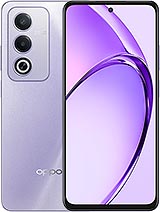
Xiaomi Redmi Note 12S review
The 12S suits buyers who want a large, bright screen and all-day battery life without paying for gaming performance or charging speed they will not use. Skip it if you game regularly or find yourself charging twice a day, or if you can stretch to €150–170 where newer chips and faster charging have become standard.

This review is based on Xiaomi’s published specifications and public benchmark data for the Xiaomi Redmi Note 12S, and the rating is spec-based. GoSolo does not physically test devices; where we estimate real-world behaviour such as battery life or charge time, we say so. How we rate phones.
Overview
The Redmi Note 12S is a 2023 midrange phone that leans on a bright, smooth 90Hz AMOLED screen and large 5000 mAh battery to deliver reliable everyday use at an appealing price. For €110, it hits the right balance of practical features over raw power, though the Helio G96 chip and 33W charging are starting to feel dated against rivals that have moved ahead.
Design & build
The 12S is slim and light at 8.1 mm and 176 g, handling well in one hand without feeling cheap. The 6.43-inch frame keeps the overall footprint reasonable for a large-screened phone, and the side-mounted fingerprint sensor is properly placed and responsive. Xiaomi has not disclosed the material, but the design feels plastic-bodied—typical for this price—and there is no water resistance rating. At three years old now, it shows its generation in the flat sides and minimal bezel design, which was contemporary in 2023 but not remarkable today. Build quality feels solid enough for the price, but do not expect the longevity or durability story of a €300 phone.
Display
The 6.43-inch AMOLED screen is a genuine highlight. 90Hz refresh is smooth, and the 1000-nit peak brightness means sunlight readability is not a struggle—a real comfort in regions with intense daylight. The 1080 x 2400 resolution (409 ppi) is sharp for text and media; you would not notice jagged edges in day-to-day use. This display alone justifies the €110 ask, since most rivals at this price are still shipping 60Hz LCDs. The colors are punchy, and blacks are deep, as AMOLED phones should be. For anyone coming from a budget 60Hz phone, this will feel like a noticeable upgrade.
Performance
The Helio G96 is a capable but dated chip for 2026 eyes. It handles messaging, browsing, and video streaming without lag, and everyday multitasking stays smooth. Gaming is where it starts to show its limits: light titles like Candy Crush run fine, but demanding games like Genshin Impact or Call of Duty will either drop frame rates significantly or force you into lower graphics settings. The 6GB or 8GB RAM variants keep lighter apps snappy, but the GPU just does not have the horsepower for sustained high-end gaming. For a user who wants a phone that works for social media and office work, this is enough. For anyone who leans on mobile gaming or heavy creative work, you will feel the ceiling after a few weeks.
Software
Android 13 with MIUI 14 means you get Xiaomi's customized interface, which is feature-rich but historically slower to receive Android updates than stock Android or Samsung. The phone shipped in 2023 and is now heading into its third year, so security patch frequency will likely slow. MIUI itself is functional and familiar, with a healthy app ecosystem, though it does include pre-installed apps and advertising in certain system interfaces that you cannot remove—a known Xiaomi quirk. For users outside mainland China, regional variant support varies, so check your market's specific build before buying.
Camera
The 108MP main sensor with f/1.9 aperture and phase detection does legitimate work. Daylight photos are detailed and punchy, and the f/1.9 aperture captures low-light shots better than budget rivals with smaller apertures. The 118-degree ultrawide lens is handy for landscapes and group shots, though it shows typical ultrawide softness at the edges. The 2MP macro lens is cosmetic; it does not resolve enough detail to justify using it over the main sensor at close range. Selfie performance is adequate with the 16MP front camera, fine for video calls and casual portraits. Video is capped at 1080p@30fps on both cameras, which falls short of the 4K standard that has trickled down to this price range by 2026. For social media and casual use, photos are good; for print or crops, the lack of 4K video is a mild disappointment.
Battery & charging
The 5000 mAh cell is genuinely large and delivers about one full day with moderate use (messaging, browsing, some video). Heavy users or those who play games often will see it dip into an evening charge, but it outlasts most compact phones at the same price. The 33W wired charging fills the battery in around 60–75 minutes, which is competent but no longer fast by 2026 standards. Rivals in the €150–200 bracket now ship 60W to 100W charging, so if you value speed at the socket, this will feel like a step back. There is no wireless charging, unsurprising at this price, but worth noting if that matters to your workflow.
Value & verdict-context
At €110 in 2023, the Redmi Note 12S was genuinely good value. By 2026, it is trickier to recommend. The core strengths—the 90Hz AMOLED screen and 5000 mAh battery—remain solid, but the Helio G96 and 33W charging feel behind what rivals are offering at similar or only slightly higher prices. If you live in a market where this phone is still widely available and the price remains in the €100–130 range, it makes sense for anyone who wants a reliable daily driver without gaming ambitions. If the market has shifted and it costs closer to €160–180, newer alternatives with better chips and faster charging are worth the stretch. The lack of 5G is a non-issue in many regions where 4G LTE still dominates, and the microSD slot is a practical win for anyone who wants cheap storage expansion.
Verdict
The 12S suits buyers who want a large, bright screen and all-day battery life without paying for gaming performance or charging speed they will not use. Skip it if you game regularly or find yourself charging twice a day, or if you can stretch to €150–170 where newer chips and faster charging have become standard.
- 90Hz AMOLED display with 1000 nits peak brightness, making daylight readability and smooth scrolling a step above budget competition
- 5000 mAh battery delivers a full day with everyday use and lasts longer than typical phones at this price
- 108MP main camera with f/1.9 aperture and PDAF handles daylight shots with clarity and low-light performance that punches above entry-level
- Dedicated microSD slot means you can expand storage without losing a SIM card
- 33W charging is respectable but slower than what rivals at €150–200 have standardized on, costing you an extra 20–30 minutes at the wall
- Helio G96 struggles visibly with demanding games and high-refresh titles; it runs social apps and video smoothly but is not built for sustained performance loads
- Only 1080p video recording on both main and selfie cameras, behind phones that now shoot 4K as standard in this price band
Xiaomi Redmi Note 12S Key Specifications
The essentials at a glance. See the full spec sheet.
| Released | 2023, March 06 |
|---|---|
| Display | 6.43 inches, 99.8 cm2 (~84.5% screen-to-body ratio), AMOLED, 90Hz, 700 nits (HBM), 1000 nits (peak) |
| Resolution | 1080 x 2400 pixels, 20:9 ratio (~409 ppi density) |
| Chipset | Mediatek MT6781 Helio G96 (12 nm) |
| RAM & storage | 64GB 6GB RAM, 128GB 6GB RAM, 256GB 8GB RAM |
| Main camera | 108 MP, f/1.9, (wide), 1/1.52", 0.7µm, PDAF 8 MP, f/2.2, 118˚ (ultrawide), 1/4.0", 1.12µm 2 MP (macro) |
| Selfie camera | 16 MP, f/2.4, (wide) |
| Battery | 5000 mAh |
| Charging | 33W wired |
| Software | Android 13, MIUI 14 |
| Dimensions | 159.9 x 73.9 x 8.1 mm (6.30 x 2.91 x 0.32 in) |
| Weight | 176 g (6.21 oz) |
| Network | GSM / HSPA / LTE |
| NFC | Yes (market/region dependent) |
| USB | USB Type-C 2.0 |
Xiaomi Redmi Note 12S FAQ
Common questions, answered from the spec sheet.
Does the Redmi Note 12S support 5G?
No. The Redmi Note 12S tops out at GSM / HSPA / LTE, without 5G.
What chipset does the Redmi Note 12S use?
The Redmi Note 12S runs on the Mediatek MT6781 Helio G96 (12 nm).
What display does the Redmi Note 12S have?
A 6.43 inches, 99.8 cm2 (~84.5% screen-to-body ratio) AMOLED, 90Hz, 700 nits (HBM), 1000 nits (peak), 1080 x 2400 pixels, 20:9 ratio (~409 ppi density).
How big is the Redmi Note 12S battery?
The Redmi Note 12S has a 5000 mAh battery. Charging is rated at 33W wired.
Does the Redmi Note 12S have NFC?
Yes, the Redmi Note 12S has NFC.
Does the Redmi Note 12S support a microSD card?
Yes, the Redmi Note 12S supports expandable storage (microSDXC (dedicated slot)).
Does the Redmi Note 12S have a headphone jack?
Yes, the Redmi Note 12S has a 3.5mm headphone jack.
Alternatives to consider
If the Redmi Note 12S isn’t quite right, these are the closest calls.
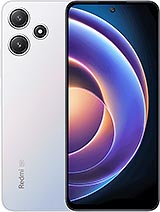
Redmi Note 12R

Redmi Note 11S 5G

Redmi Note 11S
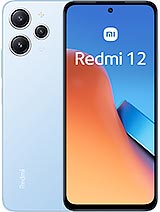
Redmi 12

Galaxy M15 5G