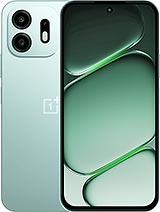
Xiaomi Redmi Note 17 review
The Redmi Note 17 is for people who live on their screen—large-format viewers, video streamers, and long-haul battery users who do not game or edit. Anyone needing speed, modern video capture, or fast charging should look elsewhere.

This review is written with AI assistance from Xiaomi’s published specifications and public benchmark data for the Xiaomi Redmi Note 17, and the rating is spec-based. GoSolo does not physically test devices; where we estimate real-world behaviour such as battery life or charge time, we say so. How we rate phones.
Overview
The Redmi Note 17 is a large, affordable AMOLED phone that trades performance for screen quality and battery capacity. It is worth the price for buyers who prioritize display and endurance over gaming or heavy multitasking.
Design & Build
The Redmi Note 17 slots into that awkward large-phone category—a 6.99-inch screen in a body measuring 170 × 79 mm is genuinely long and wide, though at 225 grams and 8.5 mm thick it does not feel bloated. Glass front with Gorilla Glass 7i and a plastic back and frame are the standard trade-off at this price. IP65 dust and water resistance (so splash-proof, not submersible) is a meaningful feature at 330 euros, giving you peace of mind in light rain or dusty conditions. The choice between Celestial Purple, Sky Teal, or Black is fine if uninspired.
Display
This is where the Redmi Note 17 earns its value. The 6.99-inch AMOLED panel runs at 120Hz with 1080 × 2396 resolution (375 ppi), landing at 88.4% screen-to-body ratio. Brightness is solid: 700 nits typical, 1200 nits in high brightness mode, up to 1800 nits peak. For a phone under 400 euros, AMOLED panels with these specs are still rarer than you'd expect; most rivals at this price cap out at IPS LCD. The contrast and color saturation suit video and photos. Refresh responsiveness at 120Hz is noticeable against 60Hz phones, though the resolution of 1080p keeps text rendering sharp enough but not pixel-perfect; if you read a lot on your phone or sit close to the screen, you will notice the limit.
Performance
The Snapdragon 4 Gen 4 is Qualcomm's entry-level 5G chip for 2026. With two Cortex-A78 cores at 2.3 GHz and six efficiency cores at 1.95 GHz, it handles everyday apps, social media, browsing, and light work without lag. Paired with 6 or 8 GB RAM and UFS 2.2 storage, the phone stays responsive for daily use. Do not expect smooth gaming in demanding titles or quick multitasking; video editing, heavy photo processing, or running five apps simultaneously will reveal its limits. For buyers who use their phone to message, stream, and take photos, this is adequate. For anyone doing serious creative work or gaming on lunch breaks, look at mid-range alternatives with a Snapdragon 7 Gen 3 or better.
Software
Android 16 with HyperOS 3 is current for 2026. Xiaomi's skin is stable and feature-rich, though heavier with bloat than stock Android. Battery optimization tools and screen customization options are a given. Expect three years of OS updates and four years of security patches, which is decent for the budget tier but not exceptional against some competitors. The optical under-display fingerprint sensor should unlock reliably in daylight and dim conditions.
Camera
A 50 MP main camera with f/1.8 aperture, 0.64µm pixels, and PDAF sounds adequate on paper; in practice, 0.64µm pixels mean each photosite captures less light, so low-light performance will be soft and noisy compared to phones with larger sensors. The 1/2.76" sensor size is modest. Daytime shots in good light should be clear and colorful, but dynamic range will be tight and the camera will struggle with backlit or mixed-light scenes. The 16 MP selfie camera is standard for this class. Both cameras max out at 1080p@30fps video capture, which is a real step back by 2026; most budget phones now hit 1440p or 4K. There is no ultra-wide, macro, or telephoto lens, so you get the single wide lens and that is it.
Battery & Charging
The 7700 mAh battery is a genuine strength. On typical mixed use (messaging, social media, streaming, light browsing), expect a full day and into the next morning; heavy users might need a top-up by evening. Standby time is lengthy. The spec sheet lists no charging wattage, which is a red flag for 2026. Given the large capacity and no mention of 45W, 65W, or higher, assume slow charging around 20–30W; this means 90 minutes or more to full. For a phone with a 7700 mAh tank, that is frustrating, and it is a real gap against rivals that push 65W or faster at this price.
Value & Verdict
At 330 euros, the Redmi Note 17 carves a niche: it is the phone you buy if you want a large, bright AMOLED screen and reliable battery life without needing speed. The Snapdragon 4 Gen 4 is not competitive for any task demanding responsiveness, but if your day revolves around reading, videos, messaging, and photo snapshots, the hardware is enough. The camera is mediocre, video maxes out at 1080p, and the lack of charging wattage data is a concern. Against rivals like Motorola or Samsung's own budget AMOLED phones at similar prices, this is a fair choice if you value screen quality and size; against phones in the 400–450 euro range with stronger chips, the Note 17 is overmatched. It is best suited to users in regions where availability is strong and network bands align; check 5G coverage in your area first.
Verdict
The Redmi Note 17 is for people who live on their screen—large-format viewers, video streamers, and long-haul battery users who do not game or edit. Anyone needing speed, modern video capture, or fast charging should look elsewhere.
- 7.99-inch AMOLED display with 120Hz refresh, 1200 nits peak brightness, and 88.4% screen-to-body ratio for this price tier
- 7700 mAh battery with realistic all-day-plus runtime on modest use
- Gorilla Glass 7i front and IP65 dust/water resistance on a 330 euro phone
- Slim 8.5 mm profile and 225g weight for a phone this size
- Snapdragon 4 Gen 4 is entry-level; slow for gaming, multitasking, or video editing by 2026 standards
- 1080p video capture and 1080p@30fps frame limit on both cameras
- No fast charging spec listed despite large battery
Xiaomi Redmi Note 17 Key Specifications
The essentials at a glance. See the full spec sheet.
| Released | 2026, August 27 |
|---|---|
| Display | 6.99 inches, 118.7 cm2 (~88.4% screen-to-body ratio), AMOLED, 120Hz, 700 nits (typ), 1200 nits (HBM), 1800 nits (peak) |
| Resolution | 1080 x 2396 pixels (~375 ppi density) |
| Chipset | Qualcomm SM4450-AF Snapdragon 4 Gen 4 (4 nm) |
| RAM & storage | 128GB 6GB RAM, 256GB 6GB RAM, 256GB 8GB RAM |
| Main camera | 50 MP, f/1.8, 26mm (wide), 1/2.76", 0.64µm, PDAF |
| Selfie camera | 16 MP, f/2.5, (wide), 1/3.0" |
| Battery | 7700 mAh |
| Software | Android 16, HyperOS 3 |
| Dimensions | 169.7 x 79.1 x 8.5 mm (6.68 x 3.11 x 0.33 in) |
| Weight | 225 g (7.94 oz) |
| Build | Glass front (Gorilla Glass 7i), plastic back, plastic frame |
| Durability | IP65 dust tight and water resistant (low pressure water jets) |
| Network | GSM / HSPA / LTE / 5G |
| NFC | Yes (market/region dependent) |
| USB | USB Type-C 2.0, OTG |
Xiaomi Redmi Note 17 FAQ
Common questions, answered from the spec sheet.
Does the Redmi Note 17 support 5G?
Yes. The Redmi Note 17 supports 5G networks.
What chipset does the Redmi Note 17 use?
The Redmi Note 17 runs on the Qualcomm SM4450-AF Snapdragon 4 Gen 4 (4 nm).
What display does the Redmi Note 17 have?
A 6.99 inches, 118.7 cm2 (~88.4% screen-to-body ratio) AMOLED, 120Hz, 700 nits (typ), 1200 nits (HBM), 1800 nits (peak), 1080 x 2396 pixels (~375 ppi density).
How big is the Redmi Note 17 battery?
The Redmi Note 17 has a 7700 mAh battery.
Does the Redmi Note 17 have NFC?
Yes, the Redmi Note 17 has NFC.
Is the Redmi Note 17 water resistant?
The Redmi Note 17 carries a IP65 dust tight and water resistant (low pressure water jets) rating.
Does the Redmi Note 17 support a microSD card?
Yes, the Redmi Note 17 supports expandable storage (microSDXC (uses shared SIM slot)).
Alternatives to consider
If the Redmi Note 17 isn’t quite right, these are the closest calls.

Redmi Note 17 4G

Redmi 17

Redmi Note 17 (India/China)

Redmi Note 17 (China)
Galaxy M17e