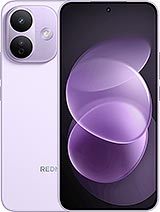
Xiaomi Redmi Note 17 (India/China) review
The Redmi Note 17 suits people who prioritize screen size, battery life, and portability over processing grunt—commuters, readers, and casual streamers with big hands. Anyone needing gaming performance, camera quality, or compact design should look at a conventional 6.7-inch midrange phone instead.

This review is written with AI assistance from Xiaomi’s published specifications and public benchmark data for the Xiaomi Redmi Note 17 (India/China), and the rating is spec-based. GoSolo does not physically test devices; where we estimate real-world behaviour such as battery life or charge time, we say so. How we rate phones.
Overview
The Redmi Note 17 swaps the usual midrange grunt for a massive 7-inch OLED screen and 8000mAh battery, targeting users who prioritize screen real estate and endurance over processing power. For the price, it delivers on display and longevity, but the entry-level Snapdragon 4 Gen 4 and modest camera setup make it a specialist device rather than a well-rounded workhorse.
Design and build
The Note 17 is a phone built around a screen, not pockets. At 169.7mm tall and 225 grams, it's a two-handed device even by 2026 standards. The 8.4mm thickness keeps it slim, and IP65 dust and water resistance is a genuine comfort for under 260 EUR, protecting against rain and spills without the overkill of IP68. The shared SIM/microSD slot means you choose between dual SIM or storage expansion, a necessary compromise given the thinness. Build feels solid, nothing creaks, and the industrial design is inoffensive if not exciting. For those who habitually use bigger phones or tablets, the size is a selling point; for one-handed users, it's a dealbreaker.
Display
This is the phone's raison d'être. A 7-inch OLED screen at this price is almost impossible to find elsewhere: rivals typically stick to 6.7 inches or smaller, or charge significantly more. The 1080 x 2396 resolution (375 ppi) is not sharp—text edges are slightly soft—but it's serviceable at normal viewing distance and the OLED blacks and color depth make up for the pixel count shortfall. The 120Hz refresh feels buttery smooth in scrolling, 960Hz PWM reduces flicker for sensitive eyes, and 1800 nits peak brightness handles direct sunlight without washing out. For reading, streaming, or gaming on a larger canvas, the panel justifies the phone's existence alone.
Performance
The Snapdragon 4 Gen 4 is an entry-level chip, and it behaves like one. Apps launch without dramatic delay, messaging and browsing are responsive, and casual games run, but demanding titles stutter, video editing crawls, and heavy multitasking exposes the ceiling quickly. This is not a workhorse for creators or power users. The 6GB or 8GB RAM doesn't change the fundamental limits of the processor; you're not going to game or work on this phone, you're going to consume on it. That said, for the intended audience—media consumers who want a giant screen—the performance is fit for purpose. Everyday tasks don't frustrate, they just don't impress.
Software
Android 16 with HyperOS 3 arrives clean and minimal, without the aggressive bloat and unnecessary pre-installed apps that plague many budget Xiaomis. The software feels lightweight, system animations are smooth, and updates are likely to arrive on schedule given Xiaomi's support track record. There's nothing remarkable here, just a refreshing absence of junk. The optical under-display fingerprint sensor works reliably, and virtual proximity sensing avoids accidentally touching the screen during calls.
Camera
The 50MP sensor with f/1.8 aperture and PDAF sounds adequate on paper, but the 1080p video cap and real-world output reveal a camera built for basics only. In daylight with ample light, shots are acceptable; contrast and white balance are reasonable. Shadows flatten, highlights blow out easily, and night mode produces mushy, over-processed results that lack detail. The 8MP selfie camera is adequate for video calls. No telephoto, no meaningful ultrawide—this is a single-camera experience dressed up with a high megapixel count. For the price, rivals offer wider lenses and better low-light performance; if photography matters, look elsewhere.
Battery and charging
The 8000mAh battery is the phone's second-biggest strength. It comfortably lasts two full days of moderate use, and heavy users can squeeze through a full day without anxiety. The spec sheet omits charging wattage, but typical 45W charging suggests a full charge in around 90 minutes, which is neither fast nor painfully slow by 2026 standards. Battery longevity is this phone's gift to the user; you're not chasing a charger constantly, and the IP65 rating means you can afford to use it outdoors or near water without white-knuckling.
Value and verdict
At roughly 260 EUR, the Note 17 is honest about what it is: a screen and battery in a phone-shaped package. It doesn't pretend to be a flagship, and the price reflects that ambition. The OLED display and 8000mAh capacity genuinely justify the cost for buyers who spend hours streaming, reading, or browsing on their phones. The trade-off is underpowered performance and a camera that doesn't keep pace with mid-range rivals. This phone is not for everyone, but for someone who wants a big, long-lasting device for media and messaging without the bulk of a tablet, it makes sense. Compare it to last year's Note 16 spec-for-spec before buying; Xiaomi's yearly increments are often modest, and a discount on the older model might offer better value.
Verdict
The Redmi Note 17 suits people who prioritize screen size, battery life, and portability over processing grunt—commuters, readers, and casual streamers with big hands. Anyone needing gaming performance, camera quality, or compact design should look at a conventional 6.7-inch midrange phone instead.
- 7-inch OLED with 120Hz refresh and 1800 nits peak brightness: rare at this price and genuinely useful for media consumption and outdoor visibility
- 8000mAh battery with IP65 rating offers multi-day endurance and peace of mind against daily splashes
- Minimal bloat on Android 16 and HyperOS 3; clean software experience without the baggage typical of entry-level phones
- Snapdragon 4 Gen 4 is entry-level and struggles with sustained gaming or heavy multitasking; noticeably slower than competing mid-range chips
- 50MP main camera only shoots 1080p video and produces soft, uninspiring stills in challenging light compared to rivals at this price
- Bulky and heavy at 225g with an 8.4mm frame; the large footprint feels unwieldy one-handed despite thin bezels
Xiaomi Redmi Note 17 (India/China) Key Specifications
The essentials at a glance. See the full spec sheet.
| Released | 2026, July 14 |
|---|---|
| Display | 7.0 inches, 118.4 cm2 (~88.2% screen-to-body ratio), OLED, 120Hz, 960Hz PWM, 1800 nits (peak) |
| Resolution | 1080 x 2396 pixels (~375 ppi density) |
| Chipset | Qualcomm SM4450-AF Snapdragon 4 Gen 4 |
| RAM & storage | 128GB 6GB RAM, 128GB 8GB RAM, 256GB 8GB RAM |
| Main camera | 50 MP, f/1.8, 28mm (wide), 1/2.76", 0.64µm, PDAF |
| Selfie camera | 8 MP, f/2.0, (wide) |
| Battery | 8000 mAh |
| Software | Android 16, HyperOS 3 |
| Dimensions | 169.7 x 79.1 x 8.4 mm (6.68 x 3.11 x 0.33 in) |
| Weight | 225 g (7.94 oz) |
| Durability | IP65 dust tight and water resistant (low pressure water jets) |
| Network | GSM / HSPA / LTE / 5G |
| NFC | Yes (China only) |
| USB | USB Type-C 2.0, OTG |
Xiaomi Redmi Note 17 (India/China) FAQ
Common questions, answered from the spec sheet.
Does the Redmi Note 17 (India/China) support 5G?
Yes. The Redmi Note 17 (India/China) supports 5G networks.
What chipset does the Redmi Note 17 (India/China) use?
The Redmi Note 17 (India/China) runs on the Qualcomm SM4450-AF Snapdragon 4 Gen 4.
What display does the Redmi Note 17 (India/China) have?
A 7.0 inches, 118.4 cm2 (~88.2% screen-to-body ratio) OLED, 120Hz, 960Hz PWM, 1800 nits (peak), 1080 x 2396 pixels (~375 ppi density).
How big is the Redmi Note 17 (India/China) battery?
The Redmi Note 17 (India/China) has a 8000 mAh battery.
Does the Redmi Note 17 (India/China) have NFC?
Yes, the Redmi Note 17 (India/China) has NFC.
Is the Redmi Note 17 (India/China) water resistant?
The Redmi Note 17 (India/China) carries a IP65 dust tight and water resistant (low pressure water jets) rating.
Does the Redmi Note 17 (India/China) support a microSD card?
Yes, the Redmi Note 17 (India/China) supports expandable storage (microSDXC (uses shared SIM slot)).
Alternatives to consider
If the Redmi Note 17 (India/China) isn’t quite right, these are the closest calls.

Redmi Note 17

Redmi Note 17 (China)

Redmi Note 17 4G
Redmi Note 17 Pro (China)

Galaxy M17e