Xiaomi Redmi Note 17 Pro Refresh (China) review
This phone makes sense for users who prioritize screen size, battery life, and durability over performance or video quality. Anyone else shopping at 210 EUR will find sharper value in rivals with 4K cameras, faster chips, and quicker charging.
This review is based on Xiaomi’s published specifications and public benchmark data for the Xiaomi Redmi Note 17 Pro Refresh (China), and the rating is spec-based. GoSolo does not physically test devices; where we estimate real-world behaviour such as battery life or charge time, we say so. How we rate phones.
Overview
The Redmi Note 17 Pro Refresh is a mid-ranger built around a large 6.83-inch AMOLED screen and a massive 9000 mAh battery, yet hampered by a mid-2023 chipset, 1080p video only, and no visible charging spec—a decent all-rounder if you value screen real estate and battery endurance, but not competitive at 210 EUR.
Design & build
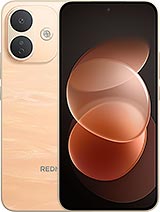
At 226 grams and 8.5 mm thick, this phone feels solid and not noticeably bulky for its 6.83-inch frame. The IP68/IP69K rating—water-resistant to 2 meters for 72 hours and drop-tested to 3 meters—is the kind of armor most phones in this segment skip. Gorilla Glass Victus 2 is standard and expected. The body design is inoffensive but unremarkable: flat sides, a rectangular camera bump, and three matte color options. There is nothing here to set it apart from other Redmi Notes, and that is fine—the focus is utility, not flair.
Display
The 6.83-inch AMOLED is the star. At 1280 x 2772 pixels (447 ppi), the density is lower than a typical flagship, but the large size means scrolling feels smooth and text is still sharp enough for daily reading. The 120Hz refresh rate is standard for AMOLED mid-rangers now, and the 3500 nits peak brightness helps outdoors. The 19.5:9 aspect ratio is narrow and tall—great for one-handed reach on a large phone, though video and gaming will waste screen real estate. The 89.5% screen-to-body ratio shows Xiaomi kept bezels minimal, which matters when you are paying for a big display.
Performance
The Snapdragon 6s Gen 4 is a respectable mid-range chip, but it is not new. Launched in mid-2023, it handles everyday tasks—messaging, social media, browsing—without lag. Streaming video, light gaming, and everyday photography are fine. But heavy games, video editing, and demanding apps will show frame drops compared to newer Snapdragon 7 or 8 Gen 3 Leading versions in rivals at similar prices. The 6GB/8GB RAM options are adequate; the 256GB models with UFS 3.1 storage will feel noticeably faster than the base 128GB model, which uses the slower UFS 2.2.
Software
Android 16 with HyperOS 3 is current and should receive years of updates given Xiaomi's track record. HyperOS is leaner than the older MIUI, with fewer pre-installed apps. The customization is deep if you want it, but the phone comes clean out of the box and does not feel cluttered. No surprises here—it is a standard implementation that stays out of your way.
Camera
A 50 MP sensor with f/1.8, 26 mm (standard wide), and PDAF sounds adequate on paper, but the 1080p video limit is a disappointment for a 2026 release and a phone this large. Rivals at this price now offer 4K or even 8K recording. The sensor size (1/2.76 inch) and 0.64 µm pixels suggest modest low-light performance—decent in daylight, average indoors. The 8 MP selfie is fine for video calls. There is no ultrawide, telephoto, or macro camera listed, so you get one lens and that is it. Photos will be competent but unremarkable, and video captures are a clear step down versus the competition.
Battery & charging
The 9000 mAh battery is impressive and should comfortably last 1.5 to 2 days on typical mixed use. That endurance is rare at this size and price, and it is a genuine advantage if you hate frequent charging. However, the spec sheet omits charging wattage—a major red flag. If it still uses the older 67W from last year, rivals now standard at 100W+, which means recharging this massive battery takes significantly longer. Without confirmation, this remains a question mark, but it is worth asking before buying.
Value & verdict
At 210 EUR, the Redmi Note 17 Pro Refresh is not expensive, but it is not a bargain either. It is competing in a crowded space where newer mid-rangers offer 4K video, faster charging, and newer chipsets for the same outlay. What you are paying for here is screen size, battery capacity, and durability—valid reasons if those matter to you. However, the 1080p video and missing charging spec are omissions that sting at 2026 pricing. This is a phone for someone who values a large, bright AMOLED screen and two-day battery life over cutting-edge performance or video quality. If you just want a functional, rugged big-screen phone for media and messaging, it delivers. If you want a no-compromise all-rounder, look elsewhere.
Verdict
This phone makes sense for users who prioritize screen size, battery life, and durability over performance or video quality. Anyone else shopping at 210 EUR will find sharper value in rivals with 4K cameras, faster chips, and quicker charging.
- 9000 mAh battery should deliver two full days of mixed use—rare at this price and size
- 6.83-inch AMOLED with 120Hz refresh and 3500 nits peak brightness feels spacious and responsive, with 89.5% screen-to-body ratio keeping bezels minimal
- IP68/IP69K rating plus 3m drop resistance gives genuine durability without the flagships' cost
- Snapdragon 6s Gen 4 is efficient enough for daily apps and streaming, with UFS 3.1 on the 256GB models
- 50MP camera maxes out at 1080p video—no 4K option is a step backward for 2026, especially at this screen size
- No charging wattage listed; if it matches last year's 67W, that is slower than rivals now hitting 120W+ at similar prices
- Snapdragon 6s Gen 4 is a mid-2023 part; gaming and heavy multitasking will strain it compared to newer chips at this tier
Xiaomi Redmi Note 17 Pro Refresh (China) Key Specifications
The essentials at a glance. See the full spec sheet.
| Released | 2026, October 13 |
|---|---|
| Display | 6.83 inches, 114.5 cm2 (~89.5% screen-to-body ratio), AMOLED, 68B colors, 120Hz, 3840Hz PWM, 3500 nits (peak) |
| Resolution | 1280 x 2772 pixels, 19.5:9 ratio (~447 ppi density) |
| Chipset | Qualcomm SM6435-AA Snapdragon 6s Gen 4 (4 nm) |
| RAM & storage | 128GB 8GB RAM, 256GB 6GB RAM, 256GB 8GB RAM |
| Main camera | 50 MP, f/1.8, 26mm (wide), 1/2.76", 0.64µm, PDAF Auxiliary lens |
| Selfie camera | 8 MP, (wide) |
| Battery | 9000 mAh |
| Software | Android 16, HyperOS 3 |
| Dimensions | 163.5 x 78.3 x 8.5 mm (6.44 x 3.08 x 0.33 in) |
| Weight | 226 g (7.97 oz) |
| Durability | IP68/IP69K dust tight and water resistant (high pressure water jets; immersible up to 1.5m for 30 min) Manufacturer-rated water-resistance (up to 2m for 72 hours) Drop resistant up to 3m |
| Network | GSM / HSPA / LTE / 5G |
| NFC | Yes |
| USB | USB Type-C 2.0, OTG |
Xiaomi Redmi Note 17 Pro Refresh (China) FAQ
Common questions, answered from the spec sheet.
Does the Redmi Note 17 Pro Refresh (China) support 5G?
Yes. The Redmi Note 17 Pro Refresh (China) supports 5G networks.
What chipset does the Redmi Note 17 Pro Refresh (China) use?
The Redmi Note 17 Pro Refresh (China) runs on the Qualcomm SM6435-AA Snapdragon 6s Gen 4 (4 nm).
What display does the Redmi Note 17 Pro Refresh (China) have?
A 6.83 inches, 114.5 cm2 (~89.5% screen-to-body ratio) AMOLED, 68B colors, 120Hz, 3840Hz PWM, 3500 nits (peak), 1280 x 2772 pixels, 19.5:9 ratio (~447 ppi density).
How big is the Redmi Note 17 Pro Refresh (China) battery?
The Redmi Note 17 Pro Refresh (China) has a 9000 mAh battery.
Does the Redmi Note 17 Pro Refresh (China) have NFC?
Yes, the Redmi Note 17 Pro Refresh (China) has NFC.
Is the Redmi Note 17 Pro Refresh (China) water resistant?
The Redmi Note 17 Pro Refresh (China) carries a IP68/IP69K dust tight and water resistant (high pressure water jets; immersible up to 1.5m for 30 min) Manufacturer-rated water-resistance (up to 2m for 72 hours) Drop resistant up to 3m rating.
Does the Redmi Note 17 Pro Refresh (China) support a microSD card?
No, the Redmi Note 17 Pro Refresh (China) does not support expandable storage.
Alternatives to consider
If the Redmi Note 17 Pro Refresh (China) isn’t quite right, these are the closest calls.
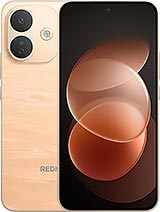
Redmi Note 17 Pro
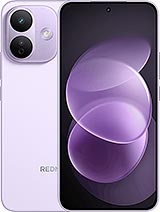
Redmi Note 17 Pro (China)

Redmi Note 17 4G

Redmi Note 17
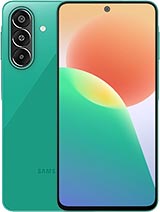
Galaxy F70 Pro