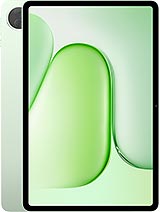
Xiaomi Redmi Pad 2 review
The Redmi Pad 2 suits anyone who reads, watches video, and handles email on a tablet without demanding speed or fast charging. Anyone expecting good photos, serious gaming, or zippy charge times will find the compromises frustrating, even at this price."
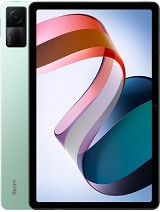
This review is based on Xiaomi’s published specifications and public benchmark data for the Xiaomi Redmi Pad 2, and the rating is spec-based. GoSolo does not physically test devices; where we estimate real-world behaviour such as battery life or charge time, we say so. How we rate phones.
Overview
The Redmi Pad 2 is a light, slim 10.6-inch tablet that handles everyday reading, video calls, and light streaming without fuss, but 18W charging is glacial by 2025 standards and the mid-range chipset will choke on demanding apps.
Design & build
At 7.1mm thick and 465g, the Redmi Pad 2 is genuinely slim and light for a 10.6-inch slate. The glass front and aluminum frame feel solid without being premium. The form factor sits well in one hand for reading or casual use, and the stylus support is a nice touch for note-taking, even if the bundled stylus is not included and prices of third-party options can add up. For a device at this price, the industrial design does not pretend to be flagship; it is straightforward and functional, which suits a device built for consumption over creation.
Display
The 10.61-inch IPS LCD ticks all the practical boxes: 1200 x 2000 resolution (220 ppi) is sharp enough for text and web at arm's length, 90Hz refresh makes scrolling feel fluid, and the 5:3 aspect ratio leaves ample room for split-screen work. At 400 nits typical brightness, it is readable in moderately lit rooms but will struggle in direct sunlight. The 80.9% screen-to-body ratio is respectable, though not class-leading. For a tablet used mostly indoors for email, video, and reading, the display does the job well. It is not a creative tool—colors are standard IPS, not studio-grade—but for the price and intended use case, there is little to fault.
Performance
The Helio G99 is a sensible upper-midrange mobile chipset, competent for video calls, email, document editing, and light streaming. Everyday tablet work flows without stuttering. Where it falters is sustained 3D graphics: mobile games at high settings will throttle, and apps that demand GPU grunt or heavy multitasking will expose its limits. AnTuTu sits at 319K, which is respectable but not exceptional for 2025. This is not a content-creation machine. Video editing, photo retouching, or design work will feel sluggish. For someone using a tablet as a second screen for browsing and media, it is more than sufficient; power users need to look elsewhere.
Software
Android 12 ships, with a promised upgrade to Android 13 and MIUI 14 overlay. MIUI is functional but prone to bloatware and aggressive background app management on budget hardware. Security patches are where budget tablets often disappoint, and there is no guarantee of regular updates beyond the initial two years. For a £250 tablet, do not expect the same long-term software support you would get from an iPad or Samsung flagship. That said, if you ignore the pre-loaded apps and keep essentials installed, the OS runs smoothly on the available RAM.
Camera
The 8MP rear and front cameras are purely functional. The rear lens (f/2.0, auto-focus) can capture a quick document scan or a passable video call, but lacks the sensor size and optics for any kind of quality photography. The 105-degree front ultrawide is a thoughtful addition for group calls, but still confined by the 8MP resolution. Both shoot 1080p video at 30fps—fine for casual clips but not broadcast-ready. If you plan to use this tablet as a camera replacement or creative tool, the low resolution will disappoint. For most users, these cameras are an afterthought.
Battery & charging
The 8000 mAh cell delivers a solid full day of mixed use—roughly 12 to 14 hours of screen-on time depending on load. That is the good news. The bad news is 18W charging, which tops the battery in 90 to 120 minutes. By 2025 standards, this is slow; tablets at comparable price points now ship with 30W, 35W, or faster. A overnight charge is not onerous, but if you need the tablet ready in an hour, you will be frustrated. The slower charging also means the battery ages less stressfully, a minor silver lining. The 18W ceiling feels like a cost-cutting measure that undercuts the otherwise strong endurance.
Value & verdict
At around £250, the Redmi Pad 2 is aimed squarely at budget-conscious buyers who want a no-nonsense tablet for reading, browsing, and video streaming. It delivers on those fronts: the slim profile, long battery life, and smooth 90Hz display make it a genuinely pleasant device for media consumption. The stylus support is a small but meaningful differentiator for note-takers. The problem is that slow 18W charging feels penny-wise and pound-foolish when rivals have moved to 30W or higher, and the mid-range Helio G99 is beginning to show age for 2025. If you are using this for passive consumption and do not game or edit, it is a solid buy. Anyone wanting stronger performance, faster charging, or better cameras should spend a bit more or consider alternatives from Samsung or Apple's budget range.
Verdict
The Redmi Pad 2 suits anyone who reads, watches video, and handles email on a tablet without demanding speed or fast charging. Anyone expecting good photos, serious gaming, or zippy charge times will find the compromises frustrating, even at this price."
- Thin, light build (7.1mm, 465g) makes it genuinely portable for a 10-inch tablet
- 90Hz IPS LCD display is crisp enough for documents and web browsing, with solid 80.9% screen-to-body ratio
- Stereo speakers with Dolby Atmos and a 3.5mm jack add practical value for video watching and audio
- 8000 mAh battery easily lasts a full day of mixed use
- 18W wired charging takes 90–120 minutes for an 8000 mAh battery—rivals at this price now offer 30W or higher
- Helio G99 GPU struggles with sustained 3D gaming and heavy multitasking; not built for creative apps
- 8MP cameras are basic for a 2025 tablet; no telephoto, limited low-light performance, 1080p video only
Xiaomi Redmi Pad 2 Key Specifications
The essentials at a glance. See the full spec sheet.
| Released | 2022, October 04 |
|---|---|
| Display | 10.61 inches, 320.4 cm2 (~80.9% screen-to-body ratio), IPS LCD, 1B colors, 90Hz, 400 nits (typ) |
| Resolution | 1200 x 2000 pixels, 5:3 ratio (~220 ppi density) |
| Chipset | Mediatek Helio G99 (6 nm) |
| RAM & storage | 64GB 3GB RAM, 128GB 4GB RAM, 128GB 6GB RAM |
| Main camera | 8 MP, f/2.0, (wide), AF |
| Selfie camera | 8 MP, f/2.3, 105° (ultrawide) |
| Battery | 8000 mAh |
| Charging | 18W wired, PD2, QC2.0 |
| Software | Android 12, upgradable to Android 13, MIUI 14 |
| Dimensions | 250.5 x 158.1 x 7.1 mm (9.86 x 6.22 x 0.28 in) |
| Weight | 465 g (1.03 lb) |
| Build | Glass front, aluminum frame |
| Durability | Stylus support |
| Network | No cellular connectivity |
| NFC | No |
| USB | USB Type-C, OTG |
Xiaomi Redmi Pad 2 FAQ
Common questions, answered from the spec sheet.
Does the Redmi Pad 2 support 5G?
No. The Redmi Pad 2 tops out at No cellular connectivity, without 5G.
What chipset does the Redmi Pad 2 use?
The Redmi Pad 2 runs on the Mediatek Helio G99 (6 nm).
What display does the Redmi Pad 2 have?
A 10.61 inches, 320.4 cm2 (~80.9% screen-to-body ratio) IPS LCD, 1B colors, 90Hz, 400 nits (typ), 1200 x 2000 pixels, 5:3 ratio (~220 ppi density).
How big is the Redmi Pad 2 battery?
The Redmi Pad 2 has a 8000 mAh battery. Charging is rated at 18W wired, PD2, QC2.0.
Does the Redmi Pad 2 have NFC?
No, the Redmi Pad 2 does not list NFC support.
Is the Redmi Pad 2 water resistant?
The Redmi Pad 2 carries a Stylus support rating.
Does the Redmi Pad 2 support a microSD card?
Yes, the Redmi Pad 2 supports expandable storage (microSDXC).
Does the Redmi Pad 2 have a headphone jack?
Yes, the Redmi Pad 2 has a 3.5mm headphone jack.
Alternatives to consider
If the Redmi Pad 2 isn’t quite right, these are the closest calls.
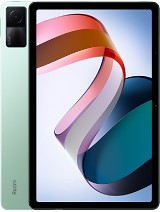
Redmi K Pad
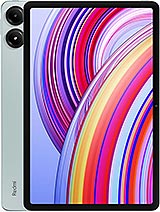
Redmi Pad 2 Pro
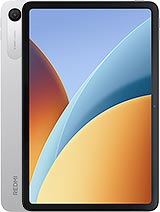
Redmi Pad 2 9.7
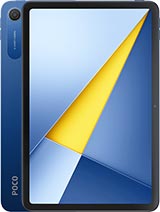
Poco Pad C1
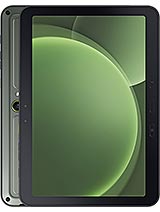
Galaxy Tab Active5 Pro