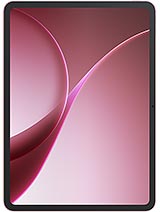
Xiaomi Redmi Pad Pro review
This tablet suits readers, casual streamers, and light workers who value portability and a good display over a fortress-like build or creative capabilities. Skip it if you plan heavy gaming, regular video calls, or need a tablet that will survive hard use without a case—the glass will scratch, and the cameras will disappoint.
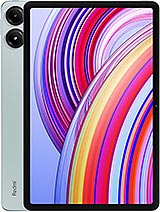
This review is based on Xiaomi’s published specifications and public benchmark data for the Xiaomi Redmi Pad Pro, and the rating is spec-based. GoSolo does not physically test devices; where we estimate real-world behaviour such as battery life or charge time, we say so. How we rate phones.
Overview
The Redmi Pad Pro is a slim, light Wi-Fi tablet with a sharp 12.1-inch display and competent mid-range performance for reading, streaming, and light work. For around €200, it delivers solid productivity value, but the older Gorilla Glass 3 coating and basic cameras limit durability and creative work.
Design and build
At 571 grams and 7.5 mm thick, this is a genuinely light and slim tablet—among the thinnest in its class. The glass front, aluminum frame, and aluminum back feel solid in hand, but the older Gorilla Glass 3 is a step backward; it lacks the scratch resistance of modern Gorilla Glass Armor or Victus, so expect fingerprints and minor scuffs to accumulate quickly. The thin all-metal frame absorbs drops better than plastic, but the shallow design means less structural rigidity if it twists. For casual use and gentle travel, it works; for a tablet that will live in a backpack or classroom, you'll want a protective case from day one.
Display
The 12.1-inch IPS LCD is one of this tablet's genuine strengths. The 1600×2560 resolution at 249 ppi is sharp enough for reading PDFs, ebooks, and web content at typical arm's length. The 120Hz refresh makes scrolling visibly smoother than a 60Hz screen, and it matters when flipping through documents or social feeds. At 600 nits peak brightness (high brightness mode), it stays legible in direct sunlight, which is rare at this price and genuinely useful if you read outdoors. Dolby Vision support is a nice touch for video streaming, though the IPS panel has narrower viewing angles than an OLED would offer. For a budget productivity tablet, this is well-executed.
Performance
The Snapdragon 7s Gen 2 with 8 GB RAM is capable upper-midrange silicon and shows it. Everyday tasks—web browsing, email, document editing, video playback—run without stalls, and the Adreno 710 GPU handles light gaming at reasonable frame rates. The AnTuTu score of 589,889 sits well ahead of entry-level chips, so you will not constantly feel the tablet fighting you. Heavy multitasking or sustained graphically intense apps (think 3D games at high settings) will cause throttling or frame drops, but that is expected at this price and performance tier. HyperOS on Android 14 is responsive and stays out of the way.
Software
Android 14 with HyperOS runs responsively on the Snapdragon 7s Gen 2. Xiaomi's HyperOS skin adds practical multitasking features—split-screen, floating windows, and app grouping—that are genuinely useful on a large tablet screen. The interface is clean and feels faster than older MIUI versions, though you will encounter Xiaomi's preloaded apps and occasional bloatware. Security patches and major OS updates are less certain on a budget tablet, so do not expect years of timely support; Xiaomi typically provides two to three major updates for mid-range devices.
Camera
The 8 MP rear and front cameras are purely functional and undersell this tablet's otherwise solid spec sheet. Both sensors are small (1/4-inch, 1.12 µm pixels), and 1080p video at 30 fps is bare-bones by 2024 standards. If you take the occasional photo or video call on Wi-Fi, they will work. If you use the tablet for any kind of creative content creation, document scanning, or regular video meetings, you will feel their limitations immediately compared to even mid-range competitors that now offer 13 MP or 20 MP rear cameras. This is one area where the budget really shows.
Battery and charging
The 10,000 mAh battery is large enough to deliver genuine staying power. On light use—reading, web browsing, email, streaming video over Wi-Fi—expect two to three days between charges. Heavy video consumption or gaming drains it in a single day, but that is normal for any tablet. The 33 W wired charger refills the battery from zero to full in roughly 50–80 minutes, which is respectable but slower than rivals at this price who offer 60 W or higher. There is no wireless charging, which is no surprise at this price point. The battery itself should age reasonably well for a 2024 device.
Value and verdict
At around €200, the Redmi Pad Pro slots into the budget tablet segment where it competes on display quality, battery endurance, and overall balance rather than premium build or camera prowess. The 12.1-inch screen with 120Hz and adequate brightness is genuinely appealing if you read, stream, or do light work. The Snapdragon 7s Gen 2 is enough for everyday tasks without constant lag. The main trade-offs are durability (older glass, thinner frame), slower charging than some peers, and cameras that feel like an afterthought. If you prioritize portability, screen quality, and battery life for productivity and media consumption, this is a solid choice. If you want a robust device that can take a knock or one with decent zoom and detail in photos, look elsewhere.
Verdict
This tablet suits readers, casual streamers, and light workers who value portability and a good display over a fortress-like build or creative capabilities. Skip it if you plan heavy gaming, regular video calls, or need a tablet that will survive hard use without a case—the glass will scratch, and the cameras will disappoint.
- 12.1-inch 1600×2560 display with 120Hz refresh, 600-nit brightness, and Dolby Vision—sharp, smooth, and legible outdoors at this price point
- Snapdragon 7s Gen 2 with 8GB RAM handles everyday tablet work, streaming, and light gaming without stuttering, and AnTuTu 589889 places it solidly above entry-level
- 10000 mAh battery lasts 2–3 days on light use (web, email, reading) and charges fully in under 90 minutes via 33W USB-PD
- Thin 7.5 mm aluminum design at 571 g is genuinely portable; stylus support and microSD expansion add flexibility
- Gorilla Glass 3 is older and more prone to scratches than current-generation glass; combined with the thin aluminum chassis, the build feels less robust than rival tablets in this price range
- 33W charging is adequate but rivals at this price often hit 60W or higher, translating to noticeably longer charge times when the battery runs dry
- 8 MP rear and front cameras are bare-bones for a 2024 tablet; if you plan any photography or video calls, this is a meaningful step down from peers
Xiaomi Redmi Pad Pro Key Specifications
The essentials at a glance. See the full spec sheet.
| Released | 2024, April 10 |
|---|---|
| Display | 12.1 inches, 424.5 cm2 (~83.4% screen-to-body ratio), IPS LCD, 68B colors, 120Hz, Dolby Vision, 600 nits (HBM) |
| Resolution | 1600 x 2560 pixels, 16:10 ratio (~249 ppi density) |
| Chipset | Qualcomm SM7435-AB Snapdragon 7s Gen 2 (4 nm) |
| RAM & storage | 128GB 6GB RAM, 128GB 8GB RAM, 256GB 8GB RAM |
| Main camera | 8 MP, f/2.0, (wide), 1/4.0", 1.12µm |
| Selfie camera | 8 MP, f/2.3, (wide), 1/4.0", 1.12µm |
| Battery | 10000 mAh |
| Charging | 33W wired, PD3.0, QC3+ |
| Software | Android 14, HyperOS |
| Dimensions | 280 x 181.9 x 7.5 mm (11.02 x 7.16 x 0.30 in) |
| Weight | 571 g (1.26 lb) |
| Build | Glass front (Gorilla Glass 3), aluminum frame, aluminum back |
| Durability | Stylus support (magnetic) |
| Network | No cellular connectivity |
| NFC | No |
| USB | USB Type-C 2.0 |
Xiaomi Redmi Pad Pro FAQ
Common questions, answered from the spec sheet.
Does the Redmi Pad Pro support 5G?
No. The Redmi Pad Pro tops out at No cellular connectivity, without 5G.
What chipset does the Redmi Pad Pro use?
The Redmi Pad Pro runs on the Qualcomm SM7435-AB Snapdragon 7s Gen 2 (4 nm).
What display does the Redmi Pad Pro have?
A 12.1 inches, 424.5 cm2 (~83.4% screen-to-body ratio) IPS LCD, 68B colors, 120Hz, Dolby Vision, 600 nits (HBM), 1600 x 2560 pixels, 16:10 ratio (~249 ppi density).
How big is the Redmi Pad Pro battery?
The Redmi Pad Pro has a 10000 mAh battery. Charging is rated at 33W wired, PD3.0, QC3+.
Does the Redmi Pad Pro have NFC?
No, the Redmi Pad Pro does not list NFC support.
Is the Redmi Pad Pro water resistant?
The Redmi Pad Pro carries a Stylus support (magnetic) rating.
Does the Redmi Pad Pro support a microSD card?
Yes, the Redmi Pad Pro supports expandable storage (microSDXC (dedicated slot)).
Does the Redmi Pad Pro have a headphone jack?
Yes, the Redmi Pad Pro has a 3.5mm headphone jack.
Alternatives to consider
If the Redmi Pad Pro isn’t quite right, these are the closest calls.
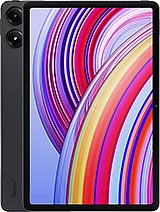
Redmi Pad Pro 5G
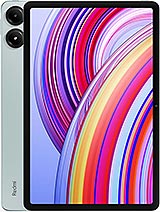
Redmi Pad 2 Pro
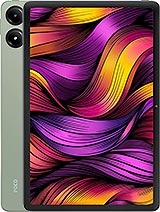
Poco Pad 5G
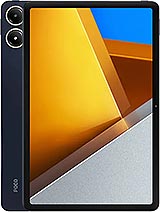
Poco Pad
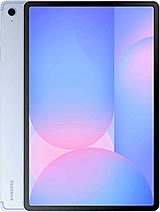
Galaxy Tab S10 FE