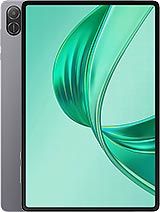
Xiaomi Redmi Pad SE review
The Redmi Pad SE suits students, teachers, and home office workers who want a large, affordable screen for documents, browsing, and light media on Wi-Fi, without needing processing muscle or outdoor brightness. Skip it if you need a tablet for graphics work, gaming, or outdoor use, or if you value cellular connectivity.
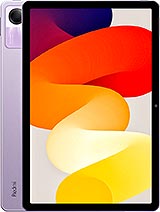
This review is based on Xiaomi’s published specifications and public benchmark data for the Xiaomi Redmi Pad SE, and the rating is spec-based. GoSolo does not physically test devices; where we estimate real-world behaviour such as battery life or charge time, we say so. How we rate phones.
Overview
The Redmi Pad SE is a no-fuss 11-inch Wi-Fi tablet pitched at students and home office users, with a 90Hz screen and all-day battery that justify its budget price—but the dim screen, sluggish Snapdragon 680, and weak cameras mean it's a compromise machine, not a bargain flagship.
Design & Build
At 478 grams and 7.4mm thin, the Pad SE feels light and portable for a tablet this size. The glass front and aluminum frame assemble solidly, and the grip is comfortable without being angular. It doesn't pretend to be rugged or premium—there's nothing fancy here—but it survives a backpack and casual handling without creaking. For a device at this price point, build quality doesn't disappoint; you're getting actual materials instead of pure plastic.
Display
The 11-inch 1200×1920 IPS panel at 207 ppi is sharp enough for text and images at typical viewing distance. The 90Hz refresh is the real draw: scrolling through documents, news feeds, or comic books feels noticeably smoother than the 60Hz ceiling you'd find on many competitors at this price. The problem is brightness. At 400 nits typical, the screen struggles outdoors or in brightly lit rooms; a window seat in sunlight becomes a wash of glare. For indoor reading and office apps, it's fine, but anyone planning outdoor use should know the limitation.
Performance
The Snapdragon 680 is a mainstream entry-level chip that handles spreadsheets, email, web browsing, and video playback without stumbling. Open multiple browser tabs or switch between apps rapidly and you'll notice lag. Gaming at high frame rates or running intensive photo editing will show stutter. For the classroom, office, and casual media consumption, it's adequate; don't expect this tablet to rival mid-range performers two tiers up. The AnTuTu score of around 242k to 261k confirms it's positioned as an office tool, not a creative workstation.
Software
Android 13 ships out of the box with Xiaomi's HyperOS 2 overlay. Updates are promised up to Android 15, which is respectable for a budget device. The UI is functional and not overly bloated, though Xiaomi's customizations can feel redundant compared to stock Android. For productivity apps and streaming, there's nothing to complain about; it's workable and stable.
Camera
The 8MP rear sensor with autofocus is capable for document scanning, whiteboard photography, and casual snapshots in good light. The 5MP ultrawide selfie handles video calls without embarrassment. Neither camera excels in low light, and there's no zoom or computational tricks to speak of. For a tablet, cameras are rarely the main event, and this Pad SE doesn't pretend otherwise—it's good enough to prove a device existed and capture a document, nothing more.
Battery & Charging
The 8000 mAh battery delivers around 10–12 hours of mixed use: reading, web browsing, light streaming, and office work. Heavy video playback or gaming will shorten that to 8 hours or less. The 18W Quick Charge 3.0 takes roughly 2 to 3 hours to refill from empty, so overnight charging or long breaks between sessions is the rhythm to expect. For a tablet, this is ordinary and entirely acceptable; nobody uses tablets the way they do phones, so slow charging is less of a friction point.
Connectivity & Value
The Pad SE is Wi-Fi only. No cellular modem means you cannot use it for calls, texts, or mobile data away from Wi-Fi networks. Wi-Fi 5 and Bluetooth 5.0 are standard for the price, and USB-C with OTG support rounds out the basics. At around 200 EUR, this tablet sits in the sweet spot for schools, students, and home office users on a strict budget. It's not cutting-edge, and it's not making compromises you'd regret either—it does its job without flourish. The microSD slot gives you meaningful storage expansion, and the 3.5mm jack is a rarity that adds real value for headphone users. Next to comparable Android or iPad alternatives at the same price, the Pad SE offers acceptable all-around balance without standout features.
Verdict
The Redmi Pad SE suits students, teachers, and home office workers who want a large, affordable screen for documents, browsing, and light media on Wi-Fi, without needing processing muscle or outdoor brightness. Skip it if you need a tablet for graphics work, gaming, or outdoor use, or if you value cellular connectivity.
- 11-inch display with 90Hz refresh feels smooth for scrolling documents and media compared to typical budget tablets stuck at 60Hz
- 8000 mAh battery delivers a full day of mixed reading, web browsing, and video without needing to hunt for a charger
- Stereo quad speakers and 3.5mm jack—rare preservation of practical audio features that matter on tablets
- Aluminum frame and glass-front build feel sturdy for the price, light enough to hold one-handed for reading
- 400 nits peak brightness is too dim for outdoor use or sunlit rooms; rivals in this price bracket now hit 500+ nits
- Snapdragon 680 is entry-level even for budget tablets—stutters under multitasking and gaming, fine only for documents and casual browsing
- No cellular option means Wi-Fi only; tethering required for standalone use away from home
Xiaomi Redmi Pad SE Key Specifications
The essentials at a glance. See the full spec sheet.
| Released | 2023, August 15 |
|---|---|
| Display | 11.0 inches, 347.5 cm2 (~81.4% screen-to-body ratio), IPS LCD, 90Hz, 400 nits (typ) |
| Resolution | 1200 x 1920 pixels, 16:10 ratio (~207 ppi density) |
| Chipset | Qualcomm SM6225 Snapdragon 680 4G (6 nm) |
| RAM & storage | 128GB 4GB RAM, 128GB 6GB RAM, 128GB 8GB RAM, 256GB 8GB RAM |
| Main camera | 8 MP, f/2.0, (wide), 1/4.0", 1.12µm, AF |
| Selfie camera | 5 MP, f/2.2, (ultrawide), 1/5.0", 1.12µm |
| Battery | 8000 mAh |
| Charging | 18W Quick Charge 3.0 |
| Software | Android 13, upgradable to Android 15, HyperOS 2 |
| Dimensions | 255.5 x 167.1 x 7.4 mm (10.06 x 6.58 x 0.29 in) |
| Weight | 478 g (1.05 lb) |
| Build | Glass front, aluminum back, aluminum frame |
| Network | No cellular connectivity |
| NFC | No |
| USB | USB Type-C, OTG |
Xiaomi Redmi Pad SE FAQ
Common questions, answered from the spec sheet.
Does the Redmi Pad SE support 5G?
No. The Redmi Pad SE tops out at No cellular connectivity, without 5G.
What chipset does the Redmi Pad SE use?
The Redmi Pad SE runs on the Qualcomm SM6225 Snapdragon 680 4G (6 nm).
What display does the Redmi Pad SE have?
A 11.0 inches, 347.5 cm2 (~81.4% screen-to-body ratio) IPS LCD, 90Hz, 400 nits (typ), 1200 x 1920 pixels, 16:10 ratio (~207 ppi density).
How big is the Redmi Pad SE battery?
The Redmi Pad SE has a 8000 mAh battery. Charging is rated at 18W Quick Charge 3.0.
Does the Redmi Pad SE have NFC?
No, the Redmi Pad SE does not list NFC support.
Does the Redmi Pad SE support a microSD card?
Yes, the Redmi Pad SE supports expandable storage (microSDXC).
Does the Redmi Pad SE have a headphone jack?
Yes, the Redmi Pad SE has a 3.5mm headphone jack.
Alternatives to consider
If the Redmi Pad SE isn’t quite right, these are the closest calls.
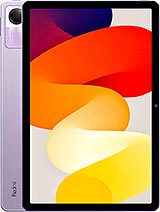
Redmi Pad SE 8.7
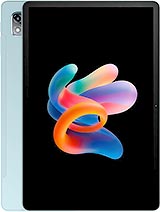
Black Shark Pad 6
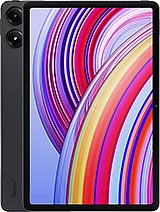
Redmi Pad Pro 5G
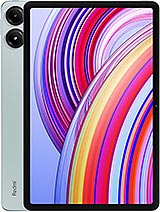
Redmi Pad Pro
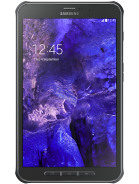
Galaxy Tab Active 5