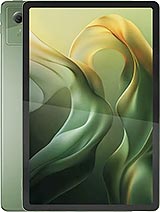
Xiaomi Redmi Pad SE 8.7 review
This tablet makes sense for someone who reads, watches, and browses on a large screen at home and needs the battery to last the day without fuss. Skip it if you need a machine for gaming, photo editing, or any work that demands fast performance or pristine display clarity.
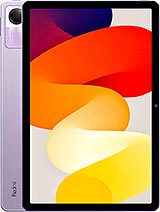
This review is based on Xiaomi’s published specifications and public benchmark data for the Xiaomi Redmi Pad SE 8.7, and the rating is spec-based. GoSolo does not physically test devices; where we estimate real-world behaviour such as battery life or charge time, we say so. How we rate phones.
Overview
This is a budget 8.7-inch tablet sold on a long battery life and expandable storage, aimed squarely at media consumption and light work rather than performance or gaming. The Snapdragon 680 and 207ppi screen are entry-level by any measure, but at 200 EUR you're paying for the tank-like battery and practical design choices, not cutting-edge specs.
Design & build
At 478 grams and 7.4 mm thin, the Pad SE is solidly built and feels competent in hand—aluminum frame and back, glass front, and enough heft to signal durability without being burdensome. The IP53 rating handles dust and vertical splashes, which is enough for everyday spills but not a guarantee against immersion. Gorilla Glass 3, however, is showing its age; it scratches more easily than current-generation protection and is a noticeable step down from the hardened glass on even mid-range competitors today. The trade-off is clear: Xiaomi has chosen cost discipline over absolute toughness. For a tablet that will live on a desk or sofa, this is acceptable. For one that gets tossed into bags regularly, you will notice the difference.
Display
The 11-inch IPS LCD runs at 90Hz with 400 nits typical brightness, which is a practical pairing for a tablet in this price band. The 1200 × 1920 resolution works out to about 207 ppi, meaning text and icons are noticeably larger than on a high-density phone—fine for reading and video, less sharp for productivity work that demands clarity at arm's length. The 90Hz refresh keeps scrolling smooth in everyday apps and browsers, a small but real improvement over 60Hz, and the brightness is adequate indoors and acceptable in sunlight, though you won't match outdoor readability of brighter tablets. The 16:10 aspect ratio and 81% screen-to-body ratio are standard for 2023 tablets at this price.
Performance
The Snapdragon 680 with 4GB to 8GB RAM is the practical minimum for a tablet that costs 200 EUR. It handles everyday tasks—web browsing, email, video playback, reading—without perceptible lag, and light gaming is feasible at low settings. Sustained demanding work (rendering, heavy multitasking, or graphically intensive games at medium to high settings) will cause throttling and heat buildup. This is not a portable editing machine or a gaming tablet; it is a consumption device that also handles office apps. Benchmarks confirm this: the AnTuTu score hovers around 242,000, placing it in entry-midrange territory. For the asking price, performance is fit for purpose.
Software
The Pad SE ships on Android 13 and is promised updates to Android 15, with HyperOS 2 as Xiaomi's custom layer. HyperOS is lighter than MIUI on phones but still carries Xiaomi's bloat: some pre-installed apps, occasional nags to install more, and ads scattered through the system settings. It is not a dealbreaker for a budget device, but it is worth noting if you value a clean OS experience. Updates have historically been steady for Redmi tablets in this tier, so longevity is reasonable—not flagship-class, but respectable.
Camera
An 8 MP main camera with f/2.0 and autofocus, plus a 5 MP ultrawide front sensor, are the bare minimum for tablet imaging. Both shoot 1080p video at 30fps. The rear camera produces usable stills in good light but struggles with detail and low-light performance—typical of budget optics on a device where photography is an afterthought. Do not buy this tablet expecting to photograph anything beyond quick reference shots or documents. The front camera is fine for video calls but low-resolution by modern standards.
Battery & charging
The 8000 mAh cell delivers around 10 to 13 hours of screen-on time depending on use, which is the tablet's genuine strength. Watching video, reading, and light apps will easily push you through a full day and into a second morning on one charge. Charging is the weak point: 18W internationally (10W in India) means a full charge takes roughly 60 to 80 minutes, longer than modern flagship tablets and most modern phones. For a device meant to sit at home or on a desk, this is tolerable; for travelers or people who need quick turnarounds, it is a frustration.
Value & verdict
At around 200 EUR, the Pad SE occupies an honest niche: it is not trying to be a productivity beast or a gaming machine. It is built for media consumption, light reading, casual browsing, and minor work tasks on a genuinely large screen. The standout strengths are the battery endurance, the microSDXC slot for expandable storage, and the overall solidity of the build. The weaknesses are the dated chipset, the modest refresh rate, the slow charging, and the aging display protection. Compared to rivals in its price band, it trades raw performance for battery life and practical expandability—a fair exchange for people who value all-day runtime over speed.
Verdict
This tablet makes sense for someone who reads, watches, and browses on a large screen at home and needs the battery to last the day without fuss. Skip it if you need a machine for gaming, photo editing, or any work that demands fast performance or pristine display clarity.
- 8000 mAh battery delivers 10+ hours screen-on time, genuine all-day endurance without hunting for a charger
- MicroSDXC slot and up to 256 GB internal storage give practical breathing room for media without cloud dependency
- Large 11-inch, 90Hz display is comfortable for reading, video, and web browsing despite modest pixel density
- Solid aluminum and glass build with IP53 dust and splash protection, not fragile for its price
- Snapdragon 680 is slow for gaming or sustained multitasking; sustained heavy use triggers throttling and heat
- 18W charging takes 60–80 minutes to full, noticeably slower than rivals at this price and inconvenient if you need rapid top-ups
- Gorilla Glass 3 scratches easily compared to current standards, and the 207 ppi display lacks the sharpness expected for close-range productivity work
Xiaomi Redmi Pad SE 8.7 Key Specifications
The essentials at a glance. See the full spec sheet.
| Released | 2023, August 15 |
|---|---|
| Display | 11.0 inches, 347.5 cm2 (~81.4% screen-to-body ratio), IPS LCD, 90Hz, 400 nits (typ) |
| Resolution | 1200 x 1920 pixels, 16:10 ratio (~207 ppi density) |
| Chipset | Qualcomm SM6225 Snapdragon 680 4G (6 nm) |
| RAM & storage | 128GB 4GB RAM, 128GB 6GB RAM, 128GB 8GB RAM, 256GB 8GB RAM |
| Main camera | 8 MP, f/2.0, (wide), 1/4.0", 1.12µm, AF |
| Selfie camera | 5 MP, f/2.2, (ultrawide), 1/5.0", 1.12µm |
| Battery | 8000 mAh |
| Charging | 18W wired (Int'l)10W wired (India) |
| Software | Android 13, upgradable to Android 15, HyperOS 2 |
| Dimensions | 255.5 x 167.1 x 7.4 mm (10.06 x 6.58 x 0.29 in) |
| Weight | 478 g (1.05 lb) |
| Build | Glass front, aluminum back, aluminum frame |
| Durability | IP53 dust protected and water resistant(vertical water sprays) |
| Network | No cellular connectivity |
| NFC | No |
| USB | USB Type-C, OTG |
Xiaomi Redmi Pad SE 8.7 FAQ
Common questions, answered from the spec sheet.
Does the Redmi Pad SE 8.7 support 5G?
No. The Redmi Pad SE 8.7 tops out at No cellular connectivity, without 5G.
What chipset does the Redmi Pad SE 8.7 use?
The Redmi Pad SE 8.7 runs on the Qualcomm SM6225 Snapdragon 680 4G (6 nm).
What display does the Redmi Pad SE 8.7 have?
A 11.0 inches, 347.5 cm2 (~81.4% screen-to-body ratio) IPS LCD, 90Hz, 400 nits (typ), 1200 x 1920 pixels, 16:10 ratio (~207 ppi density).
How big is the Redmi Pad SE 8.7 battery?
The Redmi Pad SE 8.7 has a 8000 mAh battery. Charging is rated at 18W wired (Int'l)10W wired (India).
Does the Redmi Pad SE 8.7 have NFC?
No, the Redmi Pad SE 8.7 does not list NFC support.
Is the Redmi Pad SE 8.7 water resistant?
The Redmi Pad SE 8.7 carries a IP53 dust protected and water resistant(vertical water sprays) rating.
Does the Redmi Pad SE 8.7 support a microSD card?
Yes, the Redmi Pad SE 8.7 supports expandable storage (microSDXC).
Does the Redmi Pad SE 8.7 have a headphone jack?
Yes, the Redmi Pad SE 8.7 has a 3.5mm headphone jack.
Alternatives to consider
If the Redmi Pad SE 8.7 isn’t quite right, these are the closest calls.
Pad SE
Redmi Pad SE
Redmi K Pad
Redmi Pad 2
Pad SE